Stand at the edge of any ancient road, and you can still hear the crunch of gravel under heavy wheels. Dust rises. It settles on the leaves of olive trees, on the wool tunics of merchants, on the iron plates of shields. For thousands of years, humanity has been obsessed with moving from one place to another. We laid down stones, cut through mountain passes, and braved treacherous seas, convinced that our greatest achievement was simply getting there.
We were wrong.
The movement was never the point. The control of the movement was everything.
Consider a caravan winding its way through the Syrian desert two millennia ago. To the casual observer, it is a picturesque scene of survival against the elements—camels swaying, bells chiming, stars guiding the way. But look closer at the pinch points. Look at the narrow canyons where the path squeezes between towering cliffs. Right there, perched on the rock face, stands a watchtower.
That tower does not care about the spices, the silk, or the glass beads swinging in the leather sacks below. It cares about who owns the path.
Christian Grataloup, a historian who has spent a lifetime mapping how humans organize space, points out a fundamental truth we routinely forget: trade routes do not emerge by accident, and they certainly do not exist to serve everyone equally. They are arteries of power. Every time a society carves a path through the wilderness, it also builds a choke point. Someone always holds the key to the gate.
Think about the last time you watched traffic crawl along a highway during rush hour. One accident miles ahead brings millions of lives to a grinding halt. You sit in your car, staring at the taillights of a stranger, completely at the mercy of a civil engineering layout you had no voice in creating. Now scale that up to empires. Scale it up to the entire globe.
Geopolitics is often taught as a clash of ideologies, a grand theater of speeches, treaties, and elections. But underneath the political posturing lies a much older, more physical reality. Nations rise and fall not merely because of what they believe, but because of what they can reach—and what they can block.
Let us walk back in time to the Mediterranean, the cradle of so many competing ambitions. Picture a harbor town at dusk. The salt air clings to your skin. Wooden hulls groan against the wooden docks. Warehouses heave with grain from Egypt, purple dye from Tyre, and silver from Hispania. The merchants shouting orders across the water believe they are participating in a free exchange of goods. They are making money. They are feeding families.
Yet behind the scenes, Roman legions or Phoenician fleets are calculating margins of a very different kind. If you control the straits, you control the food supply. If you control the mountain passes, you dictate the price of iron. Trade is a weapon disguised as a handshake.
Grataloup’s work reminds us that space is never neutral. When mapmakers draw lines across parchment or digital screens, they are not just describing the world; they are claiming it. Every trade route is a statement of intent. It whispers a warning: If you want to trade, you must pass through my hands.
This dynamic didn't vanish with the collapse of antiquity. We simply traded timber and canvas for silicon and steel.
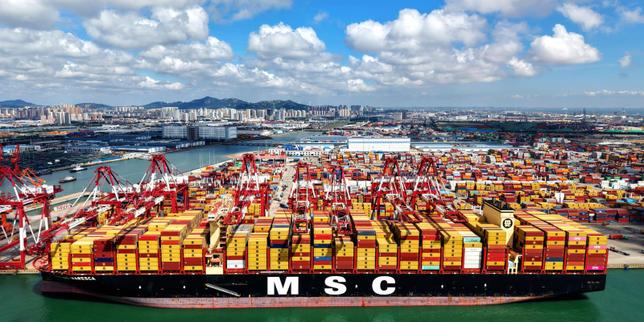
Look at a modern container ship slicing through the Suez Canal or navigating the Malacca Strait. To the consumer waiting for a package to arrive on their doorstep, global commerce feels weightless, almost magical. You click a button, and a product materializes from across the planet. But behind that magic lies the same ancient vulnerability. When a single massive vessel runs aground and blocks a vital global artery for days, billions of dollars evaporate into the thin air of the supply chain. Panic ripples through stock exchanges thousands of miles away.
We discover, with a jolt of anxiety, that our hyper-connected world is terrifyingly fragile. We are tethered to invisible lines on a map.
The struggle for these lines shapes our daily lives in ways we rarely acknowledge. Why are certain cities economic powerhouses while others wither away? Why do borders shift along river valleys and mountain ridges? Because geography sets the chessboard, and trade routes are the pieces moving across it.
When we study history, we often focus on the conquerors who marched their armies across these routes. But the true victors were often the gatekeepers. The ones who didn't fight the wars, but instead collected the tolls. The ones who decided whose goods passed through and whose rotted in the sun.
Next time you look at a map, don't just see shapes of countries and capital cities. Look for the veins. Look where the lines converge, where the oceans narrow, where the land forces travelers into a single, vulnerable corridor.
That is where the world is actually run. That is where power lives, silent and patient, waiting in the dust of the road.