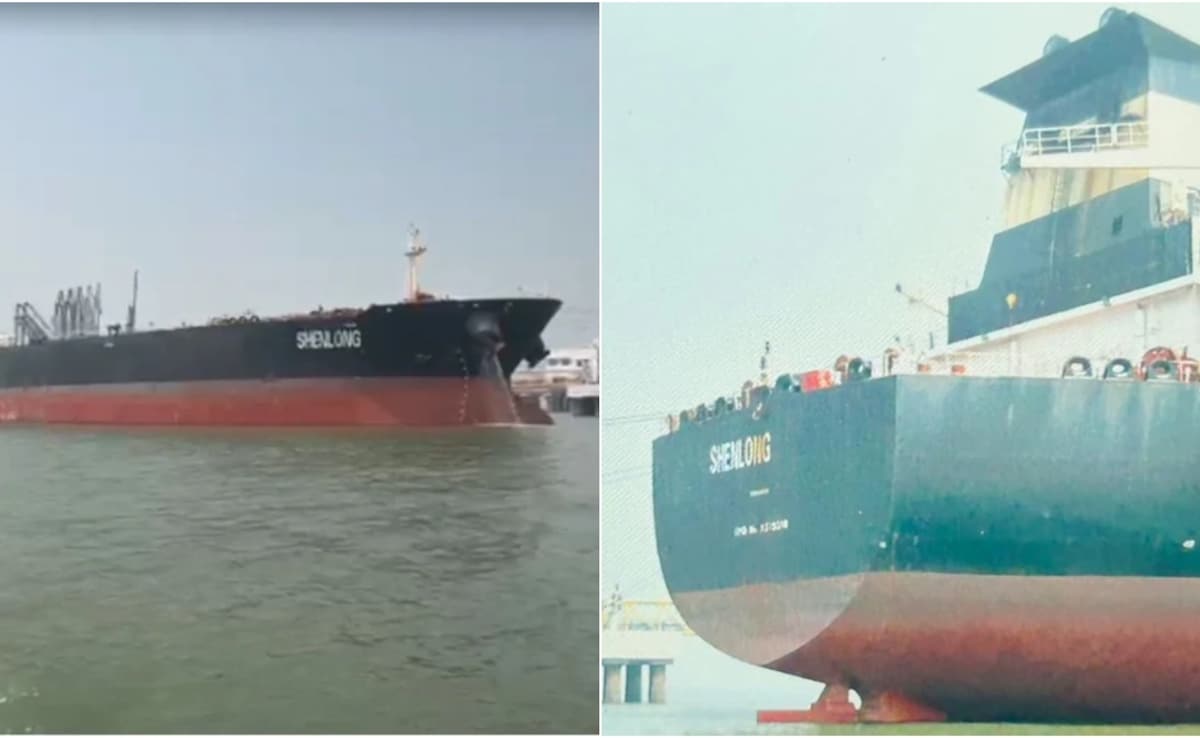
The era of cheap, predictable maritime trade in the Middle East has ended. While the world watches footage of smoke billowing from tankers in the Gulf of Oman, the true story isn’t just about the fire. It is about a fundamental shift in how non-state actors and regional powers are using low-cost, high-autonomy technology to hold the global economy hostage. Recent attacks involving explosive-laden remote boats and loitering munitions have proven that a trillion-dollar navy cannot effectively police a million-dollar threat. This is not just a localized conflict. It is a structural collapse of the security guarantees that have underpinned global energy markets for fifty years.
For decades, the math of shipping was simple. You built a bigger boat, you optimized the route, and you insured the hull against predictable risks. That math is now broken. When an unmanned surface vessel (USV) packed with high explosives strikes a mid-size Aframax tanker, the physical damage is the least of the owner's worries. The real hit comes from the vertical spike in war-risk premiums and the sudden realization that the Strait of Hormuz has become a gauntlet where the hunter is invisible and the prey is a sitting duck.
The Asymmetric Math of Modern Sabotage
Traditional maritime defense relies on seeing the enemy coming. Radar, sonar, and visual lookouts are designed to spot ships, planes, and submarines. They are not designed to find a three-meter fiberglass hull sitting inches above the waterline, painted the color of a choppy sea, and controlled via encrypted satellite link. These "suicide boats" are the naval equivalent of the improvised explosive devices (IEDs) that redefined land warfare in Iraq and Afghanistan.
The cost-to-damage ratio is staggering. A single USV can be assembled in a nondescript workshop for less than the price of a mid-range sedan. If it successfully hits a tanker carrying two million barrels of crude, it disrupts a cargo worth roughly $150 million. Even a "miss" is a victory for the attacker. The mere presence of these drones forces the diversion of multi-billion dollar destroyers and increases the operational costs for every vessel in the region.
We are seeing a refined doctrine of "active denial." Iran and its regional proxies have realized they do not need to win a naval battle against the West. They only need to make the cost of doing business in the Gulf higher than the world is willing to pay. By using explosive boats, they maintain a layer of plausible deniability that complicates any military response. Was the boat launched from a port, or was it dropped off the side of a seemingly innocent dhow in the middle of the night? In the time it takes to find the answer, the oil markets have already jumped three percent.
Why the Aegis Shield is Fraying
There is a persistent myth that Western naval superiority acts as an impenetrable umbrella. This belief is being tested and found wanting. The sophisticated sensors on a modern destroyer are tuned for high-altitude missiles and large steel hulls. Detecting a small, non-metallic object in "sea clutter"—the noise generated by waves and spray—is a nightmare for even the best operators.
Furthermore, the defensive economics are unsustainable. When a naval vessel fires a RIM-162 Evolved SeaSparrow Missile to intercept a cheap drone boat, they are trading a $2 million interceptor for a $20,000 target. The math favors the insurgent. You can run out of missiles long before the enemy runs out of cheap fiberglass and gasoline.
This technical gap has created a vacuum. Private security firms, once the go-to solution for Somali pirates, are largely useless here. You cannot shoot a remote-controlled bomb with a bolt-action rifle from a moving deck in the middle of the night. The threat requires electronic warfare capabilities and 24/7 aerial surveillance that private companies simply do not possess.
The Shell Game of Energy Security
The ripple effects extend far beyond the Gulf. When the risk of transit increases, the entire supply chain shifts. We are seeing a move toward "dark fleet" operations—vessels that turn off their transponders and engage in ship-to-ship transfers to hide their origin and destination. This doesn't just bypass sanctions; it creates a massive environmental and safety risk. These ships are often poorly maintained and under-insured, making a major spill in the Strait of Hormuz a statistical certainty rather than a possibility.
Insurance markets are the first to feel the heat. Lloyd’s of London and other major underwriters have already designated the Persian Gulf and its approaches as high-risk areas. This means every trip through the Strait requires an additional premium that can run into the hundreds of thousands of dollars per voyage. For a thin-margin business like commodity shipping, that is the difference between a profitable quarter and a total loss.
The Regional Players and Their Long Game
Iran’s strategy is not irrational. It is a calculated response to economic strangulation. By demonstrating an ability to close the Strait of Hormuz—or at least make it prohibitively expensive to use—Tehran gains a massive lever in international negotiations. They are signaling that if they cannot export their oil, no one in the region will do so safely.
The United Arab Emirates and Saudi Arabia have attempted to bypass this bottleneck with pipelines to the Red Sea and the Gulf of Oman, but these are only partial fixes. Pipelines have fixed capacities and are themselves vulnerable to drone strikes. The reality remains that the world's economy is tethered to a narrow strip of water that is increasingly dominated by low-tech, high-impact weaponry.
The Technological Arms Race at Sea
To counter the rise of the explosive boat, we are seeing a frantic push into directed-energy weapons and automated gatling guns. Lasers offer a solution to the "cost-per-kill" problem, as they only require electricity to fire. However, lasers struggle in the humid, salty air of the Gulf, which scatters the beam and reduces its effectiveness.
The more immediate shift is toward autonomous defense. The U.S. Navy’s Task Force 59 is currently experimenting with its own fleet of unmanned sensors and vessels to create a "mesh network" of surveillance. The goal is to blanket the Gulf with eyes so that no small boat can move without being tracked. This is a move toward a fully automated battlefield where AI-driven sensors hunt AI-driven boats.
This transition brings its own set of terrors. If both sides are using autonomous systems, the window for human intervention and de-escalation shrinks to near zero. A false positive or a technical glitch could trigger a kinetic exchange that neither side actually intended. We are moving toward a state of "accidental war" triggered by algorithms in the dark.
The End of Global Commons
The fundamental takeaway for any industry analyst is that the "Global Commons"—the idea that the seas belong to everyone and are safe for all—is a dying concept. We are returning to an era of "contested waters" where passage is a privilege granted by the dominant regional power, not a right.
For the consumer, this means the "Middle East discount" on energy is gone. Every gallon of gas and every plastic product now carries a hidden tax—the cost of patrolling the Gulf, the cost of insurance premiums, and the cost of the inevitable disruptions. The "just-in-time" delivery model for global energy is too fragile for a world where a teenager with a laptop and a remote-controlled boat can shut down a shipping lane.
Companies are already looking for ways out. There is a renewed interest in North American shale, deep-water drilling in the Atlantic, and a faster pivot toward renewables. Not because of environmental concerns, but because of raw security. The wind and the sun cannot be hijacked or blown up by a suicide boat.
The burning tankers in the Gulf are not a temporary crisis. They are the visible symptoms of a permanent change in the geopolitical landscape. The age of the secure ocean is over. If you are waiting for things to "get back to normal," you aren't paying attention to the wreckage.
Direct your investment toward regional self-sufficiency and hardened infrastructure, because the blue-water security we took for granted is not coming back.