Two in the morning. That is when the truth about a house finally comes out.
During the afternoon, sunlight lies to you. The furnace hums its reassuring low baritone, the air feels tolerable enough against your face, and you convince yourself that the three hundred dollars you wired to the utility company last month was just the unavoidable price of living through January. Then the sun drops behind the ridge, the mercury slides past twenty degrees, and the silence settles in. You wake up to reach for a glass of water on the nightstand, and your bare foot touches the oak floorboards.
Ice.
Not cool. Not brisk. A sharp, metallic bite that shoots straight up your calf and wakes every nerve in your spine. You pull your foot back under the duvet, listening to the furnace kick on again—its fourth cycle in an hour—and you realize you aren't actually paying to heat your home. You are paying to heat the neighborhood sky.
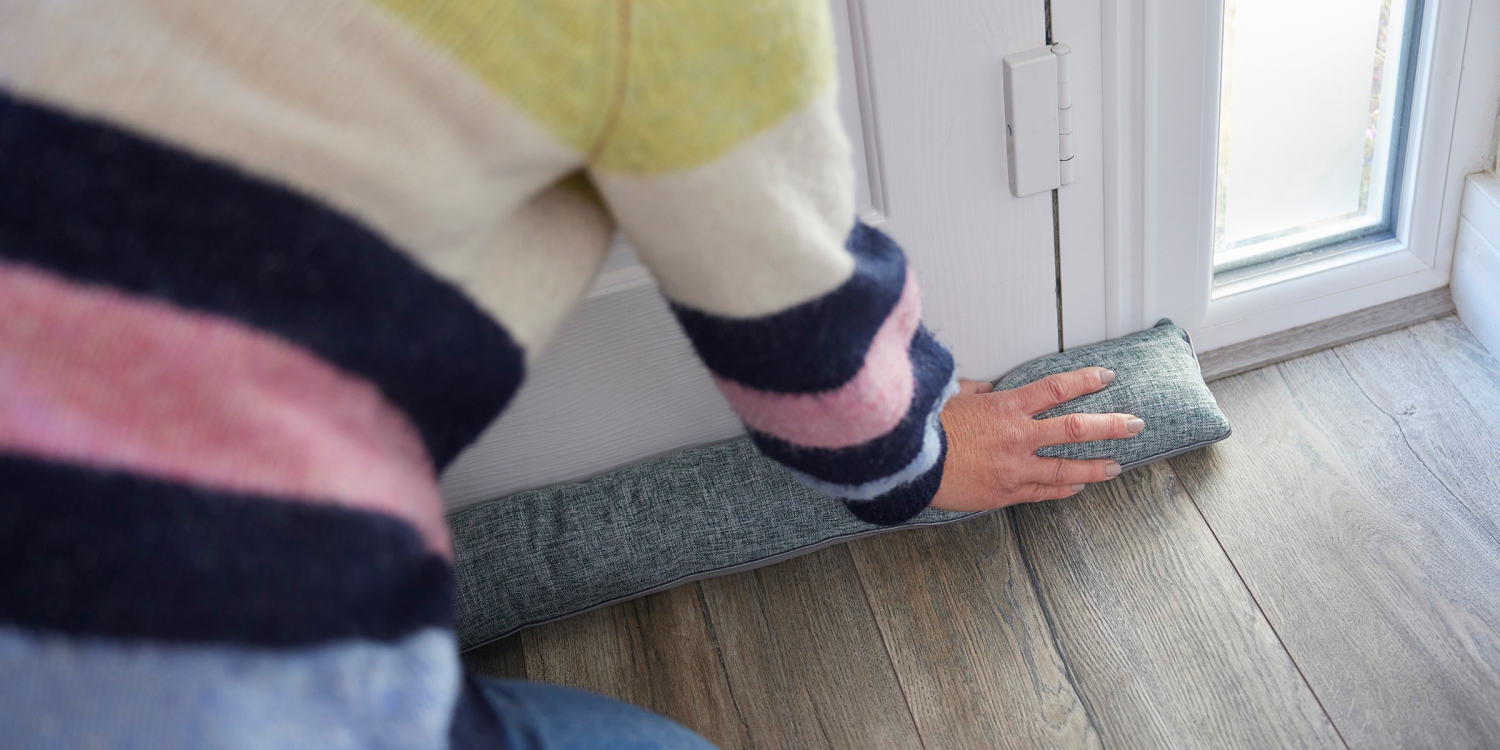
I learned this lesson the hard way six winters ago in a drafty, hundred-year-old Craftsman that looked like a postcard and bled warmth like a sieve. Every November, my partner and I performed the same desperate ritual. We bought rolls of clear plastic film and stretched them across the window frames with a hairdryer until the glass looked like wrapped leftovers. We shoved rolled-up bath towels against the bottom of the front door. We wore wool socks to bed and argued quietly over whether nudging the thermostat from sixty-four to sixty-six would wreck our grocery budget for the week. We treated winter like an invading army and ourselves like prisoners rationing bread inside a besieged fortress.
We had the entire problem backward.
The Lie of the Thermostat
Most homeowners think warmth is something you manufacture. You burn natural gas, or you run electric coils, or you feed pellets into a stove, and that heat fills up the rooms like water filling a bathtub. When the room gets cold, you assume the faucet isn't running fast enough. So you turn up the dial, buy a bigger furnace, or plug a ceramic space heater into the living room outlet and pray the breaker doesn't trip.
Consider a hypothetical neighbor—let’s call him Arthur. Arthur lives in a three-bedroom colonial built in 1978, and every October he dutifully calls an HVAC technician to service his high-efficiency furnace. He spends four hundred dollars on tune-ups and filters. Yet by mid-December, his upstairs hallway feels like a walk-in cooler, while his downstairs den is stifling. Arthur’s furnace isn't broken. His bathtub simply doesn't have a drain plug.
Heat does not sit politely in the middle of your living room waiting for you to enjoy it. Under the fundamental laws of thermodynamics, thermal energy moves relentlessly from warm spaces to cold ones. The greater the temperature difference between the inside of your house and the freezing air outside, the faster that heat sprints for the exits. According to the U.S. Department of Energy, heating and cooling account for roughly half of the energy use in an average home, yet a staggering percentage of that conditioned air vanishes before you ever feel it.
When I finally crawled into my own attic with a headlamp and a sense of dread, I expected to see something dramatic. Maybe a hole in the roof. Maybe a shattered vent. Instead, I saw four inches of flattened, gray fiberglass batting that looked like old dryer lint, resting unevenly between the joists. In several corners, the bare drywall of my bedroom ceiling was completely exposed to the freezing air of the roof cavity.
I reached out and touched the back of that drywall. It was as cold as a gravestone.
Where the Warmth Actually Goes
To understand how to insulate a home properly, you have to stop thinking like a decorator and start thinking like a physicist tracking a jailbreak. Warm air is buoyant. It rises, presses upward against your ceilings, and hunts for every microscopic crack, unsealed wire hole, and recessed light fixture it can find.
Building scientists call this the stack effect, and it turns your house into a giant chimney. As warm air escapes through gaps in your attic floor, it creates a subtle vacuum at the bottom of your house. That vacuum sucks freezing outdoor air straight through the cracks in your basement rim joists, around your foundation sill plate, and under your baseboards. You feel a draft at your ankles, so you stuff a towel under the door—never realizing that the draft at your floor is actually caused by a leak thirty feet above your head.
Let’s look at the numbers, because cold facts have a way of cutting through the fog of hardware-store marketing. Roughly 25 to 35 percent of a typical home’s heat loss happens straight through the roof and attic. Another 25 percent escapes through uninsulated walls. Foundations, basements, and crawl spaces account for up to 20 percent, while windows and doors—the very things we obsess over taping up every autumn—usually account for only 10 to 15 percent of the total loss.
Think about that. For years, I spent weekends hair-drying plastic over my windows while ignoring the massive, invisible holes above my ceiling.
If you want to stop the bleeding, you cannot start by buying rolls of fluffy pink insulation. Putting insulation over air leaks is like putting on a heavy wool sweater during a gale-force wind without wearing a windbreaker over it. The wind cuts straight through the yarn, stripping away the warmth your body just worked to generate.
The Sequence That Saves Thousands
When I finally hired a local energy auditor—a wiry man named Marcus who carried a thermal imaging camera like a detective’s flashlight—he walked through my house in silence for twenty minutes before showing me the screen. On that small digital display, my living room walls glowed a comforting orange, while the corners where the ceiling met the drywall burned a deep, violent purple. Purple meant freezing. Purple meant money evaporating into the January night.
Marcus explained that fixing a cold house requires a strict sequence, and skipping step one ruins everything that follows.
First comes air sealing. Before you touch a single batt of insulation, you have to plug the holes where air physically moves between your living space and the outside world. In an attic, that means pulling back whatever old insulation exists and looking for the dirty spots. Fiberglass acts just like an air filter; wherever dust and gray grime have stained the yellow or pink fibers, air has been rushing through for years. You grab cans of expanding polyurethane foam and tubes of high-grade silicone caulk, and you seal every penetration: the holes where electrical wires drop down into wall cavities, the gaps around plumbing vent stacks, the seam where drywall meets the wooden top plates of your walls, and the leaky wooden hatch of your attic access door.
Recessed "can" lights are notorious culprits. Older models are full of tiny ventilation holes that act like miniature smokestacks, funneling warm living-room air straight into the attic. Replacing them with airtight, insulation-contact (IC) rated fixtures—or covering them with fire-rated airtight boxes—stops one of the biggest thermal leaks in modern homes.
Only after the house is sealed tight against airflow does insulation actually do its job.
Decoding the R-Value Puzzle
Walk down the building materials aisle of any big-box store and you will be greeted by a wall of numbers: R-13, R-19, R-30, R-38, R-60. To the uninitiated, it looks like algebra designed to make you feel inadequate.
It is actually remarkably simple. The "R" stands for thermal resistance—how effectively a material slows down the conductive flow of heat. The higher the R-value, the harder heat has to work to pass through it. Think of it as the thickness of your winter coat. A light windbreaker might be R-2; an expedition parka built for the Arctic is R-40.
Because heat rises, your attic demands the heaviest armor. In most northern and temperate climates across North America and Europe, energy experts recommend an attic insulation level between R-38 and R-60—which translates to roughly twelve to twenty inches of fluffy material. If you can see the tops of your attic floor joists, you do not have enough insulation. Period.
Choosing the right material depends entirely on where you are putting it and how much patience you have for itchy forearms:
- Fiberglass Batts and Rolls: The familiar pink or yellow blankets. They are inexpensive and easy to buy, making them popular for DIYers working in open, unobstructed spaces between studs or joists. However, fiberglass loses a massive portion of its effectiveness if it is compressed, torn, or tucked poorly around pipes and wires. If you cram a six-inch batt into a four-inch wall cavity, you haven't increased the R-value; you have actually reduced it by squeezing out the tiny pockets of trapped air that do the real insulating.
- Blown-In Cellulose or Fiberglass: Often the smartest weapon for an existing attic. Cellulose is made largely from recycled newspaper treated with fire-retardant borates, and it blows out of a hose like dense gray snow. Because it settles into every awkward corner, coats irregular joists, and wraps snugly around wires without leaving gaps, blown-in insulation routinely outperforms batts in real-world conditions. Most hardware stores will lend you the blowing machine for free if you buy twenty or thirty bags of material.
- Spray Foam (Open-Cell and Closed-Cell): The heavy artillery. Applied as a liquid that expands into solid foam, closed-cell spray foam offers the highest R-value per inch—roughly R-6 to R-7—and acts as both an air barrier and a vapor retarder simultaneously. It is expensive and requires professional installation, making it ideal for tricky areas like basement rim joists, cathedral ceilings, and crawl spaces where moisture and tight quarters defeat traditional materials.
- Rigid Foam Board: Panels of extruded polystyrene (XPS) or polyisocyanurate that slice cleanly with a utility knife. These are gold for insulating bare concrete basement walls, wrapping the exterior of a home during a siding renovation, or building an insulated lid for your attic hatch.
The Forgotten Basement and the Cold Floor Mystery
Remember that freezing oak floor at two in the morning? For years, I assumed my floors were cold because my crawl space needed insulation between the floor joists. So I spent two miserable weekends lying on my back in the dirt, stapling fiberglass batts beneath my living room.
By February, half of them had sagged, absorbed ground moisture, and fallen onto the dirt like wet sponges. My floors were still freezing.
Building science eventually taught me that insulating under the floor of a vented crawl space is often a losing battle. Instead, modern experts treat the basement or crawl space as part of the home’s conditioned envelope. You lay a heavy-duty plastic vapor barrier across the dirt floor to stop earth moisture from rising, seal the exterior vents, and insulate the perimeter foundation walls with rigid foam board and spray foam along the rim joist—that wooden box framing where your house sits on top of the concrete foundation.
The rim joist is one of the highest-return DIY projects in existence. In an afternoon, armed with a utility knife, a stack of two-inch rigid foam boards, and a few cans of spray foam, you can cut squares of foam to fit between each floor joist along the basement ceiling and seal their edges. The transformation is immediate. Cold air stops pouring into the basement, the concrete walls stop radiating chill, and the floorboards upstairs finally hold the warmth of the room.
Walls, Windows, and the Art of Diminishing Returns
Once your attic is sealed and buried under sixteen inches of blown-in cellulose, and your basement rim joists are locked tight, you might wonder about your exterior walls.
If you live in a house built before 1970, there is a strong chance your wall cavities contain nothing at all—just empty air trapped between plaster and wood siding. You don't have to tear down your drywall to fix this. An insulation contractor can drill small two-inch holes through your exterior siding or interior plaster, pump dense-pack cellulose or injection foam into each stud bay until it is firmly packed, and plug the holes cleanly. It costs a fraction of a remodel and eliminates that eerie, persistent chill you feel when sitting near an outside wall on a windy night.
As for windows? Respect them, maintain them, and stop expecting miracles from them. Replacing twenty functional windows with triple-pane glass can easily cost twenty-five thousand dollars, and it can take thirty years to recoup that expense in energy savings alone. Unless your windows are rotting or single-pane relics rattling in their frames, spend your money on caulk, fresh rubber weatherstripping along the sashes, and heavy thermal-lined curtains that you pull shut at dusk. Save the fortune for the attic.
A Different Kind of Quiet
I still live in that hundred-year-old Craftsman.
Last January, an Arctic front stalled over our valley for nine days straight. Outside, the temperature hovered at four degrees above zero, and wind howled down from the hills at forty miles an hour, rattling the bare branches of the maples against the gutters.
Inside, something extraordinary happened—or rather, nothing happened at all.
The furnace kicked on softly around seven in the evening, ran for twelve minutes to bring the living room to sixty-eight degrees, and then went quiet. It stayed quiet for nearly two hours. There were no drafts curling around our ankles while we read on the sofa. The plastic film and rolled-up towels were gone, banished to a storage bin in the garage. Our monthly heating bill arrived three weeks later and was forty-two percent lower than it had been during the milder winter before we fixed the attic.
Most people think insulating a house is about saving money, or reducing carbon emissions, or checking a box on a home maintenance spreadsheet. Those things are true, and they matter.
But the real change isn't something you see on a utility statement. It is the sudden, profound stillness of a house that finally knows how to hold onto what it has. It is waking up in the dark at two in the morning, swinging your legs over the edge of the mattress, and feeling warm wood beneath your feet while the winter rages three inches away on the other side of the wall.