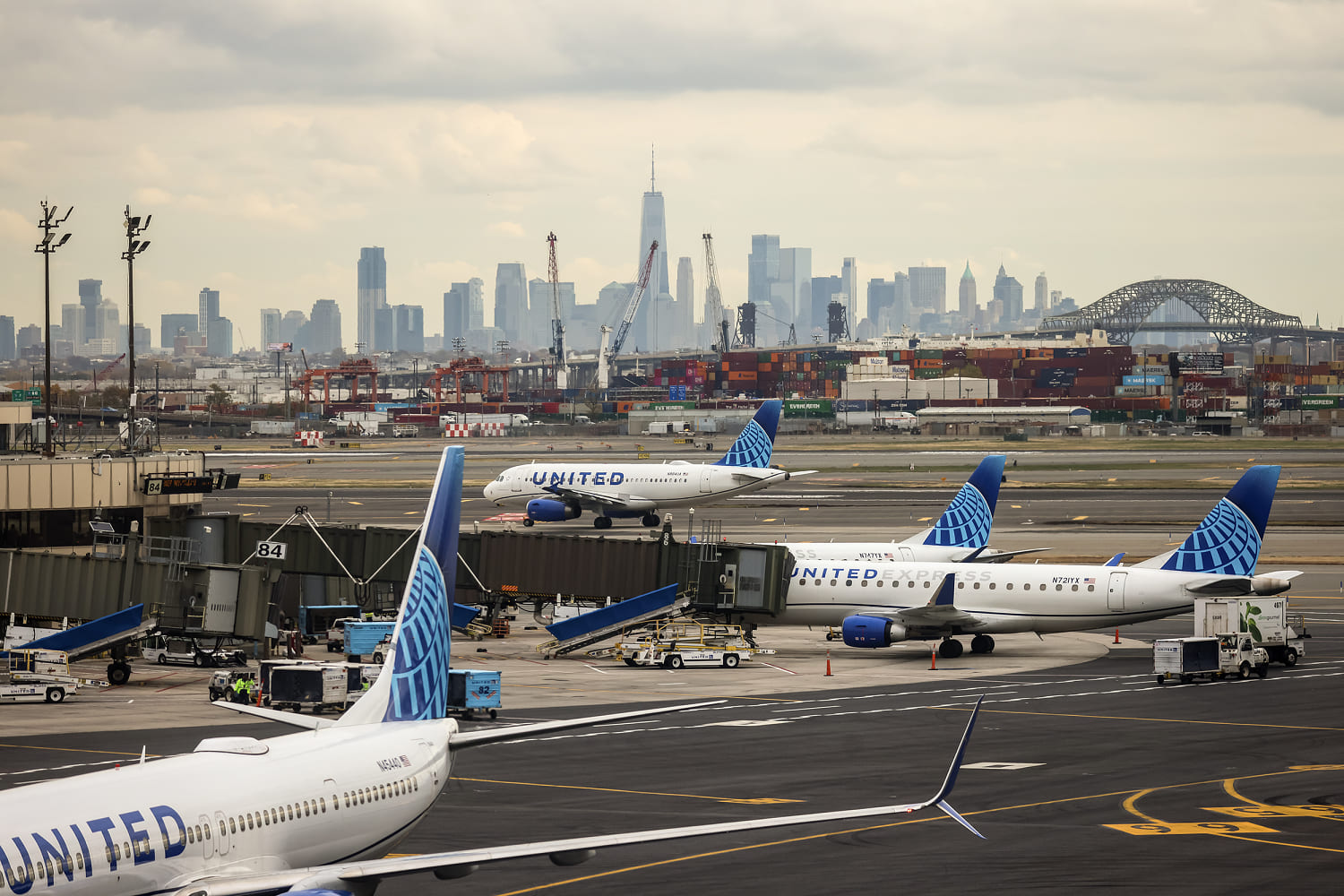
The coffee in Terminal 5 was lukewarm, tasting faintly of cardboard and burnt ambition.
Outside the floor-to-ceiling glass, a British Airways Boeing 777 sat motionless on the tarmac, its nose pointed toward the grey horizon like a hound straining against a leash. Inside the terminal, thirty thousand people stood frozen. They stared upward, necks craned toward the great amber arrival boards, watching rows of glowing destinations dissolve one by one into the cold void of delayed and cancelled. For a different view, read: this related article.
There was no smoke. There were no sirens. There was only the low, rising hum of collective anxiety—the quiet panic of parents missing weddings, surgeons missing surgeries, and weary travelers clutching crumpled boarding passes like lottery tickets that had just turned to ash.
For the second time in recent memory, the invisible nervous system of Britain's airspace had seized. And down below, locked in boardrooms wrapped in glass and polished chrome, airline executives were no longer just complaining. They were shouting. Related insight on this matter has been shared by AFAR.
Air traffic control is the modern world’s most invisible miracle. When it works, you never think about it. You sip your gin and tonic at thirty-thousand feet, blissfully unaware that you are threading a needle through a hurricane-force jet stream, separated from oncoming traffic by a sliver of airspace monitored by someone eating a stale sandwich in a darkened room in Hampshire.
We treat the sky like an endless ocean. It isn't. It is a series of invisible highways, meticulously paved by code, radar pings, and human intuition.
Consider what happens when that system stutters.
Imagine Sarah, an air traffic controller stationed near Swanwick. On a normal Tuesday, her mind is a high-speed processor of angles, weights, closure rates, and atmospheric pressure. She holds the lives of two thousand souls in her head at any given second. She speaks in a clipped, rhythmic cadence—calm, authoritative, steady.
Then, the screen flickers.
For a terrifying, heart-stopping fraction of a second, the targets vanish. When they snap back, the geometry has fractured. Flight data processors, burdened by legacy code and overwhelmed by the sheer volume of post-pandemic movement, simply choke.
"We are flying blindfolded on a tightrope," one veteran pilot muttered into his coffee cup as the second major glitch in months grounded flights across the United Kingdom.
Airlines—already battered by narrow profit margins, skyrocketing fuel costs, and the scars of global disruption—finally lost their patience. They didn't just issue press releases. They declared war on complacency. British Airways, easyJet, Ryanair, and Virgin Atlantic united in a rare chorus of fury, pointing a collective finger at the National Air Traffic Services (NATS).
The criticism was blunt. The infrastructure is aging. The contingency plans are reactive. The communication during crises is a black hole. When a technical failure ripples outward, grounding hundreds of flights and trapping tens of thousands of passengers on stationary planes for hours, the financial cost is astronomical. But the human cost is immeasurable.
Yet, reducing this crisis to a corporate turf war between airlines and air traffic controllers misses the deeper, more unsettling truth.
We have built a civilization dependent on systems that are too complex for us to fully comprehend, let alone maintain easily. We push efficiency to the absolute edge. We squeeze every ounce of capacity out of our transport networks, our supply chains, and our digital grids, leaving zero margin for error.
When everything works, it is poetry in motion. Over eight thousand aircraft cross European skies on a busy summer day, dancing an intricate ballet governed by physics and digital precision. But when a single line of code fails or a server overheats, the ballet turns into a traffic jam at five hundred miles per hour.
The airlines are right to demand answers. Passengers are right to demand accountability. But the real question hanging in that grey London sky is whether we are brave enough to rebuild the foundations before the next fracture turns from a delay into a tragedy.
The terminal lights flickered. Somewhere in the distance, a gate agent announced yet another postponement.
A young girl sitting near the window pressed her palms against the cool glass, breathing softly against the pane, watching the rain streak down the metal wing of an airplane that wasn't going anywhere tonight. Above her, the great empty sky waited, silent, indifferent, and profoundly fragile.