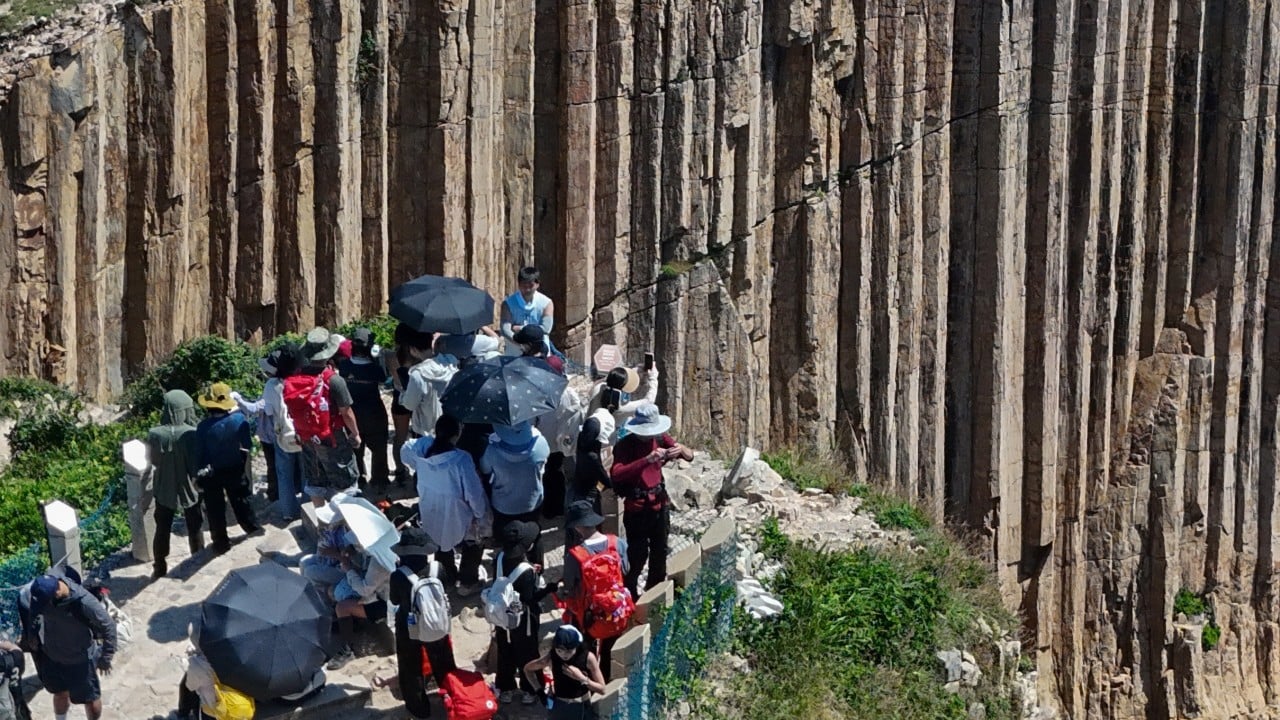
The air on a Hong Kong ridge does not merely warm; it presses. It is a heavy, saturated blanket that smells of damp earth, sun-baked granite, and the faint, salty tang of a sea that feels miles away, even when you can look down and see the ferries cutting white scars through Victoria Harbour.
Step onto a trail like the Dragon's Back or the steep stone staircases winding up toward Sunset Peak when the temperature clears thirty-three degrees Celsius, and you quickly realize that nature here is not indifferent. It is actively hostile to unprepared ambition.
Consider a hypothetical hiker we will call Marcus. Marcus is forty-two, reasonably fit, and possessed of that particular brand of urban optimism that assumes a weekend gym habit translates seamlessly into outdoor endurance. He packs a single five-hundred-milliliter bottle of water, slips on a pair of lightweight running shoes, and tells himself he will just do a quick loop before lunch. He forgets that concrete absorbs heat, but granite retains it. He forgets that humidity is a thief that steals the body's primary cooling mechanism—sweat—and leaves it to pool uselessly on the skin.
Two hours in, the shade vanishes. The canopy thaws into a blinding glare.
This is the exact moment the transition happens. The body shifts from an engine operating at peak efficiency to a closed system boiling over from the inside out.
Every year, as the subtropical heat tightens its grip on the SAR, emergency services brace for the inevitable tally. The headlines arrive with grim predictability: three hikers airlifted, unconscious, or collapsing from heat exhaustion on exposed trails. They are not reckless tourists throwing caution to the wind. They are locals, weekend warriors, people who simply miscalculated the invisible math of thermal stress.
To understand why a seemingly harmless afternoon walk can turn into a neurological crisis, you have to look past the number on the thermometer. Thirty-three degrees Celsius does not sound catastrophic on paper. Air-conditioned offices make us arrogant. We forget that direct solar radiation combined with high relative humidity creates a wet-bulb globe temperature that feels vastly hotter than the weather app suggests.
Imagine your internal organs operating as a delicate chemical refinery. At normal core temperatures, enzymes fold precisely, blood pumps efficiently to the skin to dissipate heat, and the brain receives a steady, oxygen-rich current. As ambient heat rises and hydration lags, that refinery begins to stall.
First comes the warning shot: a dull throb behind the eyes, a sudden inexplicable irritability, legs that feel as though they are wading through wet cement. That is heat exhaustion. It is the body screaming for intervention.
Ignore it, and you cross a terrifying threshold.
Heatstroke is not merely being "really tired and hot." It is a systemic collapse. When core body temperature spikes past forty degrees Celsius, the brain begins to cook. Proteins denature. Cellular membranes leak. Confusion sets in, replaced swiftly by delirium, seizures, and unconsciousness. Without rapid cooling—dousing in cold water, shade, aggressive IV rehydration—multi-organ failure follows with terrifying speed.
On a steep Hong Kong trail, help is rarely a few steps away. There are no drive-thrus, no shaded cafes, no air-conditioned sanctuaries. There are only stone steps, scrub brush, and an unsparing sky. When a hiker collapses near the peak of a remote hill, the rescue operation is an intricate, agonizing ballet of government flying service helicopters, scrambling paramedics, and stretcher teams hauling heavy gear up vertical inclines under the exact same punishing sun that felled the victim.
Why do we keep making the same mistake?
Part of the answer lies in our psychological relationship with leisure. We view nature as a sanctuary, a place of healing away from the neon geometry of the city. We subconsciously project safety onto the landscape. If the trees are green and the path is marked, how dangerous can it really be?
We also suffer from profound optimism bias. We plan for the best-case scenario—the sixty-minute hike, the clear view, the triumphant summit selfie. We rarely pack for the worst-case scenario: the twisted ankle that leaves us stranded for hours, the sudden exhaustion that halves our pace, the water bottle that runs dry when the sun is highest.
True preparedness is not about fear. It is about respect.
When the Hong Kong Observatory hoists the very hot weather warning, it is not an administrative suggestion to stay indoors. It is a weather condition as severe and structural as a typhoon signal, just slower and more insidious. It demands a radical shift in how we approach the outdoors.
It means starting at dawn, long before the sun has baked the granite blocks of the MacLehose Trail. It means doubling or tripling the water you think you need, recognizing that plain water alone is insufficient when electrolytes are pouring out of your pores in a relentless saline cascade. It means carrying an emergency whistle, a fully charged phone with offline maps, and an unshakeable willingness to turn around when the chest tightens and the head swims.
The trails will still be there tomorrow. The shade will return when the sun dips below the jagged skyline of the peaks.
Until then, the mountain keeps its own counsel. It offers beauty, solitude, and perspective, but it exacts a strict toll from those who mistake its quiet trails for a forgiving playground. Listen to the warning signs written in the sweat on your brow and the heavy thrum of your pulse. Respect the heat, because the mountain never blinks.