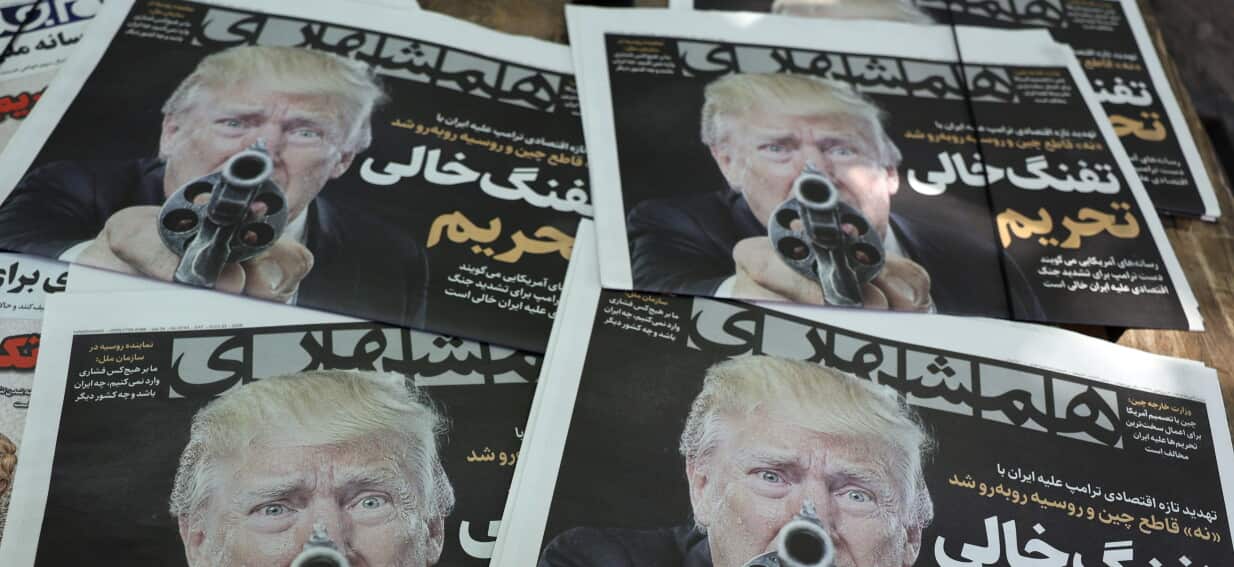
The desk in the corner of the room always felt too heavy for the paper sitting on it. When statecraft moves from spoken diplomacy to the quiet machinery of finance, the shift makes no sound. It is a slow compression.
Consider a merchant sitting in a stone-floored shop in the Middle East, watching the shipping rates climb because invisible red tape has tangled around a distant harbor. He does not care about the rhetoric echoing through congressional halls. He cares about the price of flour and whether his cargo will clear the dock before the currency shifts beneath his feet.
For decades, modern powers have reached for the dial of economic exclusion as a substitute for direct conflict. The logic is simple, almost seductive: isolate a nation's ledger, and you break its will. Yet every action triggers an invisible equal and opposite reaction. When the United States contemplates measures against Iran that have never been seen before, the conversation rarely lingers on the mechanics of what happens next. The focus stays on the threat, the posture, the grand strategy.
We forget the plumbing.
Financial isolation is not a wall. It is a maze of mirrors. When a central bank is cut off from the global artery of commerce, it does not simply wither. It adapts. It mutates. It builds clandestine corridors through grey markets, cryptocurrency channels, and shadow fleets of rusted tankers that ghost across midnight seas with their transponders dark.
Look at the history of these measures. Each tightening of the economic screw forces the target deeper into unconventional survival. What begins as a targeted strike against a regime's revenue eventually alters the structural flow of global energy markets. The pressure does not vanish; it reroutes. It finds the path of least resistance through willing buyers in distant capitals who look at the sanctions not as a moral imperative, but as a discount.
When policy advisors sketch out unprecedented restrictions, they are playing a high-stakes game of economic physics. Push too hard, and the target currency breaks completely, triggering humanitarian shockwaves that hurt the very citizens who yearn for open doors. Push too softly, and the policy becomes white noise, a routine press release dismissed by the very actors it targets.
The real story of these modern measures is not written in the executive orders themselves. It is written in the gray spaces where diplomacy fails and adaptation begins. It is the story of a global financial system fracturing into regional fortresses, each nation guarding its own gates against the day it might find its own name at the top of an exclusion list.
Every time a new frontier of economic pressure is crossed, the architecture of international trade warps a little more. The baseline shifts. What was once unthinkable becomes standard operating procedure. And somewhere in the dark water, another tanker slips past the horizon, carrying oil that official ledgers claim does not exist.