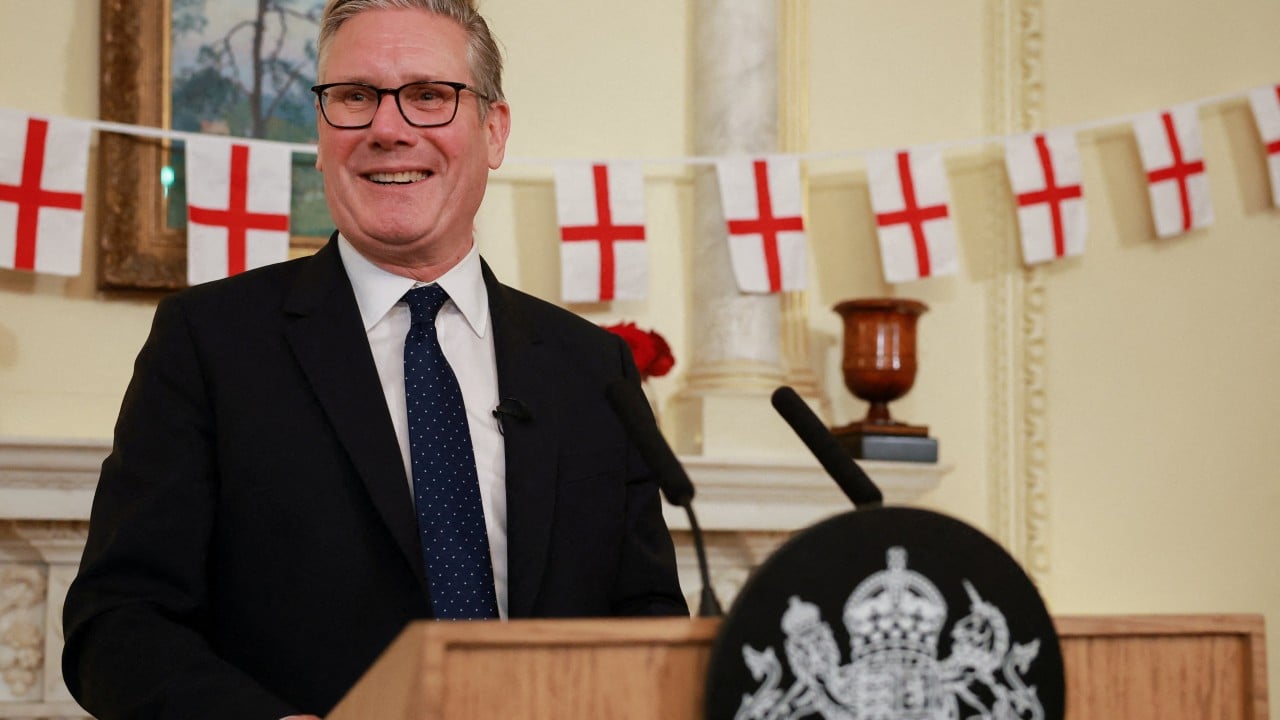
The political commentariat is currently hyperventilating over a ghost. They see a headline about Donald Trump threatening to "punish" Keir Starmer for a supposed "betrayal" on Iran policy and they immediately default to the same tired script: the "Special Relationship" is in terminal decline, Britain is adrift, and a diplomatic wrecking ball is headed for Downing Street.
This narrative is not just lazy; it’s wrong. It ignores the cold, hard mechanics of international power.
The idea that Trump is genuinely wounded by Starmer’s shift toward the JCPOA (Joint Comprehensive Plan of Action) or a more nuanced Tehran strategy assumes Trump operates on a moral plane of loyalty. He doesn't. Trump operates on leverage. By positioning the UK as a friction point on Iran, Starmer isn't "betraying" an ally—he is creating a bargaining chip for the inevitable trade and defense negotiations of 2025.
The Myth of Transatlantic Monoliths
The mainstream press loves the "loyalty" angle because it reads like a soap opera. They want you to believe that foreign policy is dictated by whether two men liked each other's speeches at a NATO summit.
In reality, the UK’s pivot on Iran is a calculated move to maintain European relevance. If Starmer marched in total lockstep with a potential second Trump administration on every Middle Eastern file, he would lose his only remaining seat at the table with E3 partners (France and Germany). Britain’s value to Washington has always been its ability to act as a bridge. A bridge that is bolted firmly to only one side isn't a bridge; it’s a pier. And piers get walked on.
I’ve watched diplomatic "crises" like this play out for two decades. The noise you hear now is theater. The reality is a sophisticated hedging strategy that Starmer’s team is executing with surprising grit.
Why "Punishment" is a Paper Tiger
When Trump talks about punishment, the media thinks in terms of tariffs or intelligence blackouts. They miss the tactical reality.
- Defense Dependency: The US defense industrial base is more integrated with UK Tier-1 suppliers than ever. You cannot "punish" the UK’s defense sector without punching a hole in the supply chain for the F-35 program.
- The AUKUS Anchor: The AUKUS submarine pact is the crown jewel of Pacific strategy. It is too big to fail and too important to Trump’s anti-China posture to be derailed by a spat over Iranian centrifuges.
- Financial Intelligence: The City of London remains the primary node for tracking global illicit flows. If the US wants to actually squeeze Iran, they need British eyes on the money.
Trump knows this. Starmer knows this. The only people who don't seem to know this are the pundits writing obituaries for Anglo-American cooperation.
The Logic of the Pivot
Critics argue that Starmer is being "weak" by not following the "maximum pressure" campaign favored by the MAGA wing. Let’s look at the data. Maximum pressure, while successful in cratering the Rial, has not stopped enrichment. In fact, since the US withdrawal from the nuclear deal in 2018, Iran’s breakout time has shrunk from months to days.
Starmer isn't being a "lefty dove." He is looking at a failed policy and refusing to double down on it. That isn't betrayal; it’s basic competence.
Imagine a scenario where the UK blindly follows a 2025 Trump administration into a full-scale maritime blockade of the Persian Gulf. The UK’s Royal Navy, already stretched thin, would be forced to pick up the slack in the Red Sea and beyond, likely without the support of European neighbors who would view the escalation as a unilateral American whim. By signaling a different path now, Starmer is setting the terms of engagement before the first tweet is even sent from the Oval Office.
Dismantling the "Special Relationship" Delusion
The "Special Relationship" is a phrase used by British politicians to feel important and American politicians to get what they want for free.
The consensus view is that Britain must "earn" this status through total compliance. This is the mindset of a vassal state. A truly sovereign power understands that friction is a sign of health. If you never disagree, you aren't an ally; you’re an employee.
Starmer’s "betrayal" is actually the first sign of a British foreign policy that isn't dictated by fear of a Washington tantrum. It’s a move toward a multi-polar reality where London realizes it can’t afford to be the 51st state, especially when that state's primary export is volatility.
The Trade Deal Carrot
There is a loud contingent claiming this Iran stance will kill any hope of a UK-US Free Trade Agreement (FTA).
Newsflash: The FTA was already dead.
Biden didn't want it. Trump’s "America First" doctrine makes a comprehensive, fair trade deal nearly impossible because his baseline for a "fair" deal is one where the other side loses. Starmer realizes that sacrificing Iran policy for the hope of a trade deal is like selling your house to buy a lottery ticket. He is choosing to keep the house.
Tactical Divergence is the New Diplomacy
We are entering an era of "pick-and-mix" alliances. You can be aligned on China (AUKUS) and Ukraine, while being diametrically opposed on Iran and Climate.
The competitor article suggests this divergence is a flaw. I argue it’s a feature. It allows the UK to maintain backchannels that the US cannot. It provides a "good cop" option in the Middle East that prevents total regional alignment with Moscow and Beijing.
If Starmer were to fold today, he would show Trump exactly how to break him. By holding his ground on Iran, he is telling the incoming administration: "If you want our compliance, you’re going to have to pay for it."
Stop Asking if They Like Each Other
The most common question in the "People Also Ask" boxes is some variation of "Do Trump and Starmer get along?"
It is the wrong question.
The right question is: "What does the UK have that Trump cannot afford to lose?"
The answer is geographic positioning, intelligence assets, and a seat at the European table. None of those things change because Starmer wants to keep the JCPOA on life support.
The "punishment" Trump threatens is a rhetorical tool used to satisfy a domestic base that demands "strength." It is not a policy white paper. Treating it as one is a fundamental misunderstanding of the man and the office.
The Cost of the Contrarian Path
Is there a risk? Of course. Trump is nothing if not vindictive. There will be public insults. There might be symbolic tariffs on Scotch whisky or British steel.
But these are temporary costs. The long-term cost of being a mindless satellite for a chaotic administration is far higher. It leads to institutional decay and the total loss of diplomatic credibility with the rest of the world.
Starmer is taking the hit now to avoid the collapse later. He is betting that the structural realities of the NATO-Five Eyes-G7 nexus are stronger than a personalized grudge.
It’s a high-stakes poker game, and for the first time in a decade, a British Prime Minister is actually playing his hand instead of just showing his cards and asking for permission to stay at the table.
The "betrayal" isn't a lapse in judgment. It’s the sound of a middle power finally remembering how to act like one.
Stop reading the theater reviews. Start watching the board.