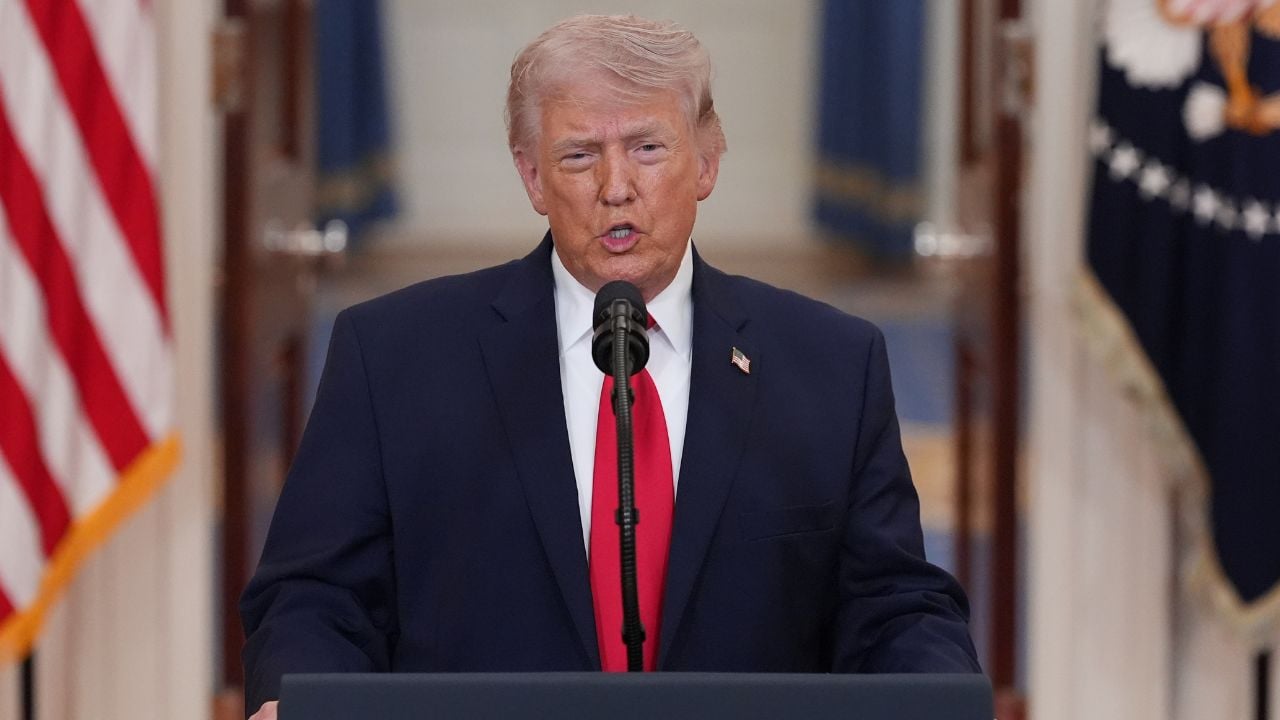
Walk through the Grand Bazaar in Tehran right now and you'll see a ghost town of empty stalls and anxious faces. It's not just "bad" out there; it's a full-scale economic meltdown. But if you talk to the hardliners in the Ebrahim Raisi administration or the inner circle of the Supreme Leader, they aren't panicking. They're waiting. They're convinced that Donald Trump, despite his "Economic Fury" campaign and the recent naval blockade, is the one who will eventually blink.
It sounds like a delusion, doesn't it? When your currency is trading at over 1.1 million rial to the dollar and meat has become a luxury item for 70% of your population, "waiting it out" seems like a suicide pact. Yet, this is the core of Iran's 2026 strategy. They believe the U.S. political system is too fractured and the global oil market too fragile to sustain a permanent war footing.
The Math of a Broken Economy
The numbers coming out of the Statistical Center of Iran are staggering. We're looking at a year-on-year inflation rate of 71.8% as of March 2026. For the average family in a rural province, that number is closer to 86%. When you're paying 140% more for bread than you were last year, political ideology starts to lose its flavor.
The World Bank estimates the Iranian economy shrank by 2.7% in the last fiscal year, and with the recent strikes on steel plants in Isfahan and Ahvaz, that contraction is expected to hit 10% by year-end. This isn't just a "recession." It’s the systematic dismantling of Iran’s industrial base.
- Oil Revenue: Virtually evaporated. The blockade of the Strait of Hormuz has turned the Persian Gulf into a parking lot for tankers that can’t move.
- Manufacturing: The strikes on Mobarakeh Steel didn't just break machines; they broke the supply chain for everything from cars to construction.
- The Digital Blackout: The 2026 internet shutdown designed to crush protests also killed the "Instagram economy"—the thousands of small, women-led businesses that were the last safety net for many families.
Why the Clerical Elite Won't Give In
So, why hasn't the regime folded? It's easy to say they don't care about their people, and while there's truth to that, the logic is deeper. They've watched Trump for years. They see his rhetoric—"unconditional surrender" one day and "very good conversations" the next—as a sign of a leader who wants a deal more than a war.
The Iranian leadership views the current ceasefire as a tactical win. They’re using Pakistani intermediaries to test the waters while publicly accusing the U.S. of "Nazi-style" propaganda. By keeping the Strait of Hormuz closed or threatened, they’ve driven Brent Crude past $120 a barrel. They know that high gas prices are the one thing that can sink a U.S. president's approval rating faster than a lost war.
Honestly, they're betting on "Trump fatigue." They think if they can hold the line through the summer, the pressure from American allies and the volatility of the global markets will force the White House to soften its "six demands."
The Disconnect Between the Street and the Palace
There’s a massive mistake Western analysts often make. They assume that economic pain automatically leads to regime change. It doesn't. Not when the Islamic Revolutionary Guard Corps (IRGC) controls the black market.
While the formal economy is dying, the IRGC’s smuggling networks are thriving. They siphon off the remaining oil, move it through Turkey or the UAE, and use the proceeds to fund the very drone programs that Trump is trying to blow up. For the guys at the top, the crisis is a way to consolidate power. If you control the food vouchers, you control the people.
The Lebanon Factor
You can't understand the current standoff without looking at Lebanon. Tehran’s national security adviser, Mahdi Mohammadi, has been clear: no deal happens without restraining Israel’s operations against Hezbollah. For Iran, their regional proxies are not bargaining chips; they are their front-line defense. They’d rather let the rial drop to 2 million than abandon their "Strategic Depth" in the Levant.
What Happens if Nobody Blinks
We're in a dangerous game of "chicken" where both drivers think the other is about to swerve. Trump has his red lines—no nuclear weapons, period. Iran has its red lines—no "surrender" terms that look like a return to the 1950s.
If you're watching this from the outside, don't expect a sudden breakthrough. The Islamabad talks have already shown how wide the gap is. Trust is zero. The U.S. team, led by JD Vance and Jared Kushner, is pushing for a total reset, while Iran’s Foreign Minister Abbas Araghchi is trying to buy time.
The immediate reality for anyone doing business in the region or trying to track global energy:
- Expect $150 Oil: If the Strait stays closed through May, $120 will look like a bargain.
- Watch the Vouchers: The shift to "e-vouchers" in Iran is a sign the regime is moving to a permanent "war economy" model.
- Internal Cracks: Keep an eye on the strikes. The bazaars and the steelworkers are the groups that can actually shake the regime, far more than the student protests.
The leaders in Tehran aren't looking at the price of bread in the Grand Bazaar. They're looking at the ticker for Brent Crude and the latest polls out of Washington. Until one of those moves significantly, the "blink" isn't coming.