You don't need a PhD in international relations to see what's happening right now. The 39-day war in West Asia has hit a "too-weak" ceasefire, and the dust is settling on a reality that Washington doesn't want to admit. Iran won. It didn't win by leveling a city or planting a flag on the White House lawn. It won by surviving a targeted onslaught from the world's most powerful military and a nuclear-armed Israel, and it's still standing at the end of the 12th round.
Navdeep Suri, India’s former ambassador to the UAE and Egypt, didn't mince words this week. He basically laid out the autopsy of American influence in the Gulf. When you look at the 10-point peace plan Trump just signed off on, it’s clear the US is looking for an off-ramp, not a victory lap. This isn't just about a regional skirmish; it's the beginning of a messy, loud decline for a once-great superpower.
The survival win that changed the game
If you go into a ring with a heavyweight champion and you're still breathing after the final bell, you've won. That’s Iran's position. The US and Israel launched Operation Midnight Hammer with the goal of ending the "Iranian threat" once and for all. They bombed, they struck nuclear facilities, and they even sank the IRIS Dena—a ship that had just been a guest of the Indian Navy in Vizag.
But guess what? Iran hit back. Hard. They didn't just target military bases; they went after the infrastructure of US allies in the Gulf. They started squeezing the Strait of Hormuz, the jugular vein of the world's oil supply. Suddenly, the "unbeatable" US found itself in a bind. Trump, who loves to talk big, realized that a prolonged war would wreck the global economy right when he needs it to look strong.
Why the 10 point plan looks like a surrender
The ceasefire brokered by Pakistan and China is a massive tell. Look at what's in it. Trump is calling it a "decisive victory" on Truth Social, but the facts on the ground say something else. Iran demanded a toll booth in the Strait of Hormuz. They demanded an end to the "great Satan" rhetoric in exchange for a pause in uranium enrichment—an enrichment they’ve already pushed far enough to have what they need.
- Pakistan's new role: For the first time in decades, the US had to rely on Islamabad as the primary mediator.
- The Hormuz Factor: Iran proved it can shut down 20% of the world's oil at will.
- The Resilience of Proxy Networks: Hezbollah and other groups didn't disappear; they stayed active throughout the bombing.
How the US lost its grip on the Gulf
For years, the Gulf states—Saudi Arabia, the UAE, Qatar—relied on the US as their ultimate security blanket. That blanket just got shredded. When the missiles started flying toward Gulf airports and residential areas, the US couldn't stop them all. These countries are now realizing that being a "major non-NATO ally" doesn't mean you're safe from Iranian drones.
Ambassador Suri pointed out something crucial. These nations are pragmatic. They aren't going to wait around for a declining US to save them. They're already talking to Tehran. They're talking to Beijing. If the US can't protect its own bases in the region, why should the UAE or Saudi Arabia tie their entire future to Washington?
The Indian autonomy dilemma
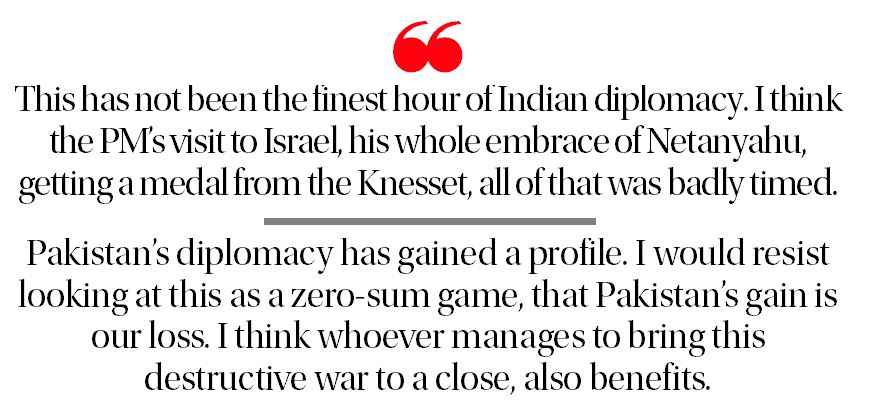
We’ve seen a shift in New Delhi, too. India has spent years trying to balance its "four corners": the US, Israel, Iran, and the Gulf. But during this 39-day war, India's tilt toward Israel became glaringly obvious. Prime Minister Modi was in Israel right before the attacks kicked off. Then, the US sank an Iranian ship that had just been our guest in Vizag.
That delay in reacting? It cost us. Suri argues we've sacrificed a degree of our strategic autonomy. We’re now scrambling to claw it back. We need that Iranian oil, and we need the Chabahar port to stay viable. If Iran is the winner of this round, India has to rethink how much it bets on a US that seems more interested in "regime change" rhetoric than actual regional stability.
Why Trump is declaring victory anyway
You've got to hand it to Trump; he knows how to spin. He’s telling the world the US has "met and exceeded all military objectives." He’s claiming he’s removing "nuclear dust" from Iran. It’s classic. But as Suri mentioned, Trump is a leader who can say two contradictory things in 24 hours and his base will believe both.
The reality is simpler. The US is in a bind. It started a war without a clear objective and realized the "off-ramp" was getting narrower by the day. By accepting Iran's 10 demands—or at least a version of them—Trump is choosing a two-week pause over a total regional meltdown. It's a face-saving exercise, not a triumph.
What happens after the two week pause
Don't expect this ceasefire to last forever. Netanyahu has already said it doesn't extend to Lebanon. Drone strikes are still happening as we speak. This is a "too-weak" truce that barely keeps the lid on the pot.
- Oil Prices: Expect volatility. If the Strait stays "open" but under Iranian shadow-control, prices won't drop back to 2024 levels.
- Regional Re-alignment: Watch for the Gulf states to sign more treaties with China and Russia.
- Israel's Isolation: If the US pulls back, Israel is left fighting a multi-front war with a emboldened Iran.
The end of the American era in West Asia
The decline of a superpower doesn't happen overnight. It happens in 39-day increments. It happens when you can't protect international waterways you've patrolled for a century. It happens when you have to ask Pakistan to talk to your enemies because you've lost the phone number.
Iran didn't need to destroy the US military to win. They just needed to outlast the American appetite for a "forever war" in the sand. They did it. While Washington argues about "regime change" and "nuclear dust," Tehran is setting up toll booths in the world's most important shipping lane.
If you're watching the news and wondering who's actually in charge of the Middle East right now, look at who dictated the terms of the ceasefire. It wasn't the guy in the White House. It was the regime that survived the best the White House could throw at them. Start looking at your energy stocks and regional investments through a post-US lens. The transition has already begun. Reach out to your regional analysts and adjust your portfolios for a world where the Strait of Hormuz has a new landlord.