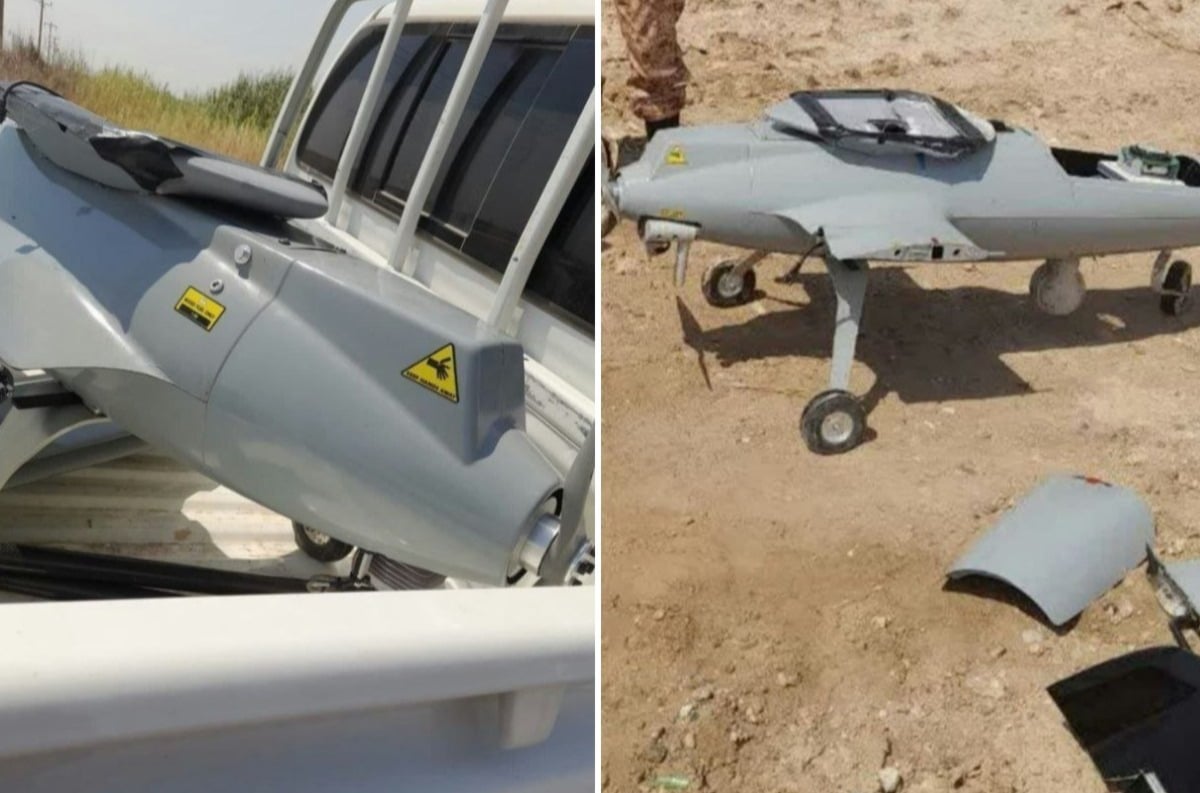
The headlines are reading like a predictable Cold War thriller. Tehran claims its air defense systems just plucked a Polish-made reconnaissance drone out of the sky near its border. The media is rushing to map out the geopolitical implications, tracing supply chains from Warsaw to the Middle East, speculating on NATO espionage, and breathlessly questioning whether this signals a dangerous escalation in regional surveillance.
They are asking all the wrong questions. You might also find this related story useful: Two Distant Lands Just Quietly Bet Their Futures on Each Other.
The lazy consensus in modern defense reporting accepts state-sponsored media claims at face value, treating every reported drone downing as a triumph of electronic warfare or kinetic intercept. Having spent years analyzing hardware signatures and airspace incursions in contested zones, I know the reality on the ground is rarely about the hardware itself. The focus on the drone's country of origin is a deliberate distraction. The real story isn't that Iran shot down a Polish drone; the story is why both sides want you to believe this specific narrative.
The Myth of the Monolithic Supply Chain
Mainstream coverage assumes that if a drone is "Polish-made," it represents a direct line of intelligence gathering tied to European state actors or their immediate allies. This reveals a fundamental misunderstanding of how modern unmanned aerial vehicles (UAVs) are manufactured and distributed. As reported in latest coverage by NBC News, the effects are worth noting.
Step into any modern defense tech lab, and the illusion of a pure national supply chain evaporates. Off-the-shelf components, commercial-grade carbon fiber, open-source flight controllers, and dual-use optical sensors cross global borders daily. A drone assembled in Poland could easily feature Taiwanese chips, American GPS modules, and German motors, bought through front companies in the UAE and deployed by actors completely unrelated to NATO.
When a state actor parades wreckage and highlights a specific Western manufacturing origin, it is an exercise in political theater, not forensic intelligence.
- The Deception: Labeling the hardware to imply direct foreign state intervention.
- The Reality: Commercial and tactical drone markets are so thoroughly gray-marketed that origin stamps are practically meaningless.
- The Motivation: Building a domestic narrative of external victimhood and technological superiority over Western tech.
Why Air Defense Claims are Frequently Staged
Let's address the premise that dominates the "People Also Ask" sections of every major news engine: How effective are Middle Eastern air defenses against Western reconnaissance tech?
The brutal truth is that many celebrated shootdowns are either cheap commercial quadcopters blown out of proportion or deliberate setups. Imagine a scenario where an intelligence agency intentionally flies an obsolete, easily detectable drone into sovereign airspace. They aren't looking for data. They are looking to see which radar frequencies light up, where the mobile battery units move, and how long the command chain takes to authorize a launch.
If Iran did bring down a drone, there is a distinct possibility they took the bait.
[Decoy Drone Enters Airspace]
       │
       ▼
[Air Defense Radar Activates] ──► [Electronic Signatures Mapped by Standoff Aircraft]
       │
       ▼
[Kinetic Missile Launch] ───────► [Stockpile Depleted / Position Compromised]
By celebrating the destruction of a low-cost asset, a military often exposes the exact architecture they need to keep hidden. Celebrating the downing of a drone without analyzing what information was surrendered to achieve that downing is tactical blindness.
The Economics of the Asymmetric Skies
The financial math of modern airspace defense is broken, and nobody wants to talk about it. Mainstream analysts look at a drone incident and weigh the political fallout. They ignore the spreadsheet.
When a state utilizes a multi-million-dollar surface-to-air missile system to destroy a drone that costs less than a used sedan, the intruder wins. Even if the drone is a sophisticated Polish tactical platform like a FlyEye, the cost-to-kill ratio remains catastrophically skewed against the defender. Air defense networks are finite. Missile stockpiles take months, sometimes years, to replenish due to specialized component bottlenecks.
Every cheap platform a military is forced to engage erodes its long-term readiness for an actual high-intensity conflict. Iran showcasing a successful intercept isn't necessarily a demonstration of strength; it is a confession that they are willing to spend premium kinetic assets on low-tier provocations.
Redefining the Surveillance Threat
Stop looking at the sky for wings. The fixation on fixed-wing reconnaissance drones ignores the actual vector of modern espionage.
High-altitude long-endurance platforms leave massive radar cross-sections. True tactical intelligence in highly contested environments has shifted toward distributed networks, cyber intrusion, and localized, short-range systems that never register on an air defense grid. A country worried about a single Polish drone crossing its border is looking for a burglar at the front door while the cyber infrastructure has already left the back window wide open.
The downside to this contrarian view? It demands strategic patience. It requires acknowledging that your adversary might be smarter than the state media apparatus claims. It forces analysts to admit that we cannot know the true owner of a piece of sky-debris until the serial numbers on the internal circuit boards are independently verified—something that almost never happens in the echo chamber of state-run press releases.
The next time a state claims to have knocked a foreign drone from the clouds, ignore the flag painted on the wing. Look at the radar sites that blinked, calculate the cost of the missile fired, and ask who actually benefited from the wreckage hitting the dirt. Stop buying into the theater of the sky. The real war is being fought on the frequencies you can't see, by actors who don't sign their work.