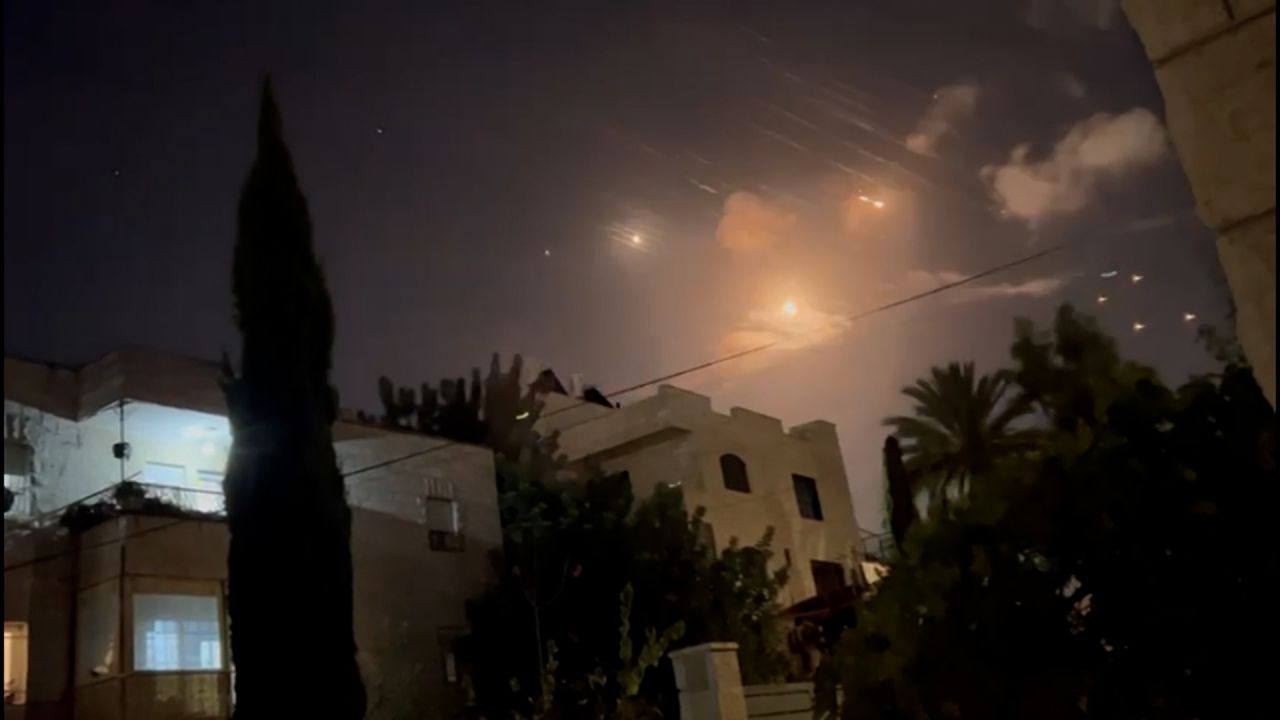
The Fragment Fallacy
Mainstream media is obsessed with the debris. They want you to stare at a twisted piece of metal near a diplomatic residence and feel a specific, curated type of dread. They call it an escalation. They call it a "hit." I call it a failure of analysis.
If you’re tracking the geopolitical pulse by counting where shrapnel lands, you’re looking at the scoreboard while the stadium is being sold from under you. The "Iranian missile fragment hits US consul residence" headline is a masterclass in focusing on the tactical symptom while ignoring the strategic disease.
In twenty years of analyzing defense systems and regional power plays, I’ve seen this movie before. Everyone argues about whether the fragment was a "direct hit" or a "lucky bounce." It doesn’t matter. What matters is the underlying math of the interception and what it reveals about the obsolescence of stationary high-value targets.
The Lazy Consensus of "Intercepted"
The media loves the word "intercepted." It sounds clean. It sounds like a win. In reality, an interception is just a high-velocity physics problem that ends in unpredictable scattering.
When an Arrow-3 or a Patriot PAC-3 hits a ballistic threat, that energy doesn't just vanish. It redistributes. If you fire a thousand kilograms of steel and explosive into the upper atmosphere and blow it up, that mass is coming down. Usually, it comes down on whatever happens to be underneath the flight path.
The fact that a fragment hit a consul residence isn't a sign of Iranian precision or a failure of Israeli defense. It is the mathematical certainty of urban-centered missile defense. We have built a world where we "protect" cities by turning incoming threats into a rain of supersonic junk.
The Real People Also Ask
- Is the US Consul under attack? No. Being under the debris field of a successful interception is not the same as being targeted.
- Is this a "Red Line"? Red lines are for politicians who haven't looked at a supply chain lately.
- Will this lead to war? We are already in a state of kinetic friction. The fragment is just the sparks.
The Sovereign Wealth of Kinetic Energy
Let’s talk about the cost-exchange ratio. This is where the "experts" get it wrong. They talk about the price of the Iranian missile versus the price of the interceptor.
- Iranian Missile: Relatively cheap, mass-produced, often using off-the-shelf components.
- Interceptor: Millions of dollars per shot, high-end sensors, limited inventory.
The "lazy consensus" says Israel and the US won because the missile didn't explode on its target. The contrarian truth? Iran wins every time an interceptor is fired. They are depleting the most sophisticated magazines in the West with "junk" that still causes diplomatic incidents when it falls on a backyard in Jerusalem or a residence in Tel Aviv.
I’ve watched defense budgets evaporate because leaders refuse to admit that stationary defense is a losing game. You cannot indefinitely defend a fixed point against a saturated threat environment. The fragment at the consul residence is a physical manifestation of that bankruptcy.
The Architecture of Vulnerability
We are obsessed with "hardening" sites. We put up concrete barriers, we install blast-resistant glass, and we park a battery of missiles nearby.
Stop trying to harden the target. Start making the target irrelevant.
The US consul residence is a relic of 20th-century diplomacy that requires physical presence in a high-threat kinetic zone. In a world of decentralized communication and distributed power, why are we still anchoring our geopolitical prestige to specific ZIP codes that sit directly under the most contested airspace on the planet?
If you want to avoid fragment damage, you don't build a better umbrella. You move out of the rain.
The Intelligence Gap
The reporting focuses on the physical damage. "Broken windows," "structural cracks," "panic."
Meanwhile, the real story is the Signal Intelligence (SIGINT) harvest. Every time a missile is launched and intercepted, every sensor in the region lights up. Frequencies are recorded. Reaction times are clocked. Tracking algorithms are tested against real-world maneuvers.
Iran didn't need that fragment to hit the building to get what they wanted. They wanted the data. They wanted to see how the system breathed. They wanted to see the "handshake" between US and Israeli sensor arrays.
The fragment is the trash left over from a high-stakes digital robbery. And the media is busy interviewing the janitor about the state of the floor.
The Hard Truth About "Alliances"
This incident highlights the friction in the "seamless" US-Israel security apparatus. When US assets are damaged by interceptors fired by their hosts to stop threats from a mutual enemy, the legal and diplomatic "synergy" (to use a word I despise) starts to fray.
Who pays for the residence repair? Is it an act of war by Iran, or a collateral consequence of Israeli defense? These are the questions that keep JAG officers awake at night while the public argues about "escalation."
Why You’re Looking at the Wrong Map
- The Kinetic Map: Shows where the missiles fly. (What the news covers).
- The Industrial Map: Shows where the interceptors are built and how fast they can be replaced. (The real crisis).
- The Data Map: Shows who is learning the most about the other's electronic warfare capabilities. (The winner's circle).
If you’re still on Map 1, you’re a spectator. If you’re on Map 3, you’re a player.
The Friction of Reality
I’ve seen this play out in private sector security too. Companies spend millions on firewalls (the interceptors) while their data (the target) is sitting in a format that makes it easy to steal.
The missile fragment isn't the story. The story is that we are still playing a game of "fortress" in an era of "fluidity." We are defending 1950s concepts of territory with 2020s technology, and we are surprised when the physics of the situation bites us.
The residence was hit because it was there. It was there because we are addicted to the optics of "standing firm."
Stop Measuring Success by "Interceptions"
A 100% interception rate is still a failure if the debris creates a diplomatic crisis or if the cost of the defense bankrupts the protector.
The Iranian missile program isn't about hitting targets anymore. It’s about creating a "threat atmosphere" where the cost of existing in a space becomes higher than the value of the space itself. Every fragment that falls on a sensitive building is a tax on Western presence in the Middle East.
We are being taxed into irrelevance, one "successful interception" at a time.
If you want to understand the next decade of conflict, ignore the craters. Watch the inventory levels. Watch the sensor logs. And for heaven's sake, stop acting surprised when gravity brings down what the missiles blew up.
The fragment didn't "hit" the residence. The residence was simply in the way of a decaying status quo.
Stop looking at the sky and start looking at the ledger.


