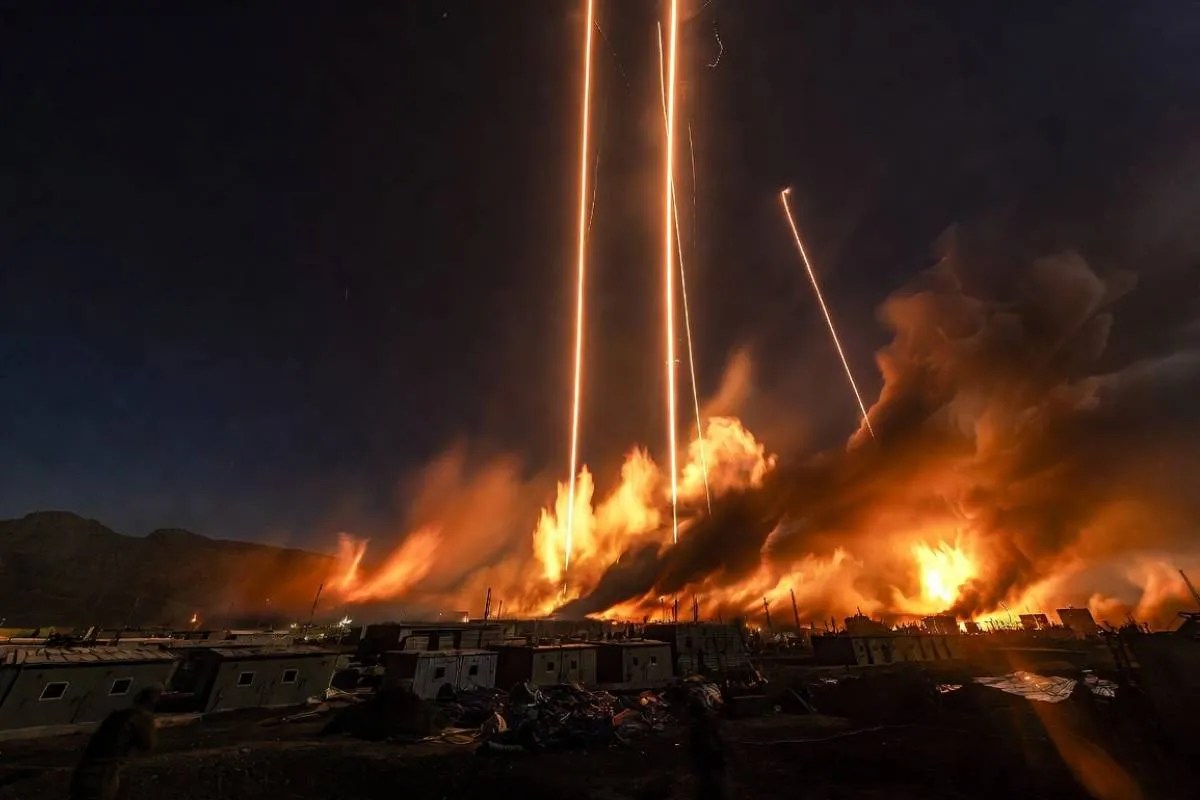
The siren's wail in Erbil isn't just a sound anymore. It’s a recurring heartbeat of a city caught in a geopolitical vice. When Iranian missiles tore through the night sky toward Kurdish targets in northern Iraq recently, the world saw another "military update." But for those watching the tactical shift in Tehran, this wasn't just a random burst of aggression. It was a calculated message written in ballistic fire.
Seven soldiers are dead. Houses are rubble. The smoke hasn't even cleared, yet the narrative is already being sanitized by official press releases. You've seen the headlines. They talk about "terrorist hubs" or "Mossad bases." Let’s look at what’s actually happening on the ground because the standard news cycle is missing the point. Iran isn't just hitting targets; it’s testing the limits of Iraqi sovereignty and Western patience in a way that should make everyone nervous.
Why Erbil stays in the crosshairs
Iraq’s Kurdistan region is an anomaly. It’s pro-Western, relatively stable, and sits on a goldmine of resources. That makes it a massive problem for Tehran. By striking Erbil, Iran achieves three things at once. First, it tells the Kurdish leadership that their friendship with Washington won't protect them. Second, it signals to Israel that nowhere is out of reach. Third, it humbles the central government in Baghdad by showing they can't control their own borders.
We often hear about these strikes as "retaliation." That's a lazy way to frame it. These attacks are proactive. Iran uses the presence of Kurdish opposition groups or alleged foreign intelligence cells as a convenient "why." The real "why" is dominance. They're carving out a sphere of influence where their ballistic capabilities act as the final word in any regional argument.
The failure of the diplomatic shield
For years, the international community relied on "de-escalation." It’s a fancy word that usually means doing nothing while hoping the bully gets bored. It’s not working. Every time a missile battery in Iran fires toward Iraq, the diplomatic response is a templated letter of condemnation.
If you're sitting in Erbil, those letters don't stop the ceiling from collapsing. The reality is that the U.S. and its allies are in a tough spot. Pushing back too hard risks a full-scale regional war. Pushing back too little invites more strikes. Iran knows this. They’ve mastered the art of "gray zone" warfare—staying just below the threshold that would trigger a massive Western military response while still dealing lethal blows.
Tactical specifics of the recent bombardment
Reports indicate a mix of ballistic missiles and suicide drones. This isn't old-school Katyusha rocket fire from a muddy field. This is high-precision hardware. When seven soldiers die in a targeted strike, it means the intelligence behind the attack was sharp. They knew who was in the building. They knew when they would be there.
The precision is the scary part. A decade ago, Iranian missiles were notoriously inaccurate. Today, they can pick a specific floor of a building. This technological leap has changed the math for every military commander in the Middle East. You can have the best defenses in the world, but if a neighbor can saturates your airspace with fifty drones and ten missiles simultaneously, some will get through.
The Iraqi sovereignty myth
Baghdad is stuck. Every time this happens, the Iraqi government summons the Iranian ambassador. They hand over a piece of paper. They complain to the UN. Then, a week later, everything goes back to business as usual.
The Iraqi military doesn't have the air defense systems to stop these incursions. They’re also politically hamstrung. With various factions in the Iraqi parliament tied closely to Tehran, any real military pushback is a non-starter. This leaves the Kurdish Peshmerga isolated. They have the will to fight, but you can't fight a ballistic missile with an AK-47.
What the media misses about the casualties
Seven deaths might seem like a small number in the context of global conflict. It isn't. In the tight-knit military structures of the Kurdistan Regional Government (KRG), losing seven trained personnel in a single night is a localized catastrophe. These aren't just names on a ledger. They’re often senior coordinators or experienced officers. Their removal from the board creates a vacuum that Tehran is more than happy to fill with its own influence.
Where the red line actually sits
If you’re waiting for a clear "red line" to be crossed, stop. There isn't one. The red line is a ghost. Iran moves it every few months. One day it’s a drone strike on a base; the next, it’s a missile strike on a civilian villa.
The international community needs to stop acting surprised. This is the new normal. Until there is a physical cost for these launches—not just economic sanctions that have been in place for forty years—the launches will continue.
Security steps for the immediate term
If you're following the regional security situation or have interests in the area, the playbook has changed. Relying on "government protection" in northern Iraq is a gamble.
- Diversify geographical footprints. Assets shouldn't be concentrated in known high-profile zones in Erbil.
- Invest in private hardening. For organizations on the ground, passive defense (bunkers and reinforced structures) is now more important than active defense.
- Monitor drone corridors. Most of these attacks follow predictable flight paths from the eastern border. Early warning isn't just a luxury; it's the difference between life and death.
The situation in Erbil isn't a localized Iraqi problem. It's a preview of how regional powers will settle scores in the 2020s. The era of traditional diplomacy is being replaced by the era of "calibrated violence." Stay informed, stay skeptical of "official" casualty counts, and recognize that these strikes are never just about the target on the map. They’re about who owns the map.