The clock is ticking toward 8:00 PM ET, and Tehran is betting on a wall of flesh to stop a rain of fire. After Donald Trump threatened the "complete demolition" of Iran’s entire infrastructure—vowing to turn every power plant and bridge into a "burning, exploding" ruin—the Iranian government scrambled to find a shield. They didn't reach for sophisticated S-400 batteries or electronic jamming. They reached for people.
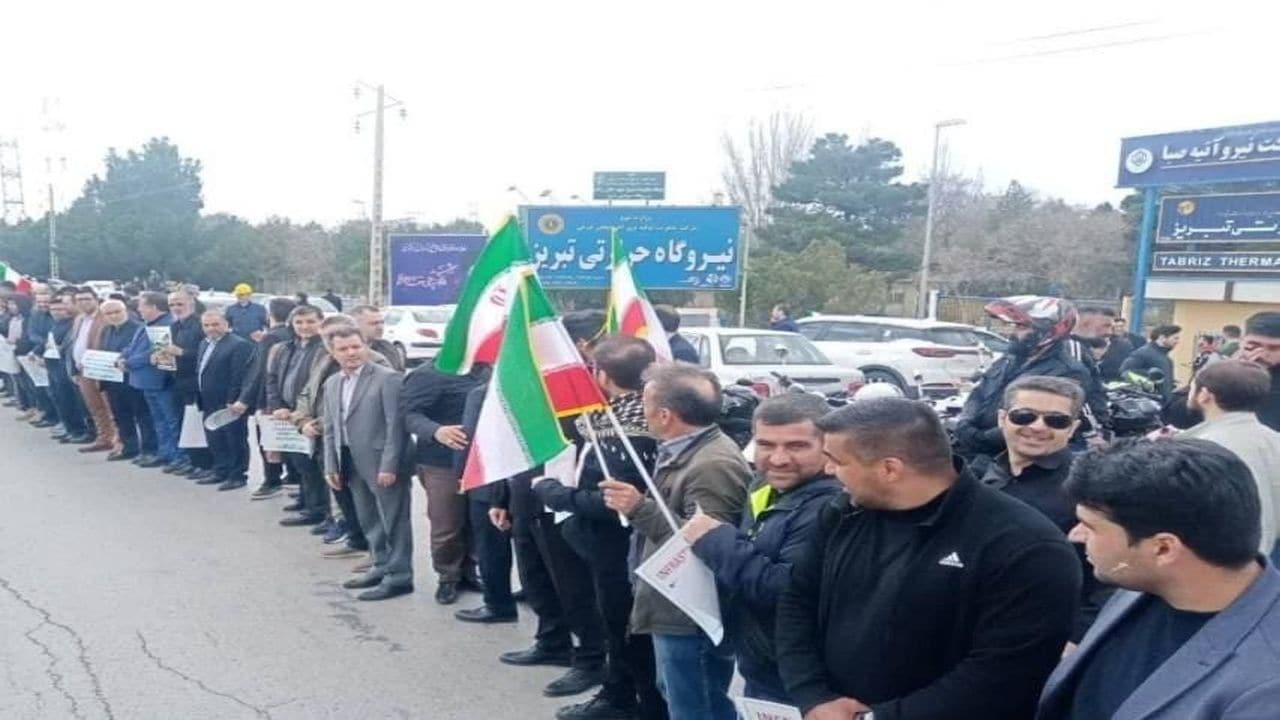
Alireza Rahimi, a high-ranking official for the Supreme Council of Youth and Adolescents, went on state television to issue a desperate call. He told the youth, the athletes, and the artists to head to the power plants at 2:00 PM on Tuesday. He called these facilities "national assets" that belong to the future. It’s a classic, if brutal, play: create a human chain of civilians and hope the American president blinks.
But if you’ve watched Trump’s rhetoric over the last 48 hours, "blinking" doesn't seem to be on the menu. He’s already dismissed the idea that these strikes are war crimes, arguing that stopping a nuclear-armed Iran is a "greater imperative." This isn't just another diplomatic spat; it’s a collision between a leader who wants "Complete and Total Regime Change" and a regime that's literally using its own children as a final line of defense.
The strategy of human shields in 2026
Using civilians to protect military or strategic assets isn't new, but the scale here is staggering. In the past, Iran used human chains around nuclear sites like Natanz and Isfahan to ward off Israeli jets. This time, the targets aren't just hidden centrifuges. They’re the lights in the hospitals, the water pumps in the cities, and the bridges that connect the country.
Iran's president, Masoud Pezeshkian, claims that 14 million people have signed up to "sacrifice their lives." That number is almost certainly inflated for propaganda, but the images coming out of Tabriz, Ahvaz, and Tehran are real enough. You see students waving flags outside electricity stations and elderly men standing on 1,700-year-old bridges in Dezful.
They’re trying to exploit a loophole in Western military ethics. If the US strikes a power plant and kills a thousand "influencers and athletes," the international blowback would be catastrophic. France’s Foreign Minister has already warned that hitting civilian infrastructure is "barred by the rules of war." Tehran knows this. They’re betting that the visual of a "civilization dying" (Trump’s own words) will be too much for the Pentagon to stomach.
Why Trump is unlikely to blink
The problem for Tehran is that this version of Donald Trump isn't the one from 2019 who called off a strike because 150 people might die. Since the February 28, 2026, assassination of Supreme Leader Ali Khamenei and the subsequent closure of the Strait of Hormuz, the White House has shifted to a "scorched earth" doctrine.
Trump’s posts on Truth Social haven't been subtle. He’s called it "Power Plant Day" and "Bridge Day." He’s told the Iranian people they’ll be "living in Hell" if the Strait doesn't open. When a president starts talking about the death of a "whole civilization," a human chain at a local substation feels like bringing a knife—or a protest sign—to a nuclear gunfight.
There’s also the military reality. Modern precision munitions like the GBU-57A/B "bunker busters" or Tomahawk missiles don't necessarily need to level a city block to take out a transformer. However, when thousands of people are packed around the perimeter of a facility, "collateral damage" becomes a certainty, not a risk.
The collapse of Iranian air defense
Why is Iran doing this now? Because they don’t have any other choice. The "Twelve-Day War" in 2025 and the subsequent strikes in early 2026 gutted Iran’s traditional defenses. Operation Midnight Hammer saw B-2 Spirit bombers fly 18-hour missions to dismantle the nuclear heart of the country.
The IRGC (Islamic Revolutionary Guard Corps) has been decimated. They’re sending 13-year-olds to guard checkpoints and using text messages to beg the public to join the Basij paramilitary. When your S-300s are scrap metal and your leadership is being picked off in "decapitation" strikes, you resort to the only resource you have left: numbers.
What happens when the lights go out
If Trump follows through at 8:00 PM, the result won't just be a military setback. It’ll be a humanitarian disaster. Removing the power grid in a modern country isn't just about "going dark."
- Hospitals stop functioning: Backup generators only last so long.
- Water treatment fails: Without electricity, clean water stops flowing, leading to outbreaks of disease.
- Logistics collapse: If the bridges are gone, food cannot get into the cities.
The US strategy seems to be "pressure until they break," but history shows that hitting infrastructure often has the opposite effect. It hardens the population. Even Iranians who hate the regime don't want to see their grandmother’s oxygen machine shut off because of a Tweet from Mar-a-Lago.
Practical steps for those on the ground
If you're in Iran or have family there, the window for preparation is closing fast. This isn't the time for symbolic gestures; it’s the time for survival.
- Stockpile essentials immediately: If the bridges go, supply chains will snap within 24 hours. You need at least two weeks of dry food and, more importantly, water.
- Secure off-grid power: Solar chargers for phones are vital. If the grid goes, communication will be your only way to find out which areas are safe.
- Move away from "National Assets": The government is asking you to stand near power plants. Regardless of your politics, these are now active military targets. The safest place is as far away from energy infrastructure and bridges as possible.
- Have a "Go-Bag" ready: If the "complete demolition" begins, Tehran will become a chaotic bottleneck. Have a plan to move to rural areas that don't rely on the central grid.
The human chains might be a "powerful display of civilian resistance," but against the weight of the US Air Force, they’re a tragedy waiting to happen. The next few hours will determine if 2026 is the year a civilization actually dies or if some "revolutionarily wonderful" deal is struck at the very last second. Don't bet your life on the latter.