Rain on corrugated tin sounds like a drum roll that never reaches the climax. In the northern plains, when the monsoon breaks, the noise swallows everything. Captain Sharma stands on a gravel pad outside Ambala, his boots sticking slightly to the red mud, staring up at a cylindrical steel canister painted in dull camouflage. He does not hear the rain. He hears the silence underneath it.
That silence is the promise of the S-400 Triumf.
To bureaucrats in North Block, defense procurement is a spreadsheet of rupees, dollar conversions, and delivery schedules negotiated across smoke-free tables in Moscow and New Delhi. To Sharma, who has spent twenty-two years tracking high-speed radar signatures across contested airspace, it is a matter of seconds. If a supersonic cruise missile crosses the northern crest at Mach 3, you do not have time to hold a committee meeting. You have a window the size of a heartbeat.
Now, Moscow is whispering about five more.
Rumors in defense circles are rarely just rumors; they are trial balloons inflated by ambition and necessity. Russia has pitched an expansion of the existing contract, offering to supply five additional regiments of the S-400 system to India. This comes at a time when Moscow's own defense factories are running hot to supply the grinding meat grinder of Eastern Europe. The sheer audacity of the offer demands a closer look. Why would a nation heavily engaged in a protracted conventional conflict offer its crown jewels to a strategic partner halfway across the continent?
The answer is currency, geography, and the slow, heavy gravity of a decades-old alliance.
Consider what happens when two superpowers court the same regional titan. India sits in a precarious geographical vise. To the north, a massive neighbor with expanding infrastructure and a rapidly modernizing air wing. To the west, a perennial adversary with a long memory and a short fuse. In this neighborhood, defensive depth is not a luxury. It is the oxygen a sovereign state breathes.
When New Delhi first inked the deal for five S-400 units back in 2018—worth over five billion dollars—Washington frowned. The Countering America's Adversaries Through Sanctions Act loomed like a wet blanket over the transaction. Diplomats scurried. Sanctions were quietly waived, or at least deferred, because Washington realized a hard truth: India is too big to bully and too important to alienate.
Back then, the bet was simple. Buy the best air defense system money can buy to plug the gaps while indigenous programs like the Long Range Surface-to-Air Missile crawl through the inevitable delays of domestic research and development.
But five units are not enough to wrap a subcontinent in steel.
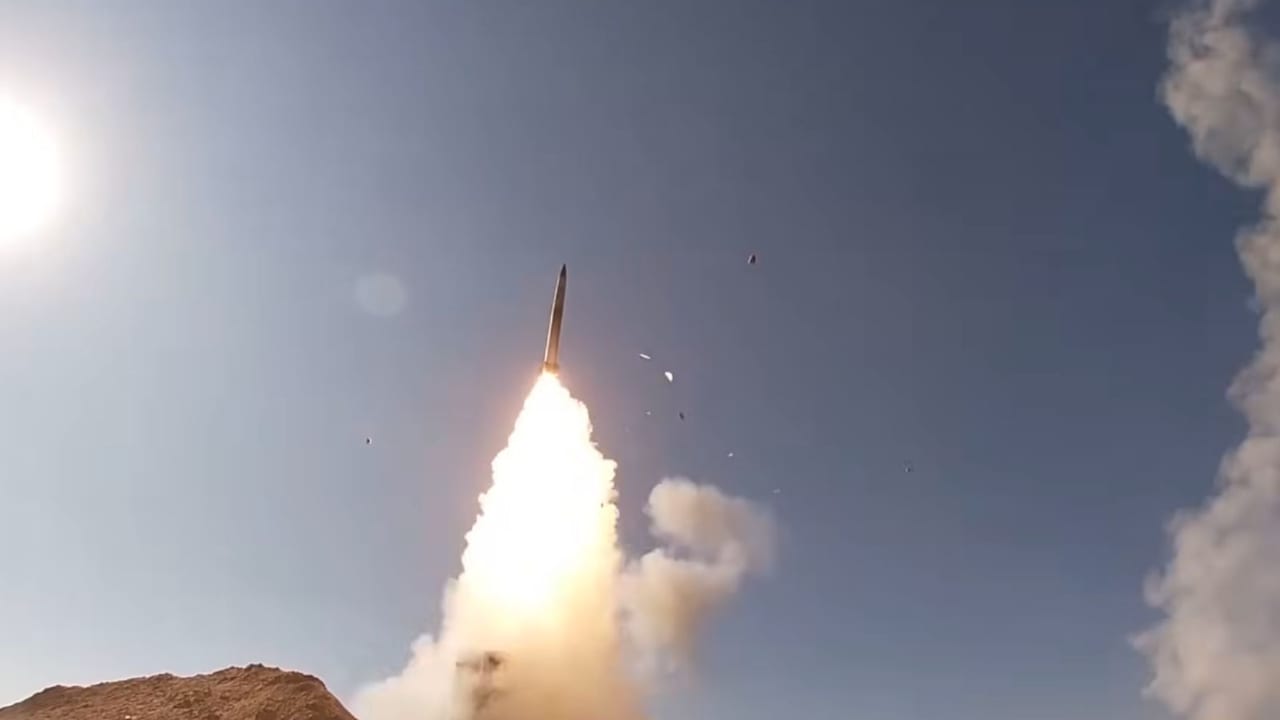
Think of an S-400 battery not as a stationary wall, but as an invisible sphere of deterrence. With a reported range of up to four hundred kilometers for its heaviest interceptor missiles, a single system can deny airspace over vast swaths of territory. It sees through electronic jamming. It tracks multiple targets simultaneously—stealth fighters, AWACS, ballistic missiles, low-flying drones. It is a technological octopus with eyes everywhere and tentacles that strike at hypersonic speeds.
Yet, a subcontinent is wide. The northern mountains require a different geometry of defense than the western deserts or the southern maritime approaches. Five regiments cover the immediate sore spots, leaving other flanks exposed.
This is where the new Russian proposal enters the room.
Russia needs hard currency and reliable diplomatic anchors. By offering more systems, Moscow ensures that New Delhi remains tethered to its military-industrial ecosystem for decades to come. Maintenance, spare parts, software upgrades, and specialized training form a lifetime golden handcuffs arrangement. You do not simply buy a missile system; you adopt a technological marriage.
For New Delhi, the dilemma is exquisite and agonizing.
On one hand, the indigenous route is accelerating. The Defense Research and Development Organization is pushing hard on Project Kusha, India's own long-range air defense system designed to match or exceed foreign capabilities. To buy more Russian hardware now might starve local projects of funding, political will, and institutional focus. Why buy foreign shoes when you are finally learning to cobble your own?
On the other hand, Project Kusha is still a promise on paper and in early test phases. The threats massing across the border are real, tangible, and flying today. Geopolitics does not wait for domestic R and D to catch up with ambition.
Captain Sharma does not care about geopolitical calculus or export-import balances. He cares about the tracking scope. He knows that training a crew to operate these complex batteries takes years of grueling simulation. The digital interfaces are labyrinthine. The physics of intercepting a ballistic missile descending at terminal velocity leaves zero room for human error.
If India accepts these five additional systems, the strategic signal sent to Beijing and Washington will be deafening. It will declare that New Delhi refuses to be corralled into any single Western security architecture. It will reaffirm a policy of multi-alignment that has defined Indian foreign policy since independence, even as the global order fractures into hard ideological blocks.
The rain finally eases over Ambala. The heavy gray clouds begin to tear, revealing ribbons of pale blue evening sky.
Sharma wipes moisture from the glass of his watch. He looks toward the horizon where the mountains hide behind the haze. Somewhere out there, beyond the ridges, the future is being written in code, composite metals, and quiet diplomacy. The missiles in their steel tubes wait, cold and motionless, holding back the dark by the sheer weight of what they might destroy.