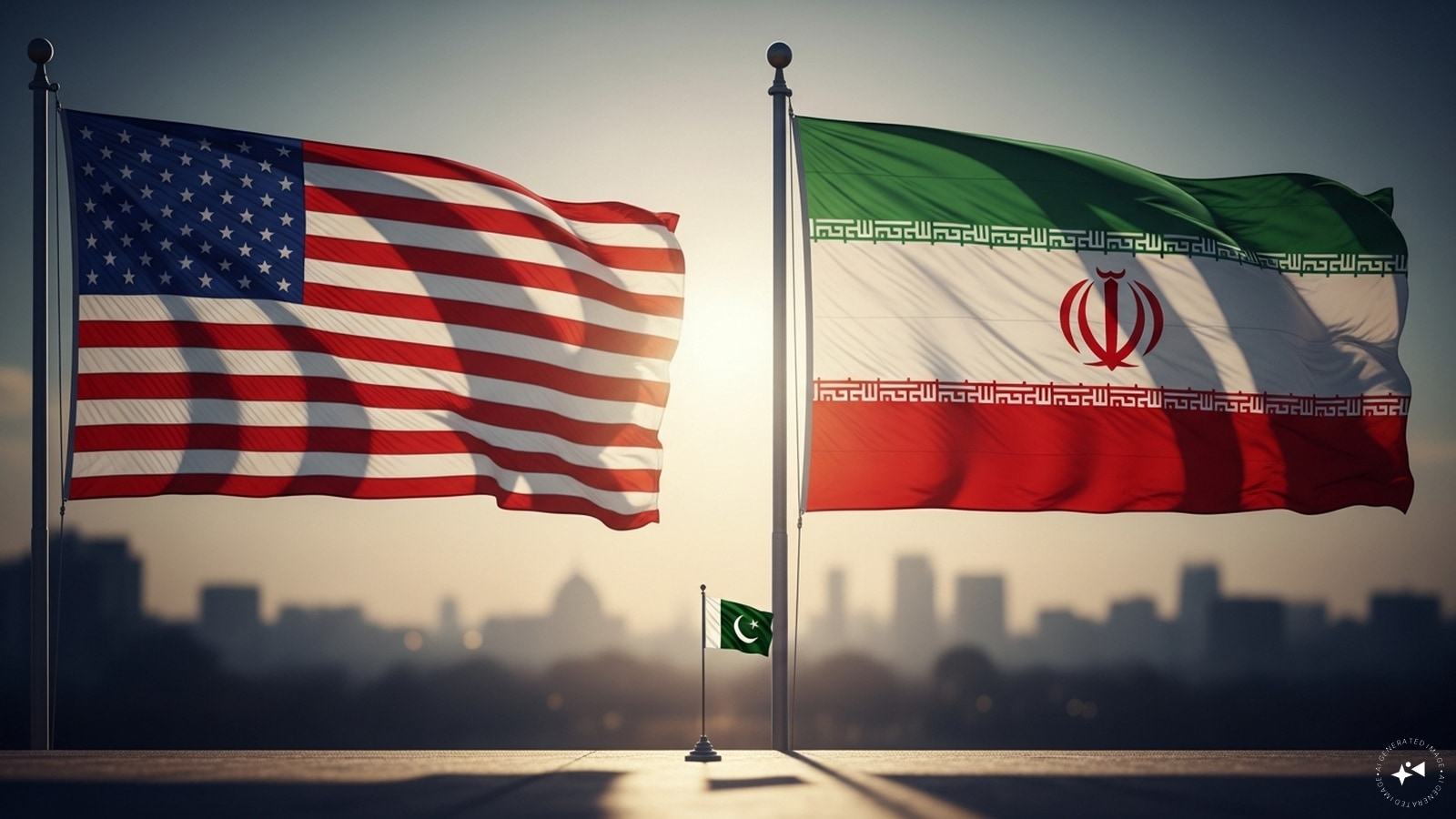
The "peace in our time" crowd is currently popping champagne over the news that Vice President JD Vance and Iranian Speaker Mohammad Bagher Ghalibaf are heading to Islamabad this Friday. The mainstream narrative is as predictable as it is lazy: diplomacy has finally "won" after forty days of Operation Epic Fury, and a two-week ceasefire is the first step toward a grand regional reset.
They are wrong. This isn't a breakthrough. It’s a massive tactical error masquerading as statesmanship.
By halting the momentum of Epic Fury just as the Iranian regime's command structure began to liquefy, Washington hasn't fostered peace. It has handed a lifeline to a wounded tiger. If you think a 10-point proposal and a photo-op in Pakistan will stabilize the Strait of Hormuz, you haven't been paying attention to the last forty-five years of Middle Eastern history.
The Ceasefire is a Recharging Station
The consensus view suggests that Iran is coming to the table because they are "defeated." Nonsense. Iran is coming to the table because they need to rearm, relocate their mobile missile launchers, and figure out who is actually in charge now that the Supreme Leader is out of the picture.
In military terms, a "two-week pause" for an asymmetric force is not a cooling-off period; it’s a logistics window. By agreeing to this, the Trump administration has essentially granted the IRGC a free pass to fix their internal comms and harden what remains of their nuclear infrastructure. I’ve seen this play out in corporate turnarounds and kinetic conflicts alike: when you have your competitor on the ropes, you don't give them a fifteen-day "consultation period" to find new investors. You finish the job.
The $2 Million Extortion Fee
The most egregious detail buried in the "diplomatic success" reports is the proposed $2 million transit fee for ships moving through the Strait of Hormuz, to be split between Iran and Oman.
Let's call this what it is: state-sponsored piracy sanctioned by the White House.
The global economy is already reeling from the energy shocks of March. By even entertaining a "toll" for international waters, the US is dismantling the core principle of Freedom of Navigation that has underpinned global trade since 1945. If you pay the bully to let you walk through the hallway, you don't buy safety; you just establish a subscription model for your own victimization.
Why Islamabad is the Wrong Room
Choosing Pakistan as a mediator isn't a "neutral masterstroke." It’s a liability. Islamabad is playing a double game, desperate for Chinese investment and Saudi liquidity, while trying to keep a lid on its own internal instability.
By shifting the venue to Pakistan, the US has signaled that it no longer trusts the traditional Gulf alliances or the European "triad" (UK, France, Germany) to manage the fallout. This isn't a "multipolar solution." It’s a vacuum of leadership. The UK has already signaled its discomfort, with Starmer's government distancing itself from "regime change from the skies." We are walking into Friday’s talks with a fractured coalition and a list of demands from Tehran that read like a victor’s manifesto, not a surrender.
The 10-Point Proposal Delusion
Tehran’s "10-point proposal" includes demands for:
- Total lifting of primary and secondary sanctions.
- Recognition of their right to uranium enrichment.
- Reparations for the last forty days of strikes.
The "consensus" analysts are calling this a "workable basis" for negotiation. In what reality? These aren't starting points; they are the exact same ideological pillars that led to the war in February. Accepting these terms wouldn't just be a retreat; it would be a total invalidation of every US and Israeli life lost since Epic Fury began.
The Real Cost of "Cooling Down"
The markets are currently rallying on the news, but the "volatility" hasn't been solved—it’s been delayed and compounded. By stopping the strikes on Tehran, Karaj, and Tabriz now, we are ensuring that the inevitable "Phase Two" of this war will be twice as lethal.
The IRGC's "hands on the trigger" rhetoric isn't posturing for their domestic audience. It’s a statement of fact. They have spent forty days watching US tactics. They’ve seen how we use base access in Fairford and Diego Garcia. They are spending this ceasefire adjusting their asymmetrical response profiles.
Stop Chasing the "Peace" Metric
The goal of Operation Epic Fury wasn't to get a signature on a piece of paper in Islamabad. It was to permanently degrade the capability of a regime that has spent decades destabilizing the world's energy heartland.
Success isn't measured by a lack of gunfire for fourteen days. It’s measured by the total removal of the threat. Friday’s talks are a distraction—a shiny object for a White House that wants a quick "win" before the political season shifts.
The "nuance" the pundits are missing is simple: you cannot negotiate a "sustainable peace" with an entity whose entire legitimacy is built on "Death to America." You either win, or you wait for them to hit you again. By choosing to wait, we’ve already lost the initiative.
The Islamabad talks won't end the war. They’ll just make the next chapter much more expensive.
Mic drop.