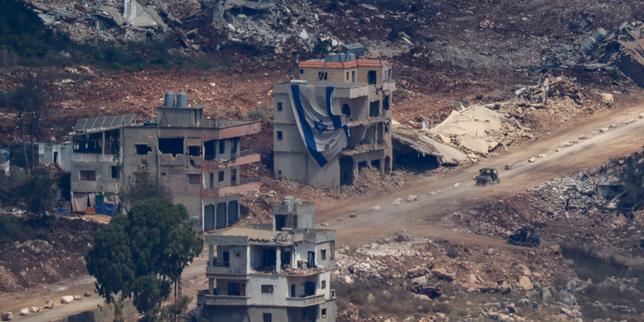
Diplomatic breakthroughs in the Middle East usually have a shelf life measured in minutes. We are seeing that play out right now in real time. The moment negotiators finalized a framework agreement aiming to stabilize the volatile border between Israel and Lebanon, reality intruded. Hezbollah's leadership wasted no time slamming the diplomatic effort, calling the entire framework a grave mistake. Almost simultaneously, Israeli forces hit targets in southern Lebanon.
If you thought a piece of paper would magically solve decades of deep-rooted hostility, you don't know this region. The friction between a sovereign state's diplomatic goals and an entrenched paramilitary force's agenda makes lasting peace an incredibly steep hill to climb.
The fundamental flaw in the border diplomacy
Diplomats love frameworks. They provide a structured way to talk about hard things. But in the context of the Israel Lebanon framework agreement, paper agreements face an immediate roadblock. That roadblock is the sheer disconnect between the official Lebanese government in Beirut and Hezbollah's independent military apparatus.
When international mediators sit down with Lebanese officials, they are dealing with a state that lacks a monopoly on force. Beirut might want economic stability, maritime security, or clarified borders to kickstart its struggling economy. Hezbollah answers to a completely different set of priorities, heavily influenced by its ideological alignment with regional patrons.
When the group's leadership publicly rejects the agreement, they are sending a clear signal. They want everyone to know that the official government does not speak for the forces controlling the southern border. For Israel, this creates an impossible negotiating partner. How do you honor an agreement when the primary military power on the other side of the line calls the deal a failure before the ink even dries?
Military realities on the ground in southern Lebanon
While politicians argue over terminology, the military situation remains hot. The Israeli military confirmed another round of strikes targeting infrastructure in southern Lebanon, pointing to active threats near the demarcation line. These actions underscore a simple truth. Israel operates on a doctrine of active deterrence, regardless of whatever political talks happen in distant capitals.
The geography of southern Lebanon complicates everything. It is a terrain of rugged hills, hidden valleys, and deeply embedded military assets. For years, observers have pointed out how deeply integrated military infrastructure has become within civilian areas. This reality makes any localized strike a high-stakes event capable of sparking a wider escalation.
When Israel launches a strike, it is usually aimed at neutralizing specific operational capabilities, like observation posts or rocket transport routes. But every single explosion chips away at the credibility of diplomatic frameworks. You cannot easily convince a population or a military faction that a peace process is real when drones are actively buzzing overhead and munitions are impacting hillsides.
Why a lasting settlement remains elusive
To understand why this latest framework is struggling, look at what both sides actually need versus what they are willing to give up. Israel requires absolute security for its northern communities. Tens of thousands of residents have faced displacement or the constant threat of rocket fire. No Israeli government can accept a status quo where an armed group remains positioned right on its fence.
On the flip side, Hezbollah views its armed presence in the south as its core reason for being. Disarming or pulling back behind the Litani River, as older UN resolutions demanded, looks like a total surrender to them. They frame their arsenal as the only viable defense for Lebanon against external aggression.
This creates a zero-sum game.
- Israel demands a verifiable pullback of hostile forces.
- The armed group refuses to budge, viewing retreat as strategic suicide.
- The Lebanese state sits trapped in the middle, broke and powerless to enforce its will.
This dynamic explains why regional observers remain highly skeptical of sudden diplomatic breakthroughs. The core structural issues are rarely addressed in these high-level frameworks. Instead, the documents tend to paper over deep ideological chasms with vague language about shared stability and economic benefits.
The path forward requires hard leverage over vague promises
If international actors want to prevent a localized border dispute from turning into a massive regional conflict, the strategy has to change. Relying on symbolic frameworks that lack enforcement mechanisms clearly fails the reality test.
Real progress requires addressing the power imbalance inside Lebanon itself. Security guarantees cannot rely on assurances from a weak central government that cannot control its own territory. International observers and peacekeeping forces need real authority and teeth, or the border will remain a tinderbox ready to ignite at any moment. Until the underlying issue of independent armed factions is resolved, expect the cycle of political declarations and retaliatory military strikes to continue indefinitely. This border demands structural security changes, not more unsigned diplomatic drafts.