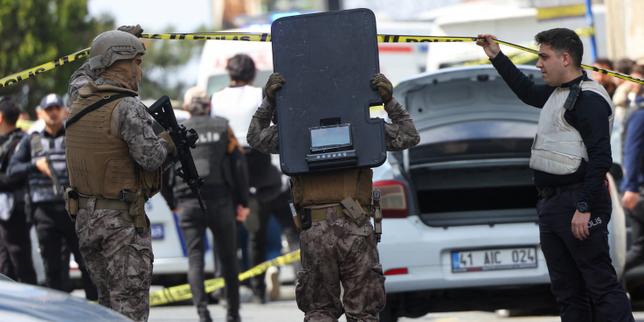
A quiet morning in Istanbul’s Sariyer district shattered when gunfire erupted outside the Israeli consulate. This wasn't just another headline. It was a chaotic scene that left one attacker dead and two others wounded after police moved in to neutralize the threat. When you see a targeted event like this, the immediate reaction is shock, but the real story lies in how security forces respond to high-stakes urban violence.
Violence near diplomatic missions isn't a new phenomenon in Turkey, but the precision of the response this time was telling. Local authorities didn't hesitate. They didn't wait for a standoff to turn into a massacre. They acted. The attacker, whose identity was quickly scrutinized by Turkish intelligence, represents a specific type of radicalized threat that keeps security experts up at night.
Security Breaches and Rapid Neutralization at the Consulate
The Israeli consulate in Istanbul is one of the most heavily fortified buildings in the city. It's tucked away, yet highly visible to those looking for it. On the day of the shooting, the assailant attempted to breach the perimeter or at least make a statement with high-caliber fire. The response from the Turkish Special Operations and local police was almost instantaneous.
They didn't just stop the shooter. They shut down the entire grid.
In these situations, the first sixty seconds dictate the body count. Because the consulate sits in a busy area, the risk of collateral damage was massive. Two individuals were caught in the crossfire or injured during the ensuing panic, suffering wounds that required immediate hospitalization. Reports from the scene described a heavy police presence that stayed for hours, not just to collect shell casings, but to sweep for explosives and accomplices.
Turkey’s Interior Ministry is usually quick to label these events. This time, the focus shifted immediately to the "lone wolf" versus "organized cell" debate. Most people think these attacks are always part of a grand master plan. Sometimes, they're just the result of one person with a weapon and a grievance, which is arguably harder to predict and stop.
Why Diplomatic Missions are Growing Targets in 2026
You have to look at the geopolitical temperature to understand why this happened now. The tension between regional powers has reached a boiling point. Diplomatic outposts are no longer just offices for visas and paperwork. They’re symbols. To an attacker, hitting a consulate is the same as hitting the soil of the country it represents.
Security around the Israeli consulate had already been at a heightened state. It’s been that way for months. Yet, someone still felt they could get close enough to do damage. This points to a gap in "soft perimeter" monitoring. While the building itself is a fortress, the streets leading to it remain public space. That's the vulnerability.
- Public Access vs. Secure Zones: You can't turn a whole city into a Green Zone.
- Response Time: Turkish police proved their training works, but the injury of bystanders shows the chaos of urban combat.
- Intelligence Gaps: How did a person with a firearm get through one of the most surveilled districts in Istanbul without raising a red flag?
The attacker was neutralized, which is the clinical way of saying they were killed on-site. For the Turkish government, this is a delicate balancing act. They have to protect foreign diplomats to maintain international standing, even when domestic sentiment might be hostile toward those same foreign entities.
The Reality of Urban Tactics in Sariyer
Sariyer is an affluent, often peaceful part of Istanbul. It’s where you go for a nice view of the Bosphorus. Seeing it filled with yellow police tape and forensic teams in white suits is a jarring contrast. Honestly, the tactical reality here is that the shooter didn't stand a chance once the first shot was fired.
Turkish police carry significant firepower in these districts. We aren't talking about beat cops with whistles. These are units trained in counter-terrorism. When the suspect opened fire, the return fire was overwhelming. The two injured parties were reportedly taken to nearby hospitals. Their condition has been a point of contention in local media, with some reports suggesting they were caught in the literal line of sight between the police and the suspect.
I've seen these patterns before. A suspect approaches, creates a distraction or begins a direct assault, and expects to cause a prolonged siege. It didn't happen. The efficiency of the "neutralization" suggests that the Turkish security apparatus was already on a hair-trigger.
What This Means for Your Travel and Safety
If you're living in or visiting Istanbul, the advice is usually to "avoid large crowds." That’s useless advice. Istanbul is a large crowd.
The real takeaway is that security around high-profile consulates—specifically those of Israel, the US, and major European powers—is going to become even more restrictive. Expect more checkpoints. Expect random ID checks. If you're near these buildings, don't linger.
I’ve talked to security consultants who argue that the "fortress mentality" actually invites more attacks. It creates a clear target. But without that fortress, the death toll in Sariyer would have been much higher. The consulate staff remained safe behind armored glass and reinforced walls while the battle played out on the sidewalk.
Immediate Steps to Take in Istanbul
Don't wait for the news to catch up. If you are in the city, there are practical things to do right now.
Check the local governor's office social media feeds. In Turkey, the Istanbul Valiliği (Governor’s Office) is the most reliable source for immediate closures and security alerts. They often post updates faster than the major news networks. Avoid the Sariyer district for the next 48 hours. Even though the shooter is down, the forensic investigation will keep traffic snarled and the police on edge.
Understand that "heightened security" means police will be more aggressive. This isn't the time to argue about your rights if you're stopped for a bag search. They are looking for a second shooter or a getaway driver, even if they claim the suspect acted alone. The investigation is currently pivoting toward the suspect’s digital footprint to see who they were talking to in the weeks leading up to this morning.
Keep your documents on you. It sounds basic, but in a post-shooting environment, being a foreigner without a passport is a fast track to a very long day at a police station. The city is on high alert, and the consulate will likely remain closed for walk-in services for several days. If you had an appointment, it's gone. Call the emergency line instead.
The situation is under control, but the underlying tension isn't going anywhere. This shooting is a symptom of a much larger friction that no amount of police presence can fully resolve.