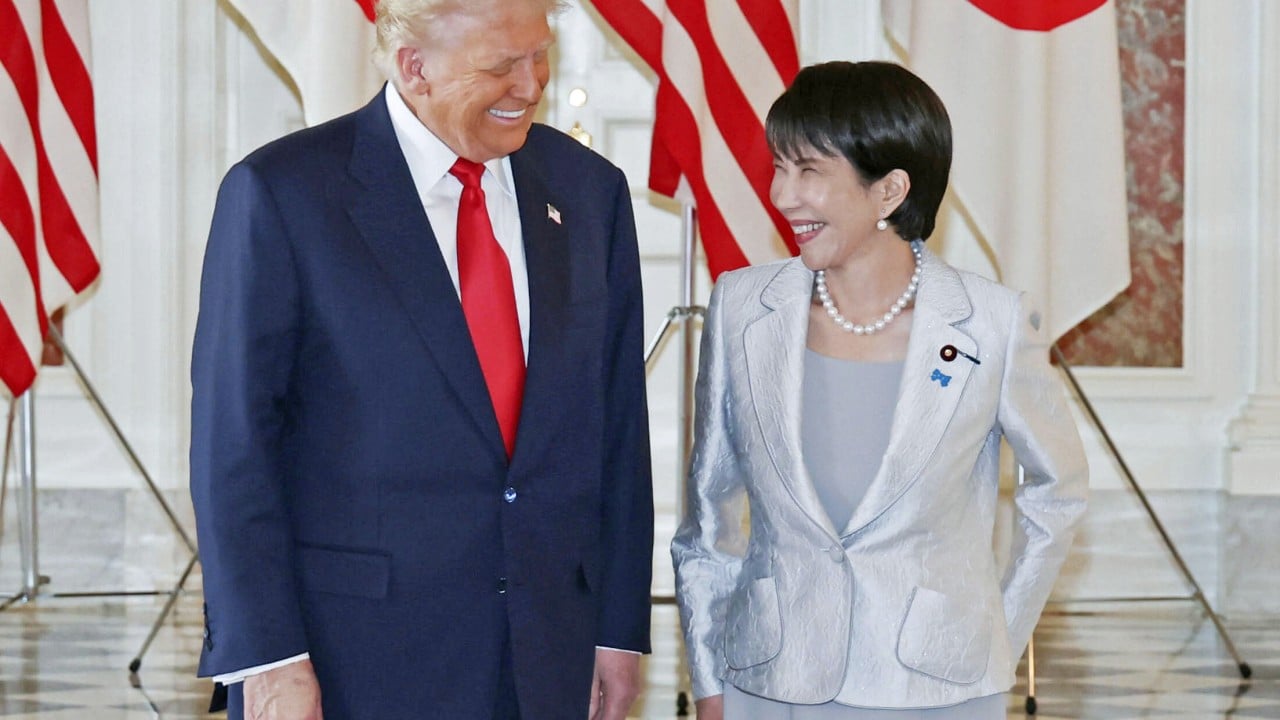
The foreign policy establishment is currently obsessed with a scheduling hiccup. They see a delayed US-China summit and a looming visit from Sanae Takaichi and conclude that the "stakes have been raised." They portray Japan as a nervous protagonist waiting for a cue from Washington. This narrative is lazy. It’s a relic of a unipolar world that hasn't existed for a decade.
If you believe the mainstream analysis, Takaichi is heading to D.C. to seek validation or to steady a ship rocked by shifting US-China dynamics. That is a fundamental misunderstanding of the current power balance in the Indo-Pacific. The delay of a summit between Biden and Xi isn't a crisis for Tokyo; it is a massive strategic opening. If you liked this piece, you might want to look at: this related article.
The Myth of the Reactive Ally
For years, the "consensus" has been that Japan’s foreign policy is a shadow of America’s. We are told that whenever the US and China sneeze, Japan catches a cold. I’ve sat in rooms with trade negotiators who still operate under this 1990s logic. They are wrong.
Japan is no longer a junior partner waiting for instructions. Under the surface of diplomatic niceties, Tokyo has been building a "Fortress Asia" strategy that functions whether Washington is distracted or not. When the US pulled out of the Trans-Pacific Partnership (TPP), the experts predicted the agreement would die. Instead, Japan took the lead, rebranded it as the CPTPP, and kept the flame of regional integration alive. For another look on this development, see the latest coverage from BBC News.
Takaichi isn't going to the White House to ask what the US wants to do about China. She is going there to tell the White House what Japan is already doing. The "stakes" aren't high because of a delayed summit; they are high because the US is increasingly dependent on Japan’s industrial base and maritime footprint to maintain any semblance of influence in the region.
Silicon Sovereignty is the Real Battleground
The chatter about diplomatic "optics" ignores the cold, hard reality of semiconductors and supply chains. While pundits talk about meeting dates, the real friction is in the "Economic Security Promotion Act."
Most analysts treat tech as a subset of trade. It isn't. It is the new nuclear deterrent. Takaichi understands this better than almost anyone in the LDP. Her brand of "economic sovereignty" isn't about following US export controls; it’s about making Japanese lithography and chemicals so indispensable that Washington cannot make a move against China without Tokyo’s explicit permission.
Imagine a scenario where the US attempts to tighten the screws on Beijing but finds that Japanese suppliers—the ones who actually own the patents for the specialized photoresists needed for sub-5nm chips—decide to prioritize their own market stability over Pentagon directives. That is the leverage Takaichi carries. She isn't a supplicant; she is a gatekeeper.
The China Delay Is a Feature, Not a Bug
The mainstream press views the delayed US-China summit as a sign of "instability." This is backward. For Japan, a stalled dialogue between the two giants is a golden period of autonomy.
When the US and China are talking, Japan risks being "passed over"—the dreaded Japan Passing phenomenon. When they aren't talking, Japan becomes the indispensable bridge. Takaichi’s visit during this vacuum allows her to set the agenda before the US and China have a chance to codify their own "G2" understanding.
Stop Asking About Security Guarantees
The most common question in the "People Also Ask" sections of the internet is: "Will the US defend Japan if China attacks?"
This is the wrong question. It assumes Japan is a passive victim. The real question is: "Can the US maintain its global position if Japan decides to go nuclear or builds a blue-water navy that operates independently?"
The "pacifist" label on Japan is a convenient mask. Japan’s defense budget is skyrocketing. Its "destroyers" are aircraft carriers in all but name. Takaichi represents the wing of the Japanese government that is tired of the charade. Her visit is about normalizing a Japan that can say "no"—not just to Beijing, but to a Washington that often treats the Pacific as a private American lake.
The High Cost of the "Status Quo"
There is a downside to this contrarian reality. As Japan asserts more autonomy, the friction within the alliance will grow. We are moving toward a "multipolar alliance" where interests overlap but rarely align perfectly.
I have seen analysts ignore these cracks for the sake of "unity." They think pointing out disagreements helps China. The opposite is true. By pretending the US and Japan are in lockstep, we fail to prepare for the moments when they aren't.
- Energy Policy: Japan is doubling down on nuclear and remains entangled with Russian energy projects that the US hates.
- Trade: Japan is pushing for regional blocks that don't always include American leadership.
- Defense: Japan is developing long-range strike capabilities that change the escalation calculus in the Taiwan Strait, regardless of US "strategic ambiguity."
The Takaichi Doctrine
Takaichi is often labeled a "hawk" or a "nationalist." These are reductive terms used by people who don't want to engage with her actual policy framework. Her focus is on Resilience through Redundancy. She wants a Japan that doesn't need to check the weather in Washington before it decides how to trade with its largest neighbor.
The White House isn't "raising the stakes" for her. She is raising the price of admission for the US. If Washington wants a partner to help contain China’s technological rise, it’s going to have to stop treating Japan like a regional outpost and start treating it like the peer competitor it has become in the sectors that actually matter.
The stake isn't a successful meeting or a nice photo op on the White House lawn. The stake is whether the US can accept a Japan that has its own vision for Asia—one that doesn't necessarily involve being the "unsinkable aircraft carrier" for American interests.
The era of the "Junior Partner" is dead. Takaichi is just the one brave enough to bring the death certificate to the Oval Office.
Would you like me to analyze the specific patent filings of Japanese tech firms that give them this leverage over US export policy?