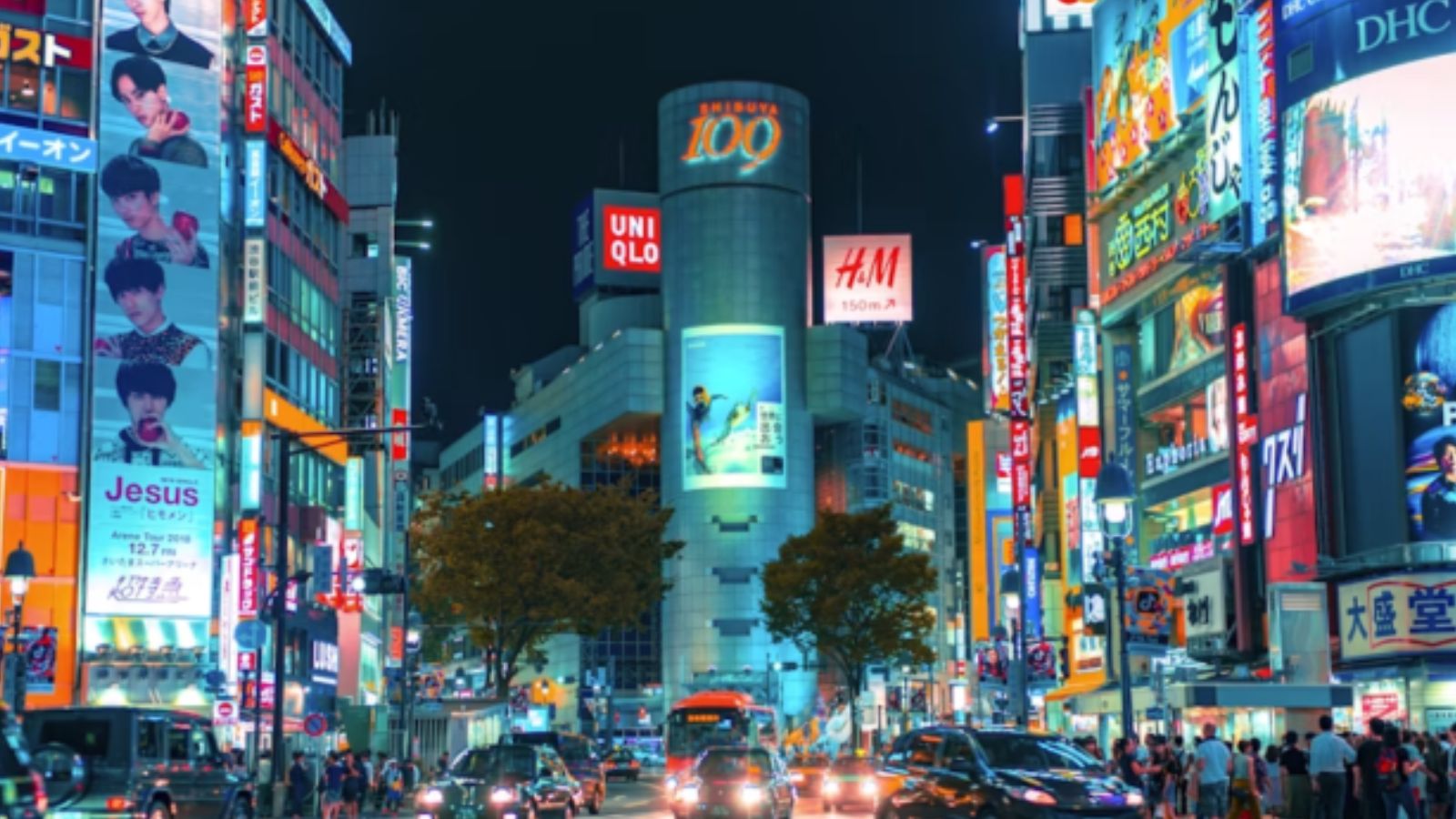
The Ghost Capital Gamble
Tokyo sits on a seismic time bomb. Every few years, government geologists update their casualty projections, pushing worst-case death tolls into the hundreds of thousands while financial markets pretend they cannot hear the ticking.
To survive a catastrophic subduction zone earthquake directly beneath the metropolis, the Japanese government has spent decades quietly engineering a backup plan. Regional municipalities across the archipelago are locked in an aggressive municipal arms race. They want to be designated as Japan’s official secondary capital. You might also find this connected story interesting: Allocating Capital Against Collapse The Sudan Education Financing Deficit.
Behind the bureaucratic press releases and glossy tourism brochures lies a far more cynical reality. This is not just emergency planning. It is a desperate municipal land grab for central government funds, corporate tax revenue, and prestige as rural populations hollow out.
The strategy, formally known as the establishment of a National Capital Function Backup System, is designed to keep the machinery of state running if Tokyo goes dark. Yet local governments are twisting this mandate into an economic survival strategy. They are sinking billions into concrete bunkers, redundant communications networks, and oversized conference centers. As reported in latest articles by NPR, the implications are widespread.
They are betting their futures on a disaster that everyone hopes will never arrive.
Why Tokyo Cannot Be Replaced Overnight
To understand why secondary capital contenders are throwing money at concrete, you have to understand the sheer centralization of Japanese power.
Tokyo is not merely a political hub. It holds nearly all the economic, regulatory, and cultural weight of the nation. Roughly ten percent of Japan's entire population lives within the Yamanote rail loop. The headquarters of every major mega-bank, national newspaper, and keiretsu corporate titan are clustered within walking distance of the Imperial Palace.
When bureaucrats talk about a backup capital, they are not talking about moving the emperor or relocating millions of civil servants. They are talking about establishing a geographically distant node capable of executing emergency decrees, maintaining financial ledgers, and processing emergency relief supplies.
Historically, centralization has deep roots here. The Tokugawa shogunate concentrated power in Edo to keep regional lords weak and dependent. Modern Tokyo inherited that gravity.
Decades ago, planners floated ambitious schemes to relocate the entire capital lock, stock, and barrel to a brand-new planned city away from the Kanto plain. Politicians quickly realized the political suicide inherent in uprooting millions of voters and government workers. The grand relocation projects quietly died in committee rooms.
What survived was a piecemeal compromise. Instead of one new capital, the state opted for a decentralized network of regional blocks. Each block is supposed to maintain redundant facilities ready to absorb displaced ministries in an emergency.
The Municipal Gold Rush
This decentralized compromise opened the floodgates for regional competition. Cities that have watched their young people migrate south to Tokyo for decades suddenly saw a lifeline.
Regional hubs like Osaka, Nagoya, Sendai, and Fukuoka positioned themselves as primary contenders. They pitched their geographic distance from the Kanto fault lines as their primary asset. They argued that if the Kanto plain suffers a magnitude 8.0 tremor, western or northern economic zones could instantly step into the breach.
The bidding war took strange forms. Local assemblies approved budgets for state-of-the-art disaster command centers that sit empty ninety-nine percent of the year. Mayors traveled to Kasumigaseki to lobby ministers, waving architectural renderings of earthquake-proof government annexes.
The pitch is simple: invest in our infrastructure now, and you ensure national continuity later. The unstated subtext is equally transparent: send us public works subsidies to prop up our failing local construction sector.
Take a hypothetical mid-sized regional capital in western Japan that builds a massive administrative contingency complex. It features redundant fiber-optic trunks, independent diesel generators designed to run for weeks, and secure parliament chambers. Local leaders trumpet this as a triumph of foresight.
Yet accountants look at the maintenance costs and shudder. These white elephants require constant climate control, software updates, and security staffing. When no disaster occurs, the facility drains municipal coffers year after year.
Corporate Hesitation and Economic Realities
While local politicians dream of a second Tokyo, corporate executives are refusing to play along.
Disaster recovery planning for a major Japanese multinational usually involves moving redundant servers to a cloud provider in Hokkaido or setting up a cold-site office in Osaka. It does not involve permanently relocating high-level corporate decision-making to a secondary government town chosen by bureaucrats.
Companies know where the talent wants to live. Young engineers, designers, and traders want the urban density, cultural output, and social mobility of Tokyo. They will not willingly relocate to a sanitized administrative outpost just because a local governor built a convention center.
This creates a stark disconnect between public sector ambition and private sector pragmatism. The state can mandate that backup emergency plans exist on paper, but it cannot force private capital to invest in ghost towns.
Furthermore, the financial burden falls disproportionately on local taxpayers. Municipalities that are already struggling with shrinking property tax bases and aging populations are borrowing heavily to finance these prestige projects. They are gambling on future central government grants that may never materialize as the national debt mounts.
The True Cost of Preparedness
Japan faces a grim demographic countdown. The population is aging rapidly, and rural depopulation is hollowing out entire prefectures. Pouring national funds into redundant concrete structures in regions losing thousands of residents every year looks less like strategic foresight and more like a Keynesian make-work program.
The government knows this. Ministries quietly scale back ambitious continuity blueprints whenever public scrutiny fades. They prefer modest, incremental upgrades to existing regional offices over grand new capital installations.
Yet the myth of the backup capital persists because it serves a political purpose. It offers hope to struggling regional economies. It gives local politicians something to campaign on. It reassures an anxious public that someone, somewhere, is preparing for the worst.
When the next major tremor hits Tokyo—and seismologists insist it is a matter of when, not if—the emergency systems will be tested. Some backup facilities will work as intended. Others will find their redundant communication lines severed or their remote staff struggling to access legacy databases.
Until that moment arrives, the competition continues. Mayors will keep cutting ribbons on empty bunkers, hoping to catch a slice of the national budget before the music stops.
The Unresolved Horizon
Beneath the surface of this quiet bureaucratic scramble lies an uncomfortable truth about modern governance. Nations structured around a single economic and political center cannot easily duplicate themselves.
You cannot simply clone Tokyo's institutional memory, its informal networks of power, and its financial liquidity into a provincial alternative. Systems that evolve over centuries resist artificial replication.
The backup capital project remains an expensive insurance policy against an unthinkable catastrophe. Whether it is an effective safeguard or an elaborate exercise in municipal theater will only be known on the day the earth finally splits open beneath the capital.