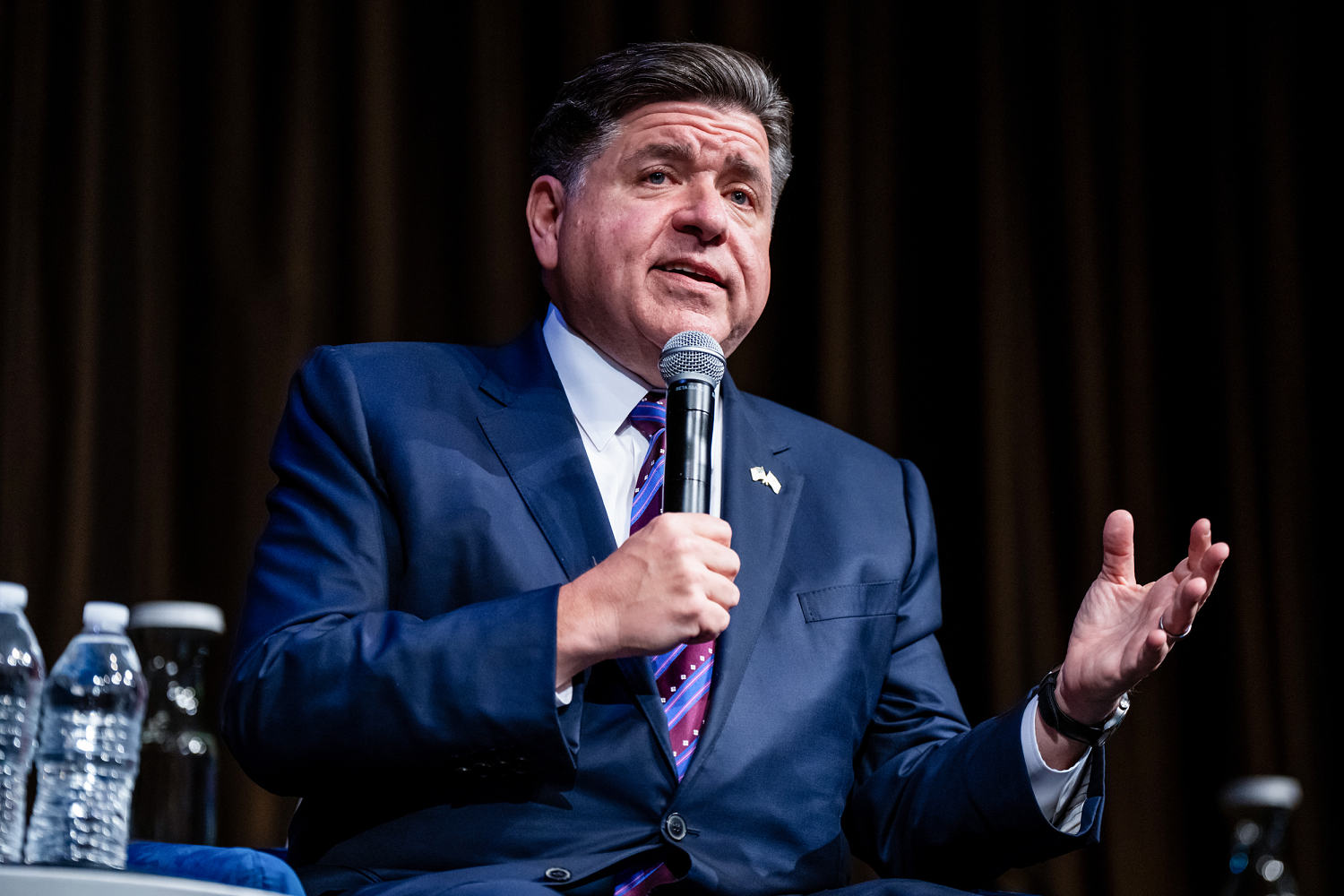
Governor JB Pritzker is pivoting from his role as the ultimate political benefactor to a traditional solicitor of national donor funds. This shift marks a professionalization of his 2028 ambitions that moves beyond the simple check-writing that defined his rise in Illinois. For years, the billionaire heir to the Hyatt Hotel fortune functioned as his own private central bank, pouring over $350 million of his personal wealth into his gubernatorial races and various state-level causes. Now, he is building a national fundraising apparatus designed to test his appeal with the Democratic Party’s elite donor class.
The move is tactical. Relying on personal wealth can actually become a liability in a national primary where voters want to see evidence of a grassroots movement and broad institutional support. By launching the "Think Big America" nonprofit and engaging with high-dollar bundlers from New York to California, Pritzker is signaling that he understands the optics of the modern presidency. He isn't just looking for money; he is looking for validation. If you found value in this post, you should read: this related article.
The Billionaire Dilemma in National Politics
In the world of high-stakes elections, being too rich can be a curse. While a massive bank account allows a candidate to bypass the grueling schedule of "dialing for dollars," it also creates a vacuum where a support base should be. When a candidate pays for everything themselves, they often fail to build the network of stakeholders necessary to survive a long primary season. Pritzker is a student of political history. He saw how Michael Bloomberg’s half-billion-dollar sprint in 2020 ended in a puff of smoke because it lacked the organic buy-in from party stalwarts.
Pritzker's transition to traditional fundraising is an attempt to avoid the "vanity candidate" label. By asking others to invest in his political future, he creates a shared interest among the party’s power players. When a hedge fund manager in Manhattan or a tech executive in Silicon Valley writes a check to a Pritzker-aligned entity, they are doing more than providing capital. They are casting a vote of confidence that carries weight in the backrooms of the Democratic National Committee. For another perspective on this event, refer to the latest coverage from Reuters.
Building the Network Beyond Springfield
The infrastructure for this shift is already visible through Think Big America, a 501(c)(4) organization that allows Pritzker to exert influence on a national scale. Unlike his previous campaign committees, this entity can accept unlimited donations from outside sources. It has already begun spending money to support abortion rights referendums in states like Ohio, Nevada, and Arizona. This is strategic philanthropy with a clear political dividend. It allows Pritzker to introduce himself to voters in swing states through a popular issue while simultaneously building a list of donors who care about that specific cause.
This isn't just about the 2028 calendar. It is about clearing the field. By establishing himself as a prolific fundraiser who can move money into key battlegrounds, Pritzker makes himself indispensable to the party. He becomes a rainmaker for others, which in turn creates a mountain of political IOUs he can collect when the primary begins in earnest.
The Mechanics of the Donor Pitch
When Pritzker meets with the Democratic elite, the pitch isn't about his wealth. It’s about his record in a state that he argues is a "laboratory for progressivism." He speaks the language of a CEO because that is his background. He points to Illinois’ improved credit ratings and the balanced budgets he oversaw as evidence that he can manage a massive, complex bureaucracy. This appeals to a specific type of donor—the pragmatist who wants social progress but fears fiscal instability.
However, the transition from self-funder to solicitor isn't without friction. Some long-time donors are skeptical of why they should give money to a man who could theoretically fund his entire campaign with the interest from his family trusts. Pritzker has to convince them that their "skin in the game" is the only way to build a winning coalition.
- The Validation Effect: Individual donations serve as a metric of momentum that the media and rivals use to judge a campaign's health.
- The Infrastructure Build: Traditional fundraising requires a massive staff of finance directors and compliance officers—the "ground game" of a national run.
- The Stakeholder Strategy: Donors who give money are more likely to volunteer, advocate, and organize in their local communities.
Navigating the Anti-Billionaire Sentiment
The Democratic base has a complicated relationship with the ultra-wealthy. Figures like Bernie Sanders and Elizabeth Warren have spent years railing against the influence of the "billionaire class." Pritzker has to thread a very fine needle. He needs to show he is a "good billionaire" who uses his resources to fight for the common man, while simultaneously asking for money from the very people his base often criticizes.
His strategy involves leaning heavily into labor. By positioning himself as the most pro-union governor in the country, he creates a shield against populist attacks. If he has the endorsement of the AFL-CIO and the SEIU, it becomes much harder for rivals to paint him as an out-of-touch plutocrat. The fundraising then becomes a tool to amplify that labor-backed message, rather than the message itself.
Redefining the Illinois Model
For decades, Illinois politics was defined by a specific brand of insider dealing and patronage. Pritzker has spent his tenure trying to scrub that image and replace it with a model of "pragmatic progressivism." This involves aggressive legislative wins on social issues combined with a surprisingly disciplined approach to state debt. This "Illinois Model" is his product, and the national donor circuit is his market.
The challenge is that Illinois is not the rest of the country. The taxes and regulations that pass in Springfield might not play well in the Sun Belt or the Rust Belt. When Pritzker asks a national donor for money, he is asking them to bet that his brand of Midwestern liberalism can scale. It is a gamble that requires more than just a big checkbook; it requires a narrative that resonates in diners in Pennsylvania as much as it does in high-rises in Chicago.
The Competition for the Same Dollars
Pritzker isn't the only one eyeing the 2028 donor pool. He is competing with a deep bench of Democratic talent, including governors like Gavin Newsom, Josh Shapiro, and Gretchen Whitmer. Many of these figures are already masters of the fundraising game. Newsom has a massive national list built over years of high-profile cultural battles. Shapiro has a centrist appeal that attracts Wall Street.
Pritzker’s entry into this arena changes the math. His ability to seed his own efforts while simultaneously raising outside capital gives him a dual-track advantage. He can spend his own money on the "unsexy" parts of a campaign—data sets, office leases, and early polling—while using donor money for high-visibility TV ads and rallies. This hybrid model could become the new standard for wealthy candidates.
Strategic Philanthropy as a Campaign Proxy
The use of "dark money" groups and nonprofits has changed the timeline of the American presidency. Potential candidates no longer wait for an official declaration to start building their brand. They use issues-based organizations to keep their name in the headlines and their operatives on the payroll. Pritzker’s "Think Big America" is the gold standard of this approach.
By funding abortion access votes, Pritzker is essentially conducting a national audition. He is showing the party that he can win on the issues that matter most to the base. He is also collecting data. Every person who signs a petition or responds to a digital ad funded by his group becomes a potential voter or donor for 2028. This is the modern way to "buy" a political machine without actually buying it. It’s about building a database of supporters who feel a personal connection to the causes he champions.
The Risk of the "Hyatt" Brand
The Pritzker name is inseparable from the Hyatt hotel chain, a global corporation with its own set of labor disputes and international entanglements. As Pritzker moves onto the national stage, his family’s business history will face unprecedented scrutiny. Opponents will dig into every contract and every labor negotiation the company has ever had.
By raising money from a broad base of donors, Pritzker creates a buffer. He can argue that his movement is supported by "the people," not just his family's corporate legacy. It is a necessary move for someone who wants to lead a party that is increasingly skeptical of corporate power. He has to prove that he is more than just a name on a building; he has to prove he is a leader who can inspire people to open their own wallets.
Transitioning from Self Funding to Sustainability
A campaign that relies solely on one man’s wealth is fragile. If that man decides to stop writing checks, the campaign dies. By building a traditional fundraising base, Pritzker is ensuring the sustainability of his political operation. He is creating an organization that can survive the ups and downs of a multi-year primary battle.
This requires a shift in mindset. He is no longer the boss who writes the checks; he is the candidate who must earn them. This change in dynamic is perhaps the most important preparation for a presidential run. It forces a candidate to sharpen their message and justify their existence every single day. If you can't convince a room of wealthy donors to support you, you have no hope of convincing millions of voters.
The "Think Big" philosophy is now being applied to the business of politics itself. Pritzker is betting that he can combine his personal resources with a sophisticated, multi-tier fundraising operation to create a juggernaut. It is an aggressive, high-risk strategy that seeks to rewrite the rules of how a billionaire runs for the highest office in the land. He is moving from being the man who pays for the party to being the man everyone wants to invite.
The primary isn't won in the voting booth; it's won in the spreadsheets of the finance directors long before the first caucus. Pritzker has realized that while his wealth got him to the table, only a broad coalition of donors can keep him there. He is now playing the game by the old rules, but with a bankroll that ensures he can stay in the hand until the very end. The shift isn't just about the money. It's about the math of power in a fractured political era.