You shouldn't assume your visa-free status is a golden ticket into South Korea. Recent events involving Indian influencer Sachin Awasthi have pulled back the curtain on a harsh reality at Jeju International Airport. Despite the island's reputation as a tropical escape, the entry process is turning into a nightmare for some. The Indian Embassy in Seoul finally stepped in after Awasthi was reportedly held for 38 hours in a small room without his luggage or a clear explanation. This isn't just a one-off travel fluke. It's a systemic tightening of borders that you need to understand before booking that flight to Jeju.
South Korea usually feels welcoming. However, the "visa-free" entry for Indians specifically to Jeju Island comes with a massive asterisk. Immigration officers are currently on high alert for "pseudo-tourists"—people they suspect are actually seeking illegal employment. If your paperwork doesn't look perfect, you're not just getting a "no." You're likely getting detained.
Why Jeju is no longer a simple weekend getaway
Jeju Island operates under a special autonomous law. This allows citizens of many countries, including India, to enter without a standard South Korean visa for up to 30 days. It sounds like a dream for spontaneous travelers. The catch? You can't leave the island for the mainland. If you try to fly from Jeju to Seoul without a proper visa, you'll be stopped.
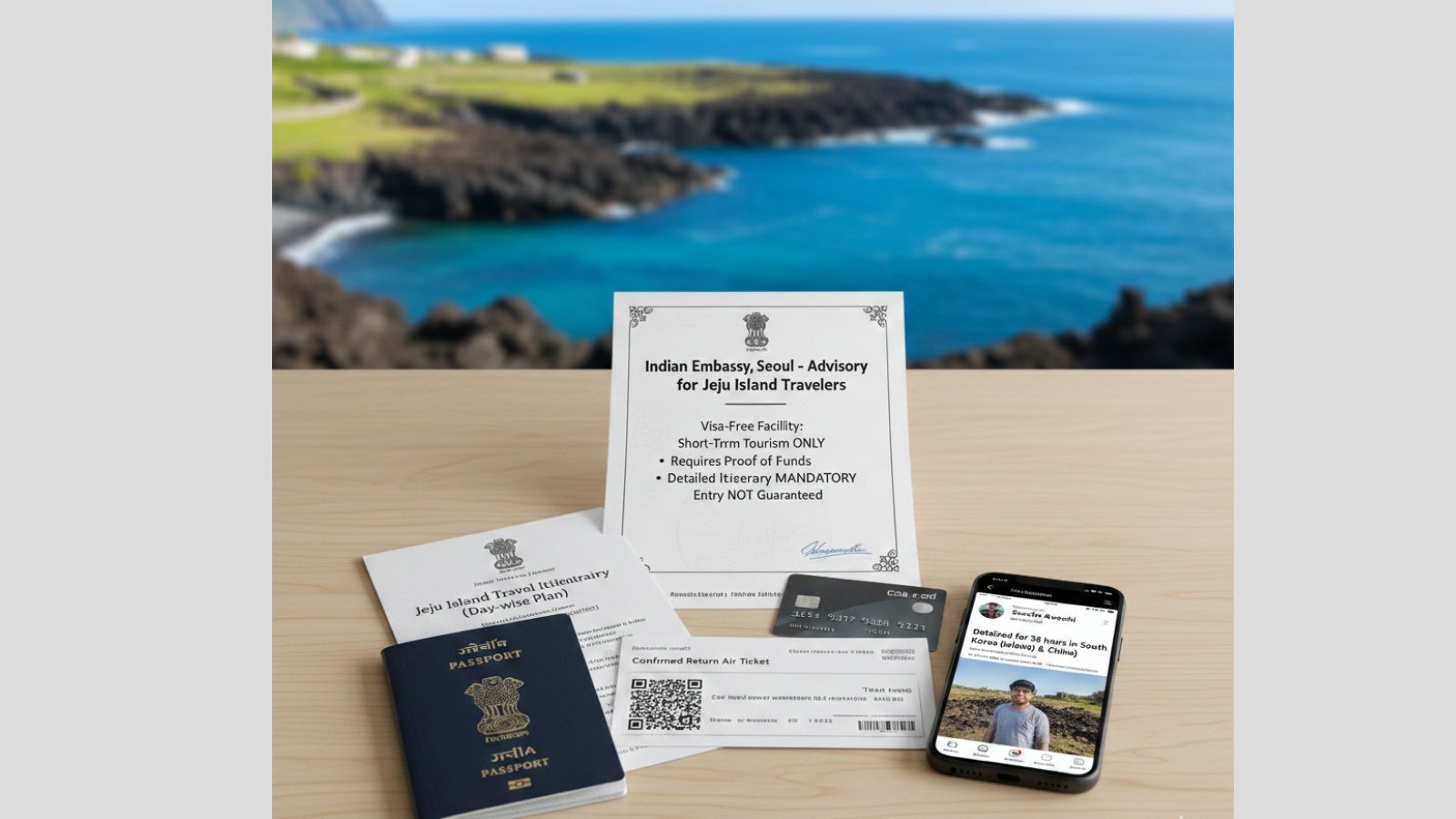
Lately, the scrutiny has reached an intense level. The Indian Embassy's advisory highlights that being "visa-free" doesn't mean "guaranteed entry." Immigration officials have the absolute right to deny anyone they think doesn't have a "clear purpose of visit." In Awasthi's case, he claims he had all his documents, yet he was still flagged. This suggests that the criteria are subjective and often depend on the mood of the officer or subtle red flags in your travel profile.
The Sachin Awasthi incident and the 38 hour detention
Sachin Awasthi isn't an amateur traveler. He's an influencer used to navigating foreign borders. Yet, upon landing at Jeju, he was whisked away to a detention area. He described the conditions as cramped, mentioning he was kept with several others in a room where they had to sleep on the floor. His luggage stayed with the airline. He couldn't access his belongings. He was eventually deported back to India.
This story went viral because it mirrors the "dark room" experiences many travelers face in high-security zones, but it's happening in a place marketed as a tourist paradise. The Indian Embassy's intervention confirms that this isn't just social media drama. They've explicitly warned Indian citizens to carry every possible piece of evidence to prove they are legitimate tourists. If you can't show a clear, prepaid path through the island, you're a target for deportation.
What the South Korean authorities are looking for
Why the sudden aggression? South Korea is grappling with a rise in undocumented workers. Many people use the Jeju visa-free loophole to land on the island and then attempt to disappear into the local labor market or find a way to the mainland. Consequently, immigration officers are trained to look for specific "risk factors."
- Insufficient funds: If you're staying for ten days but only have a few hundred dollars, they won't believe you're a tourist.
- Vague itineraries: "I'll just see where the wind takes me" is a terrible answer at Jeju immigration.
- Missing return tickets: This is a non-negotiable dealbreaker.
- Lack of hotel confirmation: They often call the hotel to verify your booking. If it's a "pay at property" booking that hasn't been charged, they might view it as fake.
How to actually survive Jeju immigration without a visa
If you're still determined to visit, you've got to be over-prepared. Don't rely on digital copies of your documents. Power banks fail. Wi-Fi drops. Carry a physical folder with every single piece of paper.
The documentation checklist you can't ignore
Honestly, you should treat a visa-free entry as if you're applying for a rigorous visa at a consulate. Bring a detailed day-by-day itinerary. Don't just list "beaches." List the specific name of the beach, the bus you're taking to get there, and the museum you'll visit afterward.
Show them the money. Have recent bank statements printed out. If you've got a high-paying job back home, bring a copy of your employment contract or a leave sanction letter. They want to see "ties to home." They want to know you have every reason to leave South Korea when your trip ends.
The psychological game at the border
Immigration officers are human. They're also tired and under pressure to catch "illegals." If you're nervous, defensive, or can't answer basic questions about your stay, you're going to the secondary screening room.
Dress like a tourist. It sounds superficial, but it matters. If you're coming for a luxury beach holiday, look the part. If you arrive looking like you're ready to work on a farm, you're inviting questions. Be polite but firm. If they ask why you're there, give a specific answer. "I want to hike the Hallasan Mountain trails" is much better than "I like Korean culture."
When to skip Jeju and just get a visa
If you're worried, the best move is to just apply for a standard C-3 tourist visa through the Korean Visa Application Center (KVAC). Yes, it costs money. Yes, it takes time. But a visa in your passport is a massive shield. It means a consular officer has already vetted you. While it doesn't 100% guarantee entry—only the officer at the port can do that—it makes the process significantly smoother.
If you have a history of deportation from any country, or if your passport is relatively blank, Jeju's visa-free entry is a gamble. The risk of being detained for 30 plus hours and then sent home on the next available flight—at your own expense—is too high.
Immediate steps if you're heading to South Korea soon
Check the latest advisories on the Official Website of the Indian Embassy in Seoul. They update these based on the number of distress calls they receive. If you're already booked, call your hotel in Jeju and confirm they have your reservation on file and that it's fully "confirmed."
Carry the contact number for the Indian Embassy's emergency helpline. If you're moved to a detention room, you have the right to ask to contact your embassy. They might not be able to force the Korean government to let you in, but they can ensure you're treated humanely and that your family knows where you are.
Pack a change of clothes and basic toiletries in your carry-on. Awasthi's ordeal was made worse because he couldn't access his checked bag. If the worst happens and you're stuck in a room for two days, you'll want your toothbrush and a fresh shirt. It's a grim thought, but in the current climate, it's a necessary precaution.
Don't let a "visa-free" label lure you into a false sense of security. Treat the Jeju border with the respect—and the paperwork—it clearly demands. Keep your documents organized, stay calm during questioning, and have a backup plan in case your "tropical escape" hits a bureaucratic wall.