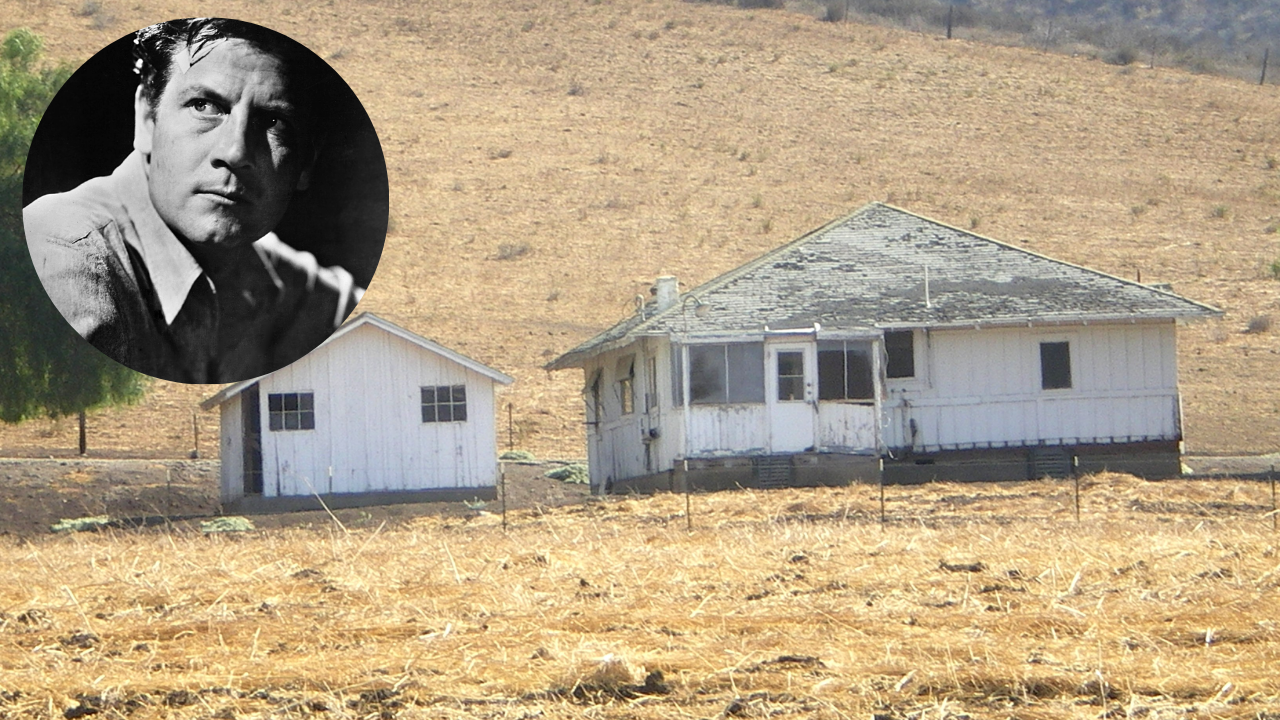
When classic western star Joel McCrea purchased a sprawling tract of Ventura County dirt in 1933, most of his peers were sinking their studio paychecks into Beverly Hills mansions or volatile stock options. Acting on the pragmatic counsel of his close friend Will Rogers, McCrea bypassed the flashing lights of Sunset Boulevard to buy thousands of acres in the Santa Rosa Valley. It was a move designed to insulate an actor against the fickle whims of movie studio bosses. That single investment evolved into a multi-decade balancing act between private agricultural life, rapid suburban expansion, and ultimate environmental preservation.
The story of the Joel McCrea ranch is rarely told for its economic brilliance or its sharp-eyed urban planning foresight. Instead, it typically gets reduced to a neat Hollywood trivia item about a nice actor who liked cows. The reality is far grittier. McCrea and his wife, actress Frances Dee, did not play at being gentleman farmers. They ran a genuine, working cattle and grain operation while raising three sons through the teeth of the Great Depression and the structural shifts of post-war California.
Will Rogers understood something fundamental about the entertainment industry that still holds true today. Studio contracts offered temporary wealth, but zero security. By steering McCrea toward tangible land assets in the Conejo Valley, Rogers provided a blueprint for long-term survival. McCrea took that advice to heart. He spent decades working opposite stars like Veronica Lake and Barbara Stanwyck during the day, only to return home to mend fences, manage livestock, and oversee grain harvests. The ranch was his anchor.
As decades passed, the pressure on agricultural land in Southern California shifted from economic depression to explosive population growth. Post-war suburbanization crept outward from Los Angeles, chewing through citrus groves and cattle pastures with terrifying speed. Ventura County was not immune. The massive open spaces that once defined the region began to fracture into master-planned communities and strip malls.
During the late 1950s and 1960s, the McCrea family faced a choice familiar to many generational landowners in path-of-growth corridors. They could hold out entirely and watch eminent domain and rising tax burdens force their hand, or they could strategically divest portions of their holdings to shape the coming urban footprint. They chose the latter. Portions of the original property were sold off, directly forming the foundational land base for what became the northern section of Thousand Oaks. Other parcels were carved away to establish local community assets, including land gifted for the local YMCA branch.
Selling land to fuel a new city while retaining the core homestead was a high-stakes tightrope walk. Yet the family managed to hold a shrinking core together until McCrea passed away in 1990. What happened next set a high-water mark for celebrity estate stewardship.
Rather than liquidating the remaining acreage to the highest bidder for maximum family payout, the heirs orchestrated a complex series of conservation agreements. In 1995, an arrangement was struck with the Conejo Recreation and Park District to transition the main ranch property into public ownership. This was not a simple cash transaction. It was an intricate legal framework designed to lock out future residential development permanently.
The centerpiece of this conservation effort materialized through targeted land transfers. The family officially dedicated 74 acres as a protected wildlife sanctuary. This specific parcel features rugged sandstone bluffs, deep canyons, and rare native flora like the Conejo rock plant. Because of its fragile ecosystem and its value as a nesting ground for birds of prey, public access to this sanctuary remains strictly controlled.
Beyond the wildlife preserve, another 220 acres were secured for parkland and historic open space. The historic ranch complex itself, anchored by eight distinct buildings including a main house designed by architect John Byers, was placed on the National Register of Historic Places. Byers departed from his signature Spanish Colonial Revival aesthetic here, instead crafting an early blueprint for the unpretentious California ranch style that would later dominate suburban architecture.
Maintaining a cluster of century-old wooden structures in a climate prone to wild temperature swings and brushfires is an expensive proposition. To handle this burden, the Joel and Frances McCrea Ranch Foundation was established. Operating as a dedicated non-profit entity, the foundation raises private capital to supplement public park funds. It finances ongoing structural restoration, artifact preservation, and educational outreach programs that bring school groups through the property.
The site operates under a tightly managed schedule rather than standard open-gate park hours. Visitors can tour the grounds, view the preserved farm equipment, and walk the perimeter trails only through scheduled docent-led tours and special community events. This controlled access model prevents the site from being loved to death by foot traffic, preserving the remote, quiet atmosphere that drew McCrea to the valley in the first place.
The broader landscape around the ranch continued to evolve well into the twenty-first century. Local conservation agencies capitalized on the momentum of the McCrea family donations by acquiring adjacent parcels. Hillside grasslands and steep ridgelines from subsequent residential developments were routinely funneled into public open-space trusts through mitigation agreements. Today, the surviving acreage acts as a green buffer, interrupting the endless sweep of suburban sprawl along the northern edge of Ventura County.
Most celebrity land purchases in modern history serve as tax shelters, vanity projects, or temporary retreats before being flipped for a profit. Joel McCrea treated his dirt as an ecosystem and a legacy. By listening to Will Rogers in the depths of the 1930s, an actor known for playing stoic cowboys on the silver screen engineered a permanent sanctuary for wildlife, history, and open space in a state that rarely looks backward.