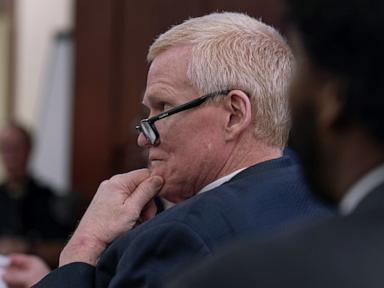
South Carolina Circuit Court Judge Clifton Newman denied Alex Murdaugh’s motion to dismiss the murder charges against him in the June 2021 shooting deaths of his wife, Maggie, and younger son, Paul. The ruling, issued from the bench in Colleton County, dismantled a defense strategy aimed at halting the prosecution before a jury could ever weigh the evidence.
Murdaugh’s legal team, led by veteran defense attorneys Dick Harpootlian and Jim Griffin, argued that state prosecutors had failed to produce direct physical evidence tying the disbarred attorney to the double homicide at the family’s Moselle hunting estate. They contended the indictment relied on circumstantial assumptions and improperly connected financial crimes to violent felonies. Judge Newman rejected those claims, affirming that the state met the legal threshold required to bring a capital murder case to trial.
The Anatomy of a Failed Dismissal Strategy
Motions to dismiss criminal indictments in high-profile murder trials rarely succeed. Defense attorneys file them anyway. In South Carolina, as in most jurisdictions, a pretrial motion to dismiss faces an extraordinarily steep climb because the court must view the allegations in the light most favorable to the prosecution.
Harpootlian and Griffin attempted to frame the state's case as a house of cards built on media sensationalism rather than forensic certainty. They pointed out the absence of murder weapons—neither the shotgun used to kill Paul nor the rifle used to kill Maggie had been recovered—and argued that blood spatter evidence remained contested. By attacking the sufficiency of the indictment early, the defense sought to force the South Carolina Attorney General’s Office into revealing its trial roadmap prematurely.
Judge Newman saw right through the maneuver.
During the hearing in Walterboro, Newman maintained tight control over the courtroom, a demeanor that defined his oversight of the entire Murdaugh legal saga. He recognized that disputing the weight of circumstantial evidence is a task reserved for twelve jurors, not a presiding judge during preliminary motions. If prosecutors allege facts that, if proven true, constitute the crime of murder, the indictment stands.
Circumstantial Evidence Versus Direct Proof
Public perception often distorts how criminal trials actually function. Television dramas condition viewers to expect a smoking gun, a clear surveillance video, or an eyewitness confession. In reality, prosecutors secure murder convictions every day using circumstantial evidence, which the law treats with the exact same legal weight as direct evidence.
To understand the distinction, consider a hypothetical example. If a witness testifies they saw someone walk outside in the rain, that is direct evidence. If a witness testifies they saw someone enter a building dry and exit five minutes later with a soaking wet umbrella and drenched coat, that is circumstantial evidence. Both lead to the same logical conclusion.
In the Murdaugh prosecution, state attorneys built their case around digital footprints, timeline contradictions, and motive. Cellphone location data, vehicle telematics, and a crucial video recovered from Paul Murdaugh’s phone placed Alex Murdaugh at the dog kennels on the Moselle property minutes before the murders occurred—directly contradicting his repeated statements to investigators that he had been napping at the main house and never visited the kennels that evening.
When Harpootlian argued that a lack of eyewitnesses invalidated the charges, he was arguing a standard that does not exist in American jurisprudence. Judge Newman’s refusal to dismiss the indictments underscored a fundamental legal reality. Contradictions in a defendant's alibi, combined with timeline proximity, provide more than enough probable cause to send a homicide case to a jury.
The Legal Mechanics of the Indictment
A grand jury indictment is not a finding of guilt; it is a formal accusation based on probable cause. For a judge to throw out an indictment prior to trial, the defense generally must prove one of three things:
- Jurisdictional failure, meaning the court lacks the legal authority to hear the case.
- Facial insufficiency, meaning the written charges fail to allege all the statutory elements of the crime.
- Prosecutorial misconduct so severe that it compromised the integrity of the grand jury process itself.
Murdaugh’s attorneys leaned heavily on allegations of prosecutorial overreach and investigative bias. They accused the South Carolina Law Enforcement Division (SLED) of rushing to judgment and leaking information to the press to poison the jury pool in the Lowcountry. They also argued that prosecutors were using dozens of unrelated financial theft indictments to smear Murdaugh’s character before a single witness took the stand in the murder trial.
Judge Newman separated the noise from the statute. While concerns about pretrial publicity are valid, the standard legal remedy is thorough jury selection—known as voir dire—or a change of venue, not the outright dismissal of double homicide charges. By keeping the indictments intact, Newman preserved the state's ability to present its theory of motive: that Murdaugh killed his wife and son to distract from the imminent collapse of his multi-million-dollar financial fraud schemes.
Why Motive Became the Battleground
The intersection of white-collar theft and violent murder made the Murdaugh prosecution unique in modern Southern legal history. Normally, rules of evidence strictly prohibit prosecutors from introducing a defendant's prior bad acts to prove they committed a new crime. You cannot tell a jury someone is a thief just to convince them he is also a killer.
However, Rule 404(b) of the South Carolina Rules of Evidence contains critical exceptions. Evidence of other crimes is admissible to prove motive, intent, plan, or absence of mistake.
State prosecutors argued that Murdaugh’s alleged theft of nearly $9 million from legal clients and his own law firm was the direct catalyst for the murders. On the morning of June 7, 2021—the very day Maggie and Paul were killed—the chief financial officer of Murdaugh’s law firm confronted him about missing client fees. Later that afternoon, Murdaugh’s father was hospitalized with terminal cancer, temporarily halting the firm's internal audit.
The state’s theory was stark. Murdaugh needed a catastrophic tragedy to buy time, generate sympathy, and halt the financial scrutiny that threatened to destroy his family's century-old legal dynasty.
Murdaugh’s defense team tried to sever this connection during the dismissal arguments, claiming the financial allegations were entirely speculative as a motive for murdering his own family. Yet judges rarely strip prosecutors of their ability to argue motive before the trial even begins. Judge Newman’s ruling signaled that the financial collapse and the killings could not be neatly divorced in a vacuum, setting the stage for brutal evidentiary battles over how much financial testimony the jury would ultimately hear.
The Strategy Behind a Losing Motion
Veteran courtroom observers knew Judge Newman would deny the motion to dismiss long before the hearing ended. Experienced litigators like Dick Harpootlian—a former prosecutor and longtime state senator—knew it too. So why burn time and political capital on a motion destined to fail?
Because criminal defense is a game of attrition and record preservation.
First, filing a comprehensive motion to dismiss forces the state to put its legal theories on the written record months before trial. Prosecutors have to file written responses defending the validity of their charges, which inevitably exposes how they plan to link timeline data, forensic testing, and financial records. Defense teams study those briefs like blueprints, looking for weak joints they can exploit during cross-examination.
Second, every pretrial motion denied by a trial judge becomes a potential issue for appeal. If a defendant is convicted, appellate attorneys comb through every single ruling made from the bench to find reversible error. If the defense fails to raise an objection or file a motion prior to trial, they generally waive the right to argue that issue before an appellate court later.
Third, these hearings serve as a testing ground for the judge's temperament. Watching how Judge Newman handled aggressive arguments over forensic reliability gave Murdaugh’s team critical intelligence on how much latitude he would grant them once the jury was seated. Newman showed he would remain unmoved by theatrical rhetoric, forcing the defense to sharpen its technical challenges to SLED’s forensic work.
Forensic Controversies and Investigative Missteps
While Judge Newman refused to toss the charges, the pretrial hearings exposed genuine vulnerabilities in the state's investigation—vulnerabilities that would later dominate the trial.
Murdaugh’s attorneys zeroed in on SLED’s handling of blood spatter testing on a white t-shirt Murdaugh wore on the night of the murders. Early reports leaked to the media suggested the shirt was covered in high-velocity impact spatter, which would indicate Murdaugh was standing right next to Paul when the fatal shotgun blast occurred.
In reality, the forensic testing was far more complicated. Initial presumptive chemical tests on the shirt came back negative for blood, and subsequent analysis by private experts hired by SLED produced conflicting conclusions, with some methods reportedly destroying samples during testing.
Defense attorneys argued that investigators relied on flawed science to secure indictments and shape public opinion. It was a legitimate point of criticism. Law enforcement agencies frequently overstate the certainty of pattern-matching forensics, such as bloodstain pattern analysis, which lacks the statistical rigor of DNA profiling.
Even so, disputed forensic testing does not invalidate a murder indictment. In the American legal system, flawed or contested forensics are challenged through Daubert hearings—proceedings designed to determine whether expert scientific testimony is reliable enough to be presented to a jury—and through competing expert witnesses at trial. Judge Newman rightly recognized that quarrels over blood spatter methodology belonged in evidentiary hearings, not as grounds to dismiss murder charges altogether.
The Weight of the Murdaugh Dynasty
To understand the tension inside that Colleton County courtroom, one has to account for the geography and history of the Fourteenth Judicial Circuit. For three generations—spanning nearly ninety years—men named Randolph Murdaugh served as the elected solicitor, or chief prosecutor, for the five-county region encompassing Hampton and Colleton counties.
The Murdaugh family did not just practice law in the Lowcountry; they were the law. Their private personal injury firm wielded immense financial power, while their prosecutorial office controlled who went to prison and who walked free. Portraits of Murdaugh patriarchs hung on courtroom walls.
When Alex Murdaugh stood before Judge Newman seeking to dismiss double murder charges, it represented a historic inversion of power. The state was prosecuting a scion of its most entrenched legal dynasty in the very courthouse where his ancestors had dictated justice for decades.
Judge Newman, an outsider from Columbia assigned specifically to handle the sprawling Murdaugh cases to avoid local conflicts of interest, treated Murdaugh like any other defendant charged with capital murder. There was no deference to family lineage, no soft-pedaling of the allegations, and no patience for procedural shortcuts.
What the Ruling Meant for the Trial Ahead
Denying the motion to dismiss locked both sides onto an unavoidable collision course. With the indictments firmly intact, the prosecution retained all its leverage, including the ability to pursue life imprisonment without the possibility of parole.
Had Judge Newman dismissed the charges without prejudice, prosecutors could have simply re-indicted Murdaugh before a new grand jury, delaying justice for months while adding millions of dollars to the state's litigation costs. Had he dismissed them with prejudice, the double murder case would have died entirely on a procedural technicality before a single piece of evidence was weighed by citizens of Colleton County.
Instead, Newman’s decision ensured that the central questions of the case—why Maggie and Paul were brutally executed at the kennels, who pulled the triggers, and whether a father could slaughter his own family to conceal financial ruin—would be decided in open court under the scrutiny of the public.
The defense lost its bid to stop the clock, leaving Alex Murdaugh with no procedural escape hatch and a mountain of digital and financial evidence waiting to be unpacked before twelve jurors.