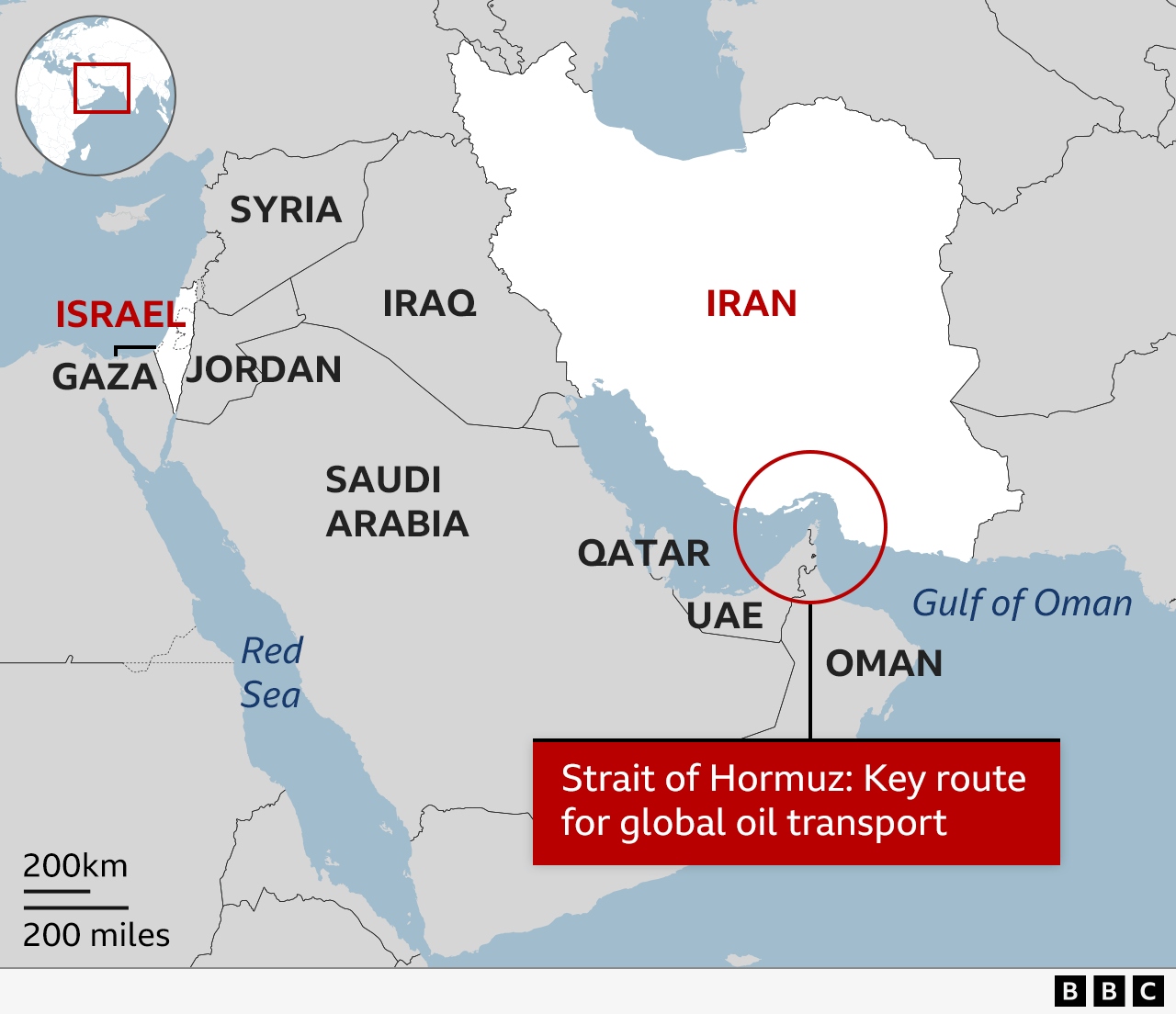
The Iranian demand for transit fees in the Strait of Hormuz is not a mere bureaucratic expansion; it is an exercise in jurisdictional arbitrage designed to weaponize the gap between treaty law and customary international practice. By attempting to formalize a "secure shipping" toll, Tehran is transitioning from kinetic interdiction—seizing ships—to a sophisticated economic extraction model that leverages its geography as a fixed asset. This strategy rests on three distinct pillars: the rejection of the Transit Passage regime, the assertion of a "Quid Pro Quo" legal theory, and the implementation of a shadow financial infrastructure for maritime tolls.
The Collision of Regimes: Transit vs. Innocent Passage
The primary bottleneck for global maritime trade in the Strait of Hormuz is not physical, but legal. The global standard, codified in the 1982 United Nations Convention on the Law of the Sea (UNCLOS), establishes the regime of Transit Passage (Articles 37–44). This regime is a non-suspendable right of navigation and overflight for the purpose of continuous and expeditious transit between one part of the high seas or an exclusive economic zone (EEZ) and another.
Iran, however, has signed but not ratified UNCLOS. Its operational posture is governed by the 1993 Marine Areas Act, which mandates a more restrictive Innocent Passage regime. The distinction is critical for the imposition of fees:
- Non-Suspendability: Under Transit Passage, coastal states cannot hamper or suspend transit. Under Innocent Passage, Iran claims the right to suspend transit on security grounds (Article 8 of the 1993 Act).
- Operational Constraints: Innocent Passage requires submarines to surface and prohibits overflight.
- Regulatory Jurisdiction: By enforcing Innocent Passage, Iran asserts the right to regulate the "good order" of the strait, providing the legal pretext to demand fees for the "service" of maintaining that order.
The Quid Pro Quo Theory: Legal Reciprocity as a Weapon
Tehran’s justification for tolls hinges on a specific interpretation of treaty law: the Quid Pro Quo Theory. Iran argues that the Transit Passage regime was a specific concession granted by coastal states in exchange for other benefits within the UNCLOS framework. Since Iran never ratified the treaty, it maintains that it is not bound by the "concession" of free transit.
This creates a structural conflict with the United States and other major shipping nations, which view Transit Passage as Customary International Law—rules that apply to all states regardless of treaty status. Iran’s counter-argument is that "new" customary law cannot be forced upon a "persistent objector." By demanding fees, Iran is effectively testing the durability of customary law against the reality of coastal sovereignty.
The Cost Function of Maritime Passage
The reported "adhoc" fees—reaching up to $2 million per voyage—are not random. They function as a risk-adjusted premium. The cost function of a shipowner transiting the strait under the current Iranian regime is:
$$Total Cost = C_{ops} + P(I) \times L + T_{f}$$
Where:
- $C_{ops}$: Standard operational costs (fuel, crew, insurance).
- $P(I)$: Probability of interdiction or seizure by the IRGC.
- $L$: The financial loss associated with detention (demurrage, cargo spoilage, reputation).
- $T_{f}$: The Iranian transit fee (the "toll").
Tehran’s strategy is to set $T_{f}$ at a level slightly lower than $P(I) \times L$. For a VLCC (Very Large Crude Carrier) carrying 2 million barrels of oil, a $2 million fee represents roughly $1.00 per barrel—a negligible cost compared to the total loss of a $150 million cargo or a $100 million vessel. This is predatory pricing applied to geopolitics: by making the fee the "cheaper" option compared to the risk of seizure, Iran incentivizes compliance and builds a precedent for a formalized tolling system.
The Shadow Toll Infrastructure
The implementation of these fees requires more than just naval presence; it requires a financial mechanism that bypasses standard maritime insurance and banking channels.
- Non-Systematic Billing: By keeping the fees adhoc and non-systematic, Iran prevents the international community from mounting a unified legal challenge at the International Tribunal for the Law of the Sea (ITLOS).
- Currency Arbitrage: The demand for fees in non-USD currencies or via opaque settlement mechanisms serves to further insulate the Iranian economy from sanctions while creating a direct revenue stream for the IRGC.
- Permit Logic: Iran’s Deputy Foreign Minister has proposed a "protocol" requiring ships to obtain licenses to pass. This moves the goalposts from a "toll" to a "regulatory fee," a common tactic used to mask economic extraction as environmental or safety compliance.
Strategic Constraints and Neutrality
A significant limitation to Iran's tolling strategy is the San Remo Manual on International Law Applicable to Armed Conflicts at Sea. If Iran formalizes these fees, it risks being classified as a belligerent that is interfering with neutral shipping, which would legally authorize naval escorts to use force to protect commercial vessels.
Furthermore, the Montreux Convention (governing the Turkish Straits) provides a historical counter-point. Turkey is permitted to charge small, regulated fees for sanitary and safety services, but it cannot charge "transit tolls" for the right of passage. Iran is attempting to leapfrog the Montreux model and establish a "sovereign gateway" model similar to the Suez Canal, despite the Strait of Hormuz being an international waterway rather than an artificial canal.
Forecast: The Normalization of the Toll
The current trajectory indicates that Iran will move to formalize these charges as part of any broader regional security settlement. This would involve:
- Drafting a "Safety and Security Protocol" with regional partners (like Oman) to provide a veneer of multilateralism.
- Indexing fees to vessel displacement and cargo hazard levels, mirroring the Suez Canal Authority's pricing structure.
- Utilizing the "Secure Shipping" narrative to justify the fees as payment for Iranian naval "protection" against third-party threats.
For global shippers, the strategic play is no longer purely a legal defense under UNCLOS, but a pricing negotiation. If the international community fails to conduct consistent Freedom of Navigation Operations (FONOPs) that specifically challenge the collection of fees, the "Hormuz Toll" will transition from an illegal extortion tactic to an entrenched cost of doing business in the 21st-century maritime environment. Shippers must begin factoring a "geopolitical transit premium" into long-term charter party agreements for any route passing through the Persian Gulf.