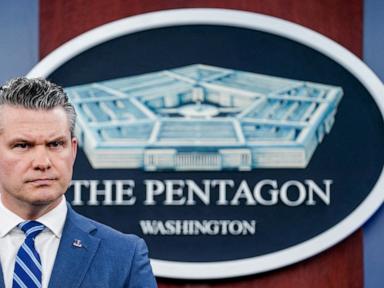
The judicial affirmation of the Pentagon’s authority to restrict journalist access and mandate escorts represents a critical recalibration of the friction between First Amendment protections and military operational security. At its core, this ruling codifies a tiered hierarchy of access where the state’s interest in tactical integrity outweighs the media's preference for unmediated observation. The legal framework governing this relationship rests on three primary pillars: the doctrine of non-public forums, the operational necessity of information control, and the historical precedent of military-press integration.
The Tripartite Framework of Military Access Control
To analyze the implications of the court's decision, one must first deconstruct the mechanism by which "access" is granted or denied. The Department of Defense (DoD) does not view the battlefield as a public forum; rather, it classifies active military installations and operational zones as restricted environments where the government retains the right to manage presence based on mission parameters.
1. The Doctrine of the Non-Public Forum
Under established First Amendment jurisprudence, the government’s power to limit speech or access is highest in a non-public forum. Unlike a public sidewalk or a park, a military base or a forward operating position exists for a specific functional purpose: the execution of national security objectives. The court’s validation of the escort requirement reinforces the principle that journalists do not possess an inherent right of "roving access." Access is a privilege granted under specific conditions, and the withdrawal of that privilege—or the imposition of supervision—does not constitute a prior restraint unless it is viewpoint-discriminatory.
2. Operational Security (OPSEC) as a Constraint Function
The Pentagon’s insistence on escorts functions as a physical firewall against the inadvertent disclosure of tactical data. In a modern conflict environment characterized by near-instantaneous data transmission, the delta between observation and broadcast has collapsed. The escort serves as a human filter to ensure that:
- Tactical Geometry (the specific layout of defenses) is not compromised.
- Unit Capabilities (personnel counts, equipment status) remain obscured from signals intelligence.
- Casualty Notification Protocols are respected, preventing the public release of identities before families are notified.
3. The Liability and Safety Mandate
Beyond security, the military operates under a duty of care for civilians within its theater of operations. An unescorted journalist represents a dual liability: a potential casualty requiring rescue (thereby diverting combat resources) and a variable that unit commanders cannot account for in their kinetic planning. By mandating escorts, the Pentagon internalizes the risk management of press presence, effectively making the journalist a temporary "attachment" to the unit's command structure.
The Economic and Logistical Friction of Unmediated Reporting
When the court permits the Pentagon to restrict access "for now," it validates a logistical bottleneck that has profound effects on the marketplace of ideas. The cost of reporting from a conflict zone is not merely financial; it is measured in the "friction of observation."
Every layer of supervision adds a delay to the reporting cycle. If a journalist must wait for an available Public Affairs Officer (PAO) to conduct an escort, the window for capturing time-sensitive events may close. This creates a natural selection process where only the largest media conglomerates—those with the capital to sustain long wait times—can maintain a presence. Independent or freelance journalists are disproportionately filtered out of the ecosystem because they cannot absorb the "wait-state" costs imposed by restrictive access policies.
The second-order effect is a homogenization of the narrative. When all journalists are viewing the same events through the same escorted lens, the diversity of perspective narrows. This is not necessarily a result of active censorship, but a byproduct of structural alignment. If ten reporters are standing in the same "media pit" at a forward base, their output will inevitably converge toward a singular set of facts and visuals.
Analyzing the Counter-Arguments and Legal Challenges
Critics of the ruling argue that the "for now" caveat provides the Pentagon with an indefinite runway to suppress unfavorable reporting. The primary legal tension lies in whether the escort requirement is a reasonable "time, place, and manner" restriction or an overbroad tool for narrative management.
To be legally sound, the Pentagon's restrictions must meet the following criteria:
- Content Neutrality: The restrictions must apply equally to all accredited media, regardless of the tone of their previous coverage.
- Narrow Tailoring: The use of escorts must be linked to a specific, identifiable security or safety concern, rather than a general desire to minimize press presence.
- Alternative Channels: The military must demonstrate that journalists have other ways to gather information, such as briefings or pooled footage, even if those channels are less desirable than direct access.
The court’s decision indicates that the current security environment—characterized by hybrid warfare and the ubiquity of digital surveillance—provides sufficient justification for these restrictions. The "for now" language suggests a temporal limit, but in practice, the state of "conflict" or "heightened security" is often permanent in the regions where the Pentagon operates.
The Information Asymmetry Gap
The core problem for the press is the information asymmetry between the military and the observer. The Pentagon possesses the data required to justify a restriction (e.g., "we have intelligence of a specific threat in this sector"), but they cannot always share that data with the press without compromising the very security they seek to protect.
This creates a "black box" of justification. The court essentially ruled that, in the absence of evidence of bad faith, the judiciary will defer to the military's expertise in assessing risk. This deference is a cornerstone of the Chevron era (and its evolving successors), where specialized agencies are given wide berth to interpret the requirements of their mission.
Strategic Implications for Media Engagement
The shift toward mandated escorts and restricted access necessitates a change in strategy for news organizations. If the front lines are increasingly "escort-only," the value of the "embedded" model increases while the "unilateral" model (independent travel in war zones) becomes increasingly dangerous and legally tenuous.
- Investment in Digital OSINT: As physical access is throttled, news organizations must shift resources toward Open-Source Intelligence (OSINT). Satellite imagery, social media geolocation, and data scraping serve as necessary checks against the curated reality of an escorted tour.
- Legal Push for Defined "Sunset" Clauses: Future litigation will likely focus on defining the "for now" aspect of the ruling. The press must force the DoD to define the specific conditions under which restrictions will be lifted, preventing temporary measures from becoming de facto permanent policy.
- The Rise of Non-Traditional Witnesses: As professional journalists are restricted, the role of local civilians and "accidental journalists" with smartphones grows. The Pentagon can control the press, but it cannot easily control the digital exhaust of an entire population.
The current legal trend favors a managed, sanitized, and supervised interface between the military and the public. This ensures operational integrity but risks creating a vacuum of independent verification. The strategic response is not to fight the escort requirement in isolation, but to build a redundant reporting infrastructure that utilizes technological surrogates where physical access is denied.
News organizations must now operate with the understanding that the Pentagon has been granted the legal authority to serve as the gatekeeper of the combat narrative. The focus shifts from challenging the gatekeeper's right to exist to finding the technological and legal tools to look over the fence.