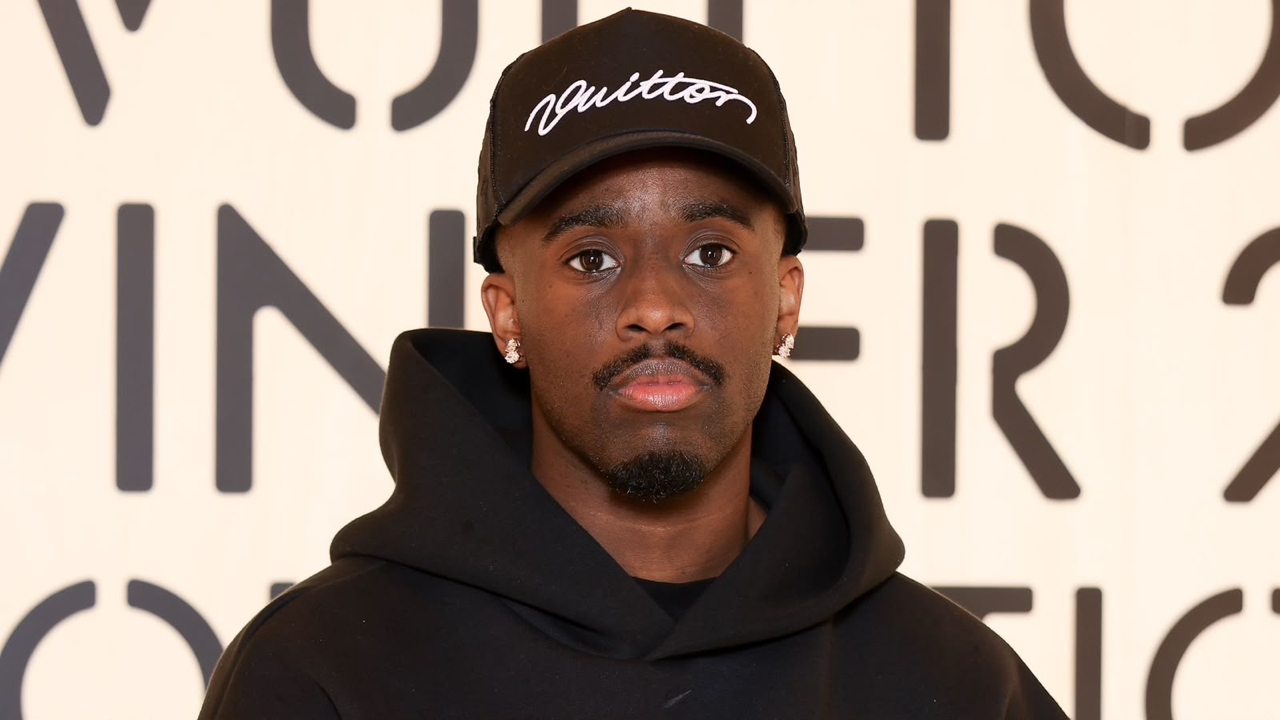
Kai Cenat is stepping back from the chaotic, hyper-accessible style of livestreaming that made him the biggest creator on Twitch, enforcing strict personal boundaries with fans while shifting his long-term focus toward his independent fashion label, Vivet. This strategic pivot is not an isolated retreat from fame, nor is it simply burnout. It is a calculated business survival maneuver driven by the physical dangers of parasocial obsession, the exhausting economics of live broadcast retention, and the cold reality that platform algorithms reward self-destruction until the creator breaks.
For years, the blueprint for modern internet stardom demanded total surrender. You turned on the camera, invited millions of strangers into your bedroom, and let them dictate your sleep schedule, your emotional state, and your physical safety. Cenat perfected this formula. He built an empire on relentless energy, marathon subathons, and an illusion of total proximity. Viewers did not just watch him; they felt entitled to him. Also making waves recently: Jessica Chastain in Lost Lear Isn’t a Safe Prestige Play It’s Broadway’s Biggest Gamble.
That illusion shattered on the concrete of Union Square.
When a fan giveaway in New York City spiraled into a massive riot in August 2023, it exposed the fatal flaw in the modern creator economy. Digital metrics do not translate cleanly into physical crowd control. Thousands of young fans descended on Manhattan, climbing vehicles, throwing debris, and clashing with police. Cenat was arrested and charged with inciting a riot—charges that were later dropped after he apologized and paid restitution—but the incident marked a permanent fracture in how the industry views public appearances. You cannot manage a mob with a moderator ban hammer. More information into this topic are detailed by E! News.
The Economics of Parasocial Exhaustion
To understand why Cenat is erecting walls now, you have to look at the mechanics of livestreaming. Unlike traditional celebrities who release a movie once a year or drop an album every few seasons, top streamers are trapped on a content treadmill that stops only when they sleep. Even then, during marathon broadcasts like Mafiathon, the camera stays on while they rest.
This constant visibility breeds a specific, corrosive form of attachment known as a parasocial relationship. Psychologists have studied this one-sided intimacy since the days of early television, but live chat turns it into a feedback loop. When a viewer donates five dollars and hears their username read aloud by a millionaire in real time, the brain registers a social transaction. Multiply that by hundreds of thousands of concurrent viewers, and you create a massive audience that genuinely believes they are friends with the person on screen.
Friends do not respect security perimeters. Friends show up unannounced at your front door.
Top creators routinely deal with swatting, doxxing, and fans loitering outside their residences. For Cenat, whose brand was built on being the approachable guy from the Bronx who just happened to get rich, setting boundaries carries immense financial risk. Pull back too far, and the audience accuses you of "changing" or "forgetting where you came from." Stay too close, and you risk physical harm or legal liability every time you step outside.
The Trap of Escalation
Livestreaming suffers from a severe case of diminishing returns. What shocked and entertained the audience in 2022 feels pedestrian by 2026. To maintain peak concurrent viewership and keep subscriber counts climbing, creators are forced into an arms race of spectacle.
- First-year growth relies on personality and raw authenticity.
- Mid-tier scaling demands collaborations, celebrity guests, and higher production budgets.
- Apex survival requires stunts, marathon broadcasts, and dangerous real-world integrations.
Cenat hit the apex faster than almost anyone in digital media history. He shattered Twitch subscriber records, hosted A-list musicians and athletes in his streaming room, and turned his broadcasts into cultural events that rivaled traditional late-night television. Yet the ceiling of livestreaming is surprisingly low when measured against traditional media ownership.
You do not own your Twitch audience. You rent access to them. If the platform changes its revenue split, alters its discovery algorithm, or issues a suspension, your primary income stream vanishes overnight. Cenat’s decision to recalibrate his relationship with fame is a direct response to this vulnerability. He is trading short-term, volatile attention for long-term, insulated equity.
Why Fashion Is the Ultimate Exit Ramp
Look at the trajectory of every major entertainer over the last thirty years. Music, sports, and digital media are high-burnout, youth-obsessed industries. Apparel is where you go to build generational wealth without having to dance on camera at forty.
Cenat’s focus on Vivet, his clothing brand, follows a well-worn playbook established by figures like Kanye West, Tyler, the Creator, and Rihanna, though adapted for the direct-to-consumer streaming era. Most internet personalities fail miserably at fashion because they treat it like glorified merchandise. They slap a catchphrase or a logo onto a cheap blank hoodie, mark it up by four hundred percent, and expect their fans to buy it out of blind loyalty. That model dies the moment the creator's viewership dips.
Vivet represents an attempt to build a standalone label that can survive independently of Cenat’s daily broadcast schedule. By emphasizing cut-and-sew garments, distinct silhouettes, and curated drop cycles rather than constant availability, the brand signals a shift from mass-market merch to legitimate streetwear.
Consider a hypothetical example of how these two business models diverge. Imagine a creator sells 50,000 basic graphic tees at $35 each. They generate $1.75 million in gross revenue, split heavily with a third-party merch fulfillment company, and zero long-term brand equity is created. Nobody wears that shirt in three years unless it is ironically. Now imagine an independent fashion label producing 10,000 heavyweight, custom-milled jackets priced at $220. The gross revenue is $2.2 million, the margins are retained in-house, and the garment enters the secondary resale market, building cultural prestige that attracts buyers who have never watched a single livestream.
That is the transition Cenat is attempting to execute. Fashion offers three distinct advantages that livestreaming never will:
- Asynchronous Revenue: A clothing drop makes money in minutes without requiring the founder to sit in front of a ring light for twelve hours a day.
- Cultural Legitimacy: Traditional luxury houses and fashion weeks do not respect Twitch metrics, but they do respect proprietary design and sell-through rates.
- Physical Distance: A customer buys a garment; they do not buy a ticket to invade the designer's personal space.
The Friction of Rebranding in Real Time
Executing this shift while remaining the face of live internet entertainment is notoriously difficult. The audience that made Cenat famous is young, fiercely vocal, and deeply resistant to corporate polish. Whenever a grassroots creator introduces professional boundaries, a segment of the fanbase inevitably revolts.
We have seen this exact friction play out across digital media. When YouTubers transition from chaotic daily vlogs to structured production companies, viewership drops before it stabilizes. When musicians pivot from underground mixtapes to high-fashion creative direction, early adopters cry sellout.
Cenat has been unusually transparent about the psychological toll of his rise, addressing his audience directly about the need for privacy, mental space, and respect when he is off the clock. By explicitly defining when he is "working" versus when he is simply existing as a private citizen, he is attempting to retrain millions of viewers who have been conditioned to treat his life as a 24-hour interactive video game.
The Counter-Argument From the Trenches
Not everyone inside the creator economy believes this retreat is sustainable. A loud faction of industry analysts and rival streamers argue that hyper-accessibility is the entire product.
If you strip away the unfiltered chaos, the unannounced public pop-ups, and the raw emotional vulnerability, what separates a top streamer from a traditional Hollywood celebrity? Traditional celebrities have better writers, bigger budgets, and decades of institutional backing. Streamers win because they are immediate and reachable.
Critics of the boundary-setting movement point out that audiences have short memories and shorter attention spans. On platforms like Twitch and Kick, loyalty is measured in minutes. If Cenat logs off for weeks at a time to oversee fabric sourcing and lookbook shoots for Vivet, younger, hungrier creators will aggressively cannibalize his market share. They will do the dangerous stunts he now refuses to touch. They will give away their home addresses for clout. They will gladly burn themselves to the ground to capture his audience.
This is the central dilemma of modern digital fame. The very behaviors required to conquer the algorithm are incompatible with long-term survival.
Industry Precedent and the Maturation of New Media
To see where this leads, look back at the early days of YouTube in the mid-2010s. Creators like Casey Neistat, Emma Chamberlain, and PewDiePie all hit a wall where the demands of daily uploads collided with basic human sanity.
Chamberlain’s trajectory offers the closest parallel to Cenat’s current crossroads. She rose to prominence through hyper-relatable, unedited bedroom vlogs that forged an intense parasocial bond with millions of teenagers. At the peak of her YouTube dominance, she abruptly scaled back her video output, pulled away from public social gatherings, and poured her energy into Chamberlain Coffee and high-fashion partnerships with Louis Vuitton. She traded ubiquitous internet fame for a quieter, higher-margin, culturally insulated career.
Cenat is operating on a much larger, more volatile scale, and his audience skews significantly more aggressive in public spaces. Yet the underlying mechanics are identical. He is recognizing that fame is a depreciating asset if it is not converted into tangible ownership.
The New Rules of Engagement
By setting hard boundaries now, Cenat is effectively drafting a new contract with his audience. The terms are simple: you get the spectacle when the red light is on, and you get nothing when it turns off.
For the broader creator economy, his pivot serves as an early warning system. Talent agencies, brand sponsors, and platform executives have spent the last five years treating top streamers as indestructible content machines. They ignored the security risks, downplayed the psychological burnout, and profited from the chaos.
Now, the industry's biggest draw is locking the doors, hiring heavier security, and building a clothing empire designed to outlive his time on camera. If Vivet succeeds as a standalone fashion house, it will prove that a livestreamer can graduate from being the product to owning the factory—and if it fails, it will stand as a stark reminder of just how hard it is to escape the audience that built you.


