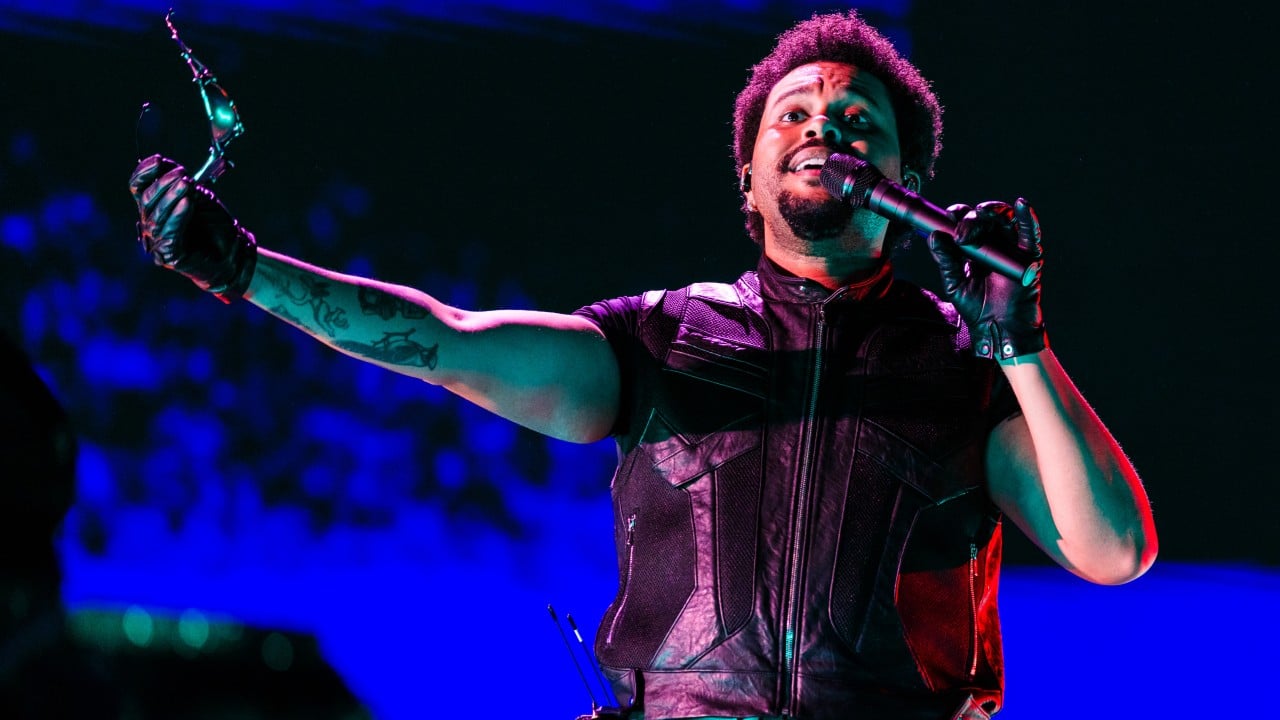
The announcement of The Weeknd’s return to Hong Kong in October 2026, marking his first appearance in the territory since 2018, is less a routine tour stop and more a stress test for the city’s post-pandemic entertainment infrastructure. By selecting the Kai Tak Sports Park as the venue, the organizers are shifting the operational center of gravity away from the aging AsiaWorld-Expo and the capacity-limited Hong Kong Coliseum. This move signifies a pivot toward large-scale "event-driven" tourism, a model that relies on high-volume throughput to justify the massive overhead of new stadium developments.
To understand the implications of this event, one must analyze the interplay between three primary variables: venue capacity dynamics, the premiumization of the "After Hours Til Dawn" tour model, and Hong Kong’s competitive position against regional hubs like Singapore and Tokyo.
The Infrastructure Pivot: From Convention Halls to Purpose-Built Stadiums
For over a decade, Hong Kong’s major international concerts were relegated to AsiaWorld-Expo, a venue designed primarily for trade shows. While functional, the "black box" nature of convention centers limits the verticality and pyrotechnic complexity of modern stadium productions. The move to the Kai Tak Sports Park—specifically the Main Stadium—represents a fundamental upgrade in the city's technical capabilities.
Capacity Scaling and Revenue Potential
The shift from a ~14,000-seat arena to a ~50,000-seat stadium alters the unit economics of a tour date. For a Tier-1 artist like The Weeknd, the cost of mobilizing a production—shipping dozens of containers of LED screens, stage architecture, and audio arrays—is fixed regardless of venue size.
- Fixed Cost Dilution: In a stadium setting, the fixed logistical costs are spread across a ticket base 3.5 times larger than that of an arena.
- Variable Margin Expansion: While security and cleaning costs increase linearly with attendance, the "VIP" and "Premium Seating" inventory expands exponentially. The Kai Tak venue design includes luxury suites and hospitality lounges that allow promoters to capture a higher percentage of the "super-fan" spend, which typically accounts for a disproportionate share of total show revenue.
The Retractable Roof Factor
Weather remains the primary risk factor for stadium tours in East Asia. The inclusion of a retractable roof at Kai Tak eliminates the "rain-out" clause in performance contracts, which often necessitates expensive insurance premiums or results in total revenue loss. This technical feature provides a predictable environment for the complex lighting and laser choreography synonymous with The Weeknd’s aesthetic, ensuring that the production value remains consistent with his performances in London or Los Angeles.
The Economic Impact of the Eight-Year Absence
The Weeknd last performed in Hong Kong in 2018 during his Asia Tour. Since then, his market value has undergone a transformation, propelled by the record-breaking success of After Hours and Dawn FM. This eight-year gap creates a supply-demand imbalance that promoters are using to justify premium pricing.
The Scarcity Premium
In economics, the value of an experience is inversely proportional to its frequency. The prolonged absence of a major artist creates "pent-up demand." When an artist returns after nearly a decade, the consumer base has expanded to include a younger demographic that was unable to attend previous shows. This demographic shift, coupled with the "bucket list" mentality of older fans, allows for a wider spread in ticket pricing tiers.
Regional Competition and the "Singapore Effect"
Hong Kong’s entertainment sector has faced significant headwinds, particularly with Singapore’s aggressive "Exclusivity Strategy" (seen most notably with Taylor Swift’s 2024 tour). For Hong Kong to reclaim its status as a mandatory stop on the global circuit, it must solve two specific bottlenecks:
- Transport Logistics: The Kai Tak area must demonstrate it can disperse 50,000 people within a 60-minute window. Failure to do so creates a "negative experience loop" that discourages international promoters from booking future dates.
- Ease of Entry: The coordination between the Leisure and Cultural Services Department (LCSD) and private promoters must minimize the bureaucratic friction that often plagues large-scale events in the city.
Technical Requirements of the After Hours Til Dawn Production
The Weeknd’s current tour is noted for its immense scale, often featuring a long catwalk, a giant inflatable moon, and a hyper-realistic cityscape stage design. These elements impose strict physical constraints on a venue.
- Weight Load Limits: The roof structure at Kai Tak must support several tons of suspended audio and lighting equipment.
- Sightline Optimization: Stadiums are notoriously difficult for audio engineering due to sound bouncing off hard surfaces. The "Acoustic Shielding" design of the new venue will be tested by the heavy bass and synth-driven layers of The Weeknd’s discography.
- Power Consumption: A show of this magnitude requires dedicated power substations or a fleet of synchronized industrial generators to prevent brownouts during peak pyrotechnic or lighting sequences.
The Tourist-to-Resident Ratio: Driving Incremental Spend
A 50,000-capacity show cannot be sustained by local residents alone in a city of 7.5 million. The success of the October show depends on attracting "concert tourists" from the Greater Bay Area (GBA) and Southeast Asia.
The GBA Integration
The proximity of Shenzhen and Guangzhou via the High-Speed Rail creates a potential catchment area of over 80 million people. If the ticketing platform integrates with Mainland payment systems (Alipay, WeChat Pay) and provides "show + hotel" packages, the economic multiplier for the city increases. A tourist attending a concert typically spends 3 to 4 times more than a local attendee, accounting for accommodation, dining, and retail.
Risk Management and Security
Crowd control for an artist with a fan base that skews younger and more mobile requires a different approach than traditional sporting events. The "Pit" or "General Admission Standing" area is the most volatile zone. Effective management requires:
- Dynamic Barrier Systems: To prevent crowd surges.
- RFID Entry: To reduce bottlenecks at the gates and track crowd density in real-time.
- Zonal Dispersal: Directing fans to different MTR stations or shuttle points based on their seating sector to avoid a single-point failure in the transport grid.
Strategic Forecast: The New Normal for Hong Kong Entertainment
The Weeknd at Kai Tak is the opening gambit in a larger strategy to reposition Hong Kong as the "Events Capital of Asia." If the October show succeeds operationally, it will serve as the blueprint for future bookings of artists who previously bypassed the city due to venue constraints.
The limitation of this strategy lies in the "Venue-Artist Fit." Not every performer can fill a 50,000-seat stadium. The city risks a "hollowed-out" middle market if it focuses solely on stadium-level mega-stars while failing to support the 5,000-to-10,000-capacity venues that nurture the next generation of headliners.
The immediate priority for stakeholders is the "Last Mile" experience. The physical stadium is world-class, but the surrounding ecosystem—retail, dining, and transport—must be fully operational by October to prevent the venue from becoming an isolated island. The objective is to convert a one-night concert into a multi-day economic event.
Promoters must now focus on tiered release cycles for tickets to maintain momentum and utilizing the "waitlist" data to gauge if a second night is viable. Given the eight-year hiatus and the scale of the new venue, a single-night sell-out is the baseline expectation; a multi-night residency would be the definitive signal that Hong Kong has successfully recalibrated its position in the global touring market.