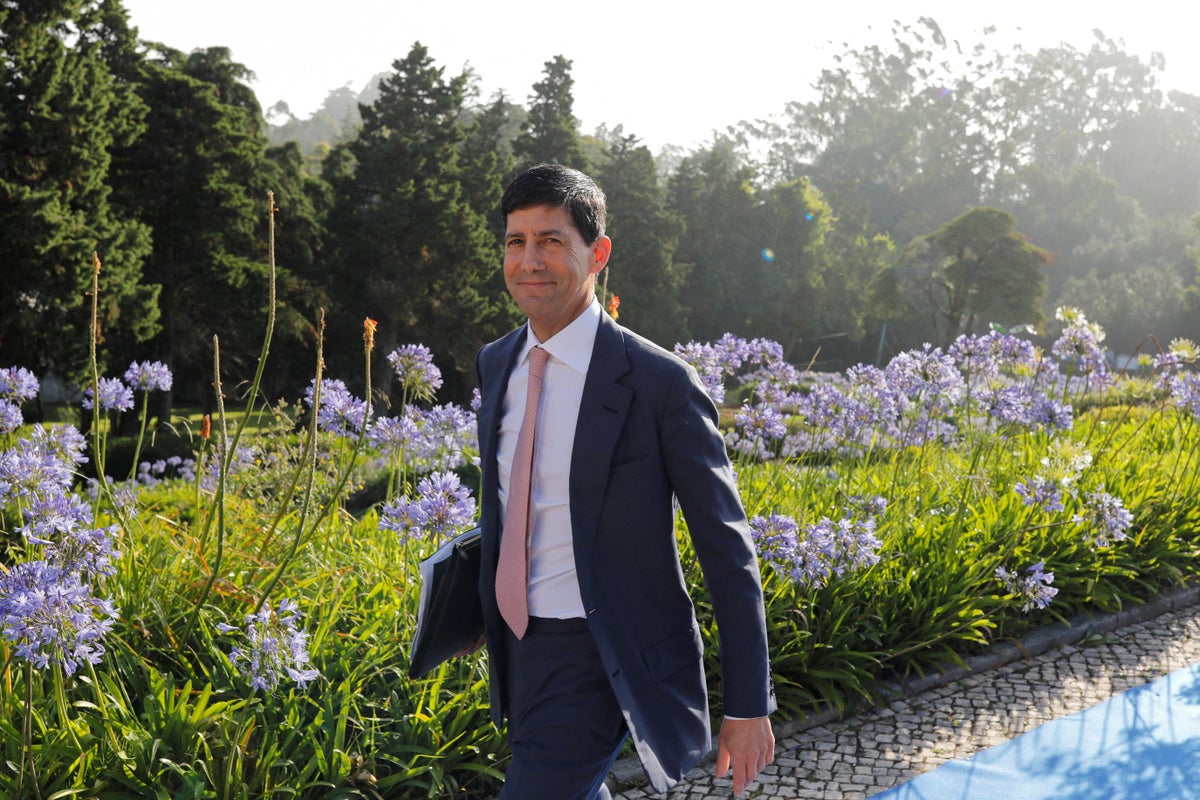
Wall Street loves a good fairy tale, and the latest narrative surrounding Kevin Warsh taking the helm at the Federal Reserve is no exception. The financial press is flooded with predictable commentary celebrating his supposed commitment to "independence" and his "hawkish stance" against inflation. It is a comforting bedtime story for investors who want to believe the central bank operates in a pristine, apolitical vacuum.
It is also completely wrong.
The mainstream media is hyper-focused on the wrong question. They are asking whether Warsh can maintain a firewall between the Oval Office and the Eccles Building. The real question we should be asking is why anyone still believes that firewall exists in the first place. The institutional design of the Federal Reserve makes true autonomy impossible, especially under an administration that explicitly views monetary policy as an extension of national economic strategy. Warsh is not arriving to defend the fortress of independence; he is arriving to manage the integration.
The Myth of the Maverick Central Banker
The consensus view treats the Fed Chair like an economic monk, walled off from political temptation. This view ignores decades of monetary history. Central banks have always been tethered to the governments that create them.
Think back to the Nixon administration and Arthur Burns. Burns famously succumbed to intense presidential pressure to keep interest rates low ahead of the 1972 election, fueling the brutal stagflation of the 1970s. Even Paul Volcker, widely canonized as the ultimate independent hawk, operated with a tacit political mandate to break inflation, a mandate that vanished the moment the political cost became too high for the incoming Reagan team.
To believe that Kevin Warsh—a man whose career was forged at the intersection of Wall Street and Washington politics—will suddenly morph into an untouchable, apolitical purist is a fundamental misunderstanding of how power operates. Warsh spent years as a Morgan Sachs executive and served on George W. Bush’s National Economic Council before his first stint at the Fed. He understands political capital better than almost anyone in macroeconomic policy. He is a creature of the system, not an outsider sent to disrupt it.
The Flawed Premise of Fighting Inflation Alone
The headline writers are obsessed with Warsh’s "inflation-fighting credentials." This focus reveals a deeper, more structural misunderstanding of how modern economies work. The prevailing dogma suggests the Fed can simply crank the interest rate dial to control prices.
This view completely ignores fiscal policy.
When a government runs massive, structural deficits—climbing past $1.8 trillion annually—monetary policy loses its sharpness. The Fed can hike rates all it wants, but if the Treasury keeps pumping liquidity into the economy through fiscal spending, interest rates become a blunt instrument that harms the private sector while doing nothing to curb public sector expansion.
Imagine a scenario where the central bank aggressively raises the federal funds rate to 6%, while Congress simultaneously passes massive infrastructure bills and tax cuts. The private sector suffocates under high borrowing costs, while the government continues to spend unchecked, driving up structural inflation anyway. In this environment, a hawkish Fed chair is not fighting inflation; they are merely punishing private capital to offset government profligacy.
What the "People Also Ask" Columns Get Wrong
If you look at standard financial FAQs, the questions reflect a naive view of monetary mechanics.
- Does the President control the Fed Chair? The official answer is always "No, the Fed is an independent agency." The real answer is far more complex. A President cannot fire a Fed Chair over a policy disagreement, but they can select a Chair whose worldview perfectly aligns with their own goals. You do not need to command a puppet if you choose a puppet master who already agrees with your direction.
- Will higher interest rates fix the supply chain? Mainstream analysts treat inflation as a pure demand problem. But monetary policy cannot drill oil wells, build semiconductor fabrication plants, or fix geopolitical trade blockages. Raising rates to fix supply-driven inflation is like stomping on the brakes of a car because the engine is overheating. It slows you down, but it does not fix the underlying malfunction.
The Uncomfortable Reality of the Warsh Doctrine
Having watched institutional asset managers misallocate billions of dollars during previous Fed transitions, the pattern is obvious. Wall Street prices in a caricature of the new Chair, gets blindsided by reality, and then blames the market.
Warsh's actual track record suggests he is a pragmatist, not an ideologue. During the 2008 financial crisis, he was Ben Bernanke’s primary liaison to Wall Street. He did not object to the unprecedented expansion of the Fed’s balance sheet or the deployment of emergency lending facilities. He facilitated them. He understood that when the system is burning, theoretical purity about moral hazard goes out the window.
The contrarian truth is that a Warsh-led Fed will likely cooperate more closely with the executive branch than any Fed in recent memory. This cooperation will not take the form of crude, public bullying via social media. It will be a sophisticated coordination of monetary policy and fiscal goals.
There is an inherent danger in this approach. If the market perceives that the Fed is monetizing national debt or suppressing rates to keep government borrowing costs manageable, international faith in the U.S. dollar degrades. Investors will demand a higher risk premium to hold American debt, driving long-term yields up regardless of what the Fed does with short-term rates. That is the downside of the pragmatic approach: you solve the immediate political crisis at the expense of long-term structural stability.
Survival Guide for a Coordinated Market
Stop reading the statements issued after Federal Open Market Committee meetings as if they are holy writ. They are exercises in public relations, designed to soothe algorithms and naive day traders.
Instead of watching the nominal federal funds rate, track the real yield curve and the spread between short-term and long-term Treasury bonds. If Warsh coordinates closely with the administration, expect a steeper yield curve. Long-term bonds will sell off as investors protect themselves against structural inflation, while short-term rates will be kept artificially suppressed to support domestic economic growth.
Dump the traditional 60/40 portfolio allocation. The idea that bonds will automatically hedge equity risk relies on a regime of low inflation and independent central banking that no longer exists. When monetary and fiscal policies merge, stocks and bonds move in the same direction.
Position your capital in hard assets, cash-flow-positive businesses with pricing power, and short-duration debt. Stop betting on a return to the pre-2020 economic norm. The era of the independent, technocratic central banker is over, and Kevin Warsh is not here to save it. He is here to preside over its funeral.