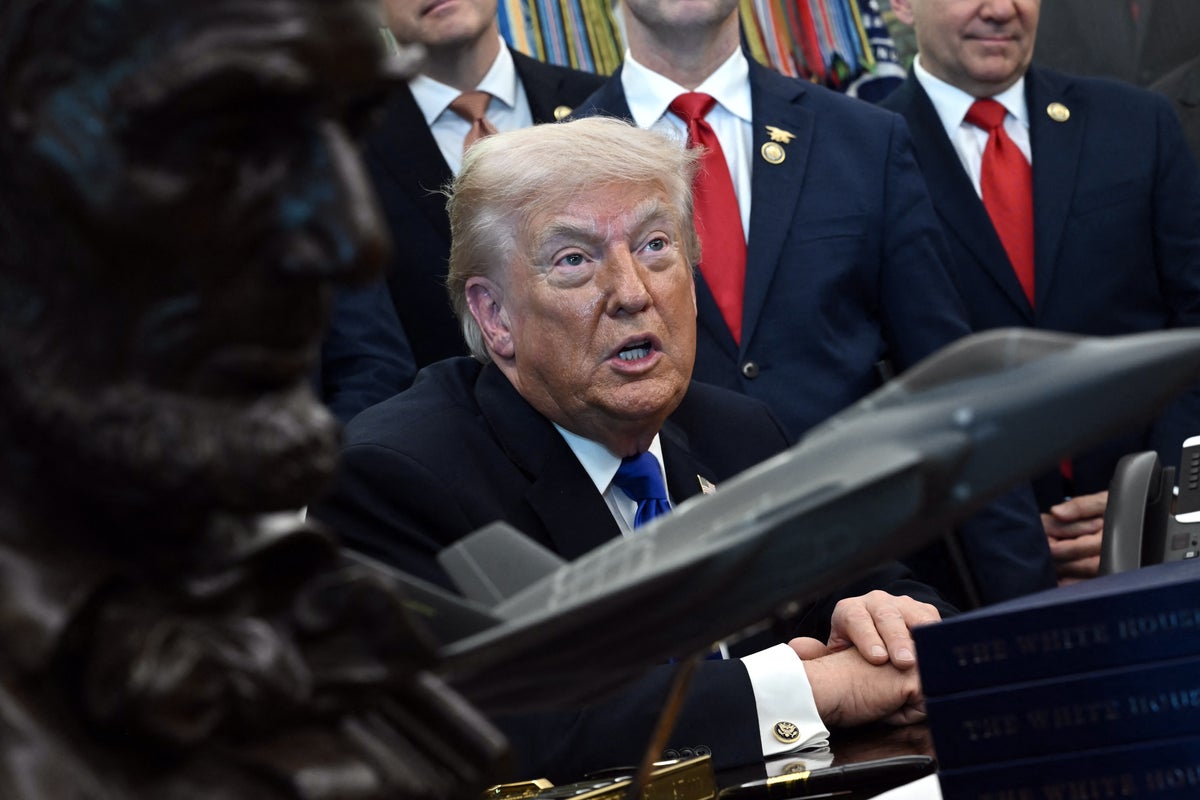
The foreign policy establishment is salivating over the "final blow" briefing currently sitting on Donald Trump’s desk. They see a map of Iran’s Kharg Island and see a solution. They see the Strait of Hormuz and see a chokehold. They think that by seizing a 12-square-mile rock in the Persian Gulf or cratering a few more centrifuges, the Iranian regime will finally fold its hand and hand over the keys to its nuclear program.
They are dead wrong.
The "lazy consensus" among analysts is that Iran is on the brink of total collapse because its oil infrastructure is "one bullet away" from exploding. This narrative assumes that the Islamic Republic operates like a Western corporation that files for bankruptcy when the debt-to-equity ratio gets too high. It doesn't. I have watched the same "maximum pressure" scripts play out for a decade, and the result is always the same: we mistake Iranian desperation for Iranian surrender.
The Oil Infrastructure Myth
The briefing suggests that hitting Kharg Island—which handles roughly 90% of Iran’s oil exports—will be the "final blow" to the regime’s treasury. Trump himself has suggested the oil infrastructure could "explode" within days due to mechanical failure under the weight of the blockade.
This is a fundamental misunderstanding of how a revolutionary state maintains power. Totalitarian regimes do not need a functional macroeconomy to survive; they only need enough cash to pay the Praetorian Guard. Even if oil exports hit zero, the IRGC (Islamic Revolutionary Guard Corps) has spent forty years mastering the black market. They don't need the global banking system; they need a network of dhows, front companies in Dubai, and a blind eye from Beijing.
By focusing on "final blows" to infrastructure, the administration is playing a game of 20th-century conventional warfare against a 21st-century asymmetric monster. You cannot "bankrupt" a regime that views poverty as a tool of social control.
The Nuclear Escalation Paradox
The Pentagon’s options reportedly include seizing Iran’s 450-kilogram stockpile of highly enriched uranium. On paper, it’s a masterstroke. In reality, it is a logistical nightmare that guarantees the very outcome it seeks to prevent.
If U.S. boots hit the ground to "secure" nuclear material, the "Zero Enrichment" demand becomes irrelevant. The moment an American soldier touches an Iranian nuclear facility, the "Fatwa" against nuclear weapons—a thin but functional diplomatic shield—evaporates. Iran’s response won't be a conventional counter-attack; it will be the immediate, decentralized dispersal of its remaining nuclear knowledge. You can seize the uranium, but you cannot seize the physics.
The current administration’s demand for a 20-year moratorium on enrichment is being laughed at in Tehran. Why? Because the "final blow" rhetoric has shown the Iranians that the U.S. has no "Option B" other than total occupation. And after twenty years in Iraq and Afghanistan, the regime knows the American public has zero appetite for "Baghdad 2.0: The Tehran Edition."
The Strait of Hormuz is a Ghost Town
The administration’s plan to "take over part of the Strait of Hormuz" to reopen it to commercial shipping is a tactical fantasy. The Strait isn't a door you can just kick open and hold. It is a 21-mile-wide kill zone.
Iran doesn't need a blue-water navy to win. They have thousands of fast-attack craft, sea mines, and shore-based ASCMs (Anti-Ship Cruise Missiles) hidden in the Zagros Mountains. Even if the U.S. Navy clears a path, no commercial insurance underwriter in London is going to greenlight a VLCC (Very Large Crude Carrier) to sail through a combat zone where MANPADS are being fired from fishing boats.
The blockade has already sent global energy prices into a tailspin. A "final blow" that involves seizing Iranian islands will likely push Brent Crude toward $200 a barrel. Trump’s domestic mandate is built on low inflation and cheap gas. The "final blow" is, ironically, the fastest way to blow up his own domestic agenda.
The Proxy Pivot
While the "experts" argue that Iran is deprioritizing its proxies because Hezbollah and Hamas have been battered, they are missing the nuance. Iran isn't abandoning its proxies; it’s evolving them.
The 15-point proposal demanding the total disarmament of the "Axis of Resistance" assumes these groups are mere puppets. They aren't. They are indigenous political and military movements that share a symbiotic relationship with Tehran. Asking Iran to "freeze" the Houthis is like asking the U.S. to "freeze" the internet. It’s an integrated part of their regional DNA.
If the U.S. delivers a "final blow" to the Iranian mainland, the "ghost" proxies—unaffiliated cells across the globe—will be the ones to respond. We are looking at a scenario where the "victory" in the Persian Gulf leads to a decade of asymmetric "small-ball" terror that no carrier strike group can stop.
The Only Move That Matters
Stop looking for a "final blow." There isn't one. The Iranian regime is a cockroach of geopolitics; it survives the radiation that kills everything else.
The counter-intuitive reality is that the U.S. needs a vibrant Iranian economy to foster a middle class that actually wants change. By pulverizing the infrastructure, we are only empowering the IRGC, which thrives in the ruins. The current "briefing" is a trap designed by hawks who haven't updated their playbooks since 1988.
If Trump wants a "conquest," he should stop trying to take Kharg Island and start trying to take the Iranian people’s imagination. But as long as the options are "bomb" or "blockade," we are just waiting for the next cycle of failure.
The "final blow" isn't the end of the war. It's the beginning of a much longer, much uglier one.


