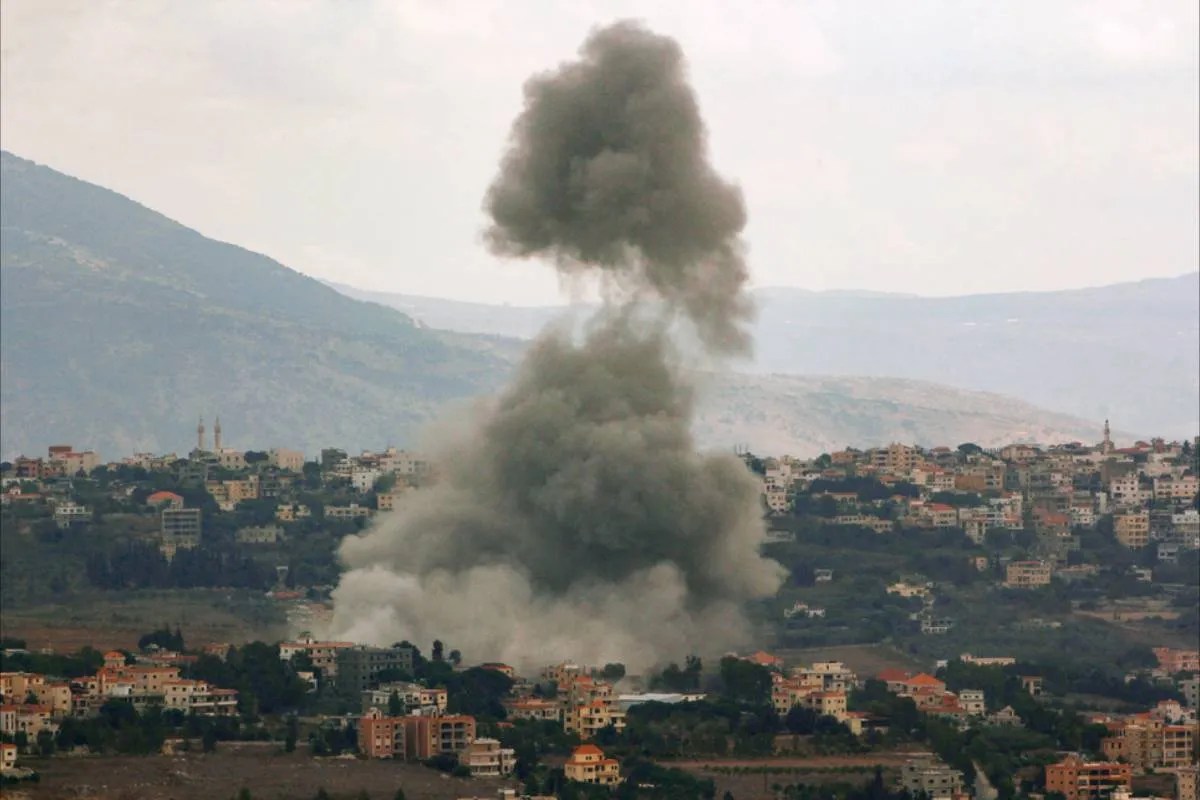
The localized escalation in Southern Lebanon, characterized by the targeted elimination of three Hezbollah operatives during Israeli kinetic operations, signifies more than a routine border skirmish; it represents a functional breakdown in the de-escalation architecture. When tactical strikes occur within the temporal window of a negotiated ceasefire, the "cessation of hostilities" ceases to be a legal reality and becomes a psychological buffer. This specific engagement serves as a case study in the failure of buffer zones and the inherent instability of non-state actor containment.
The Triad of Operational Instability
The collapse of a ceasefire is rarely a singular event. It is a byproduct of three intersecting variables that dictate the durability of any Middle Eastern security agreement.
- The Information Gap: Real-time intelligence regarding "imminent threats" creates a preemptive strike incentive. If Israel identifies tactical movement—weaponry transport or the re-establishment of launch sites—the perceived cost of inaction outweighs the diplomatic cost of violating the ceasefire terms.
- Command and Control Decentralization: In asymmetric warfare, the central leadership of a non-state actor like Hezbollah often struggles with "rogue" or "autonomous" units. If a local commander initiates a low-level provocation, the retaliatory response from a state military is often disproportionate, leading to a rapid escalation ladder that the original ceasefire was designed to prevent.
- The Sovereignty Paradox: The Lebanese state remains technically responsible for its territory, yet lacks the enforcement capacity to disarm or displace Hezbollah. This creates a vacuum where international law (UN Resolution 1701) meets the reality of paramilitary dominance.
The Cost Function of Tactical Preemption
State actors calculate military interventions using a risk-reward matrix that prioritizes long-term security over short-term diplomatic friction. The elimination of three specific combatants suggests a surgical rather than a broad-spectrum offensive. This distinction is critical. A broad offensive aims to degrade infrastructure; a surgical strike aims to disrupt local command hierarchies.
The immediate result of these strikes is the degradation of the "Status Quo Ante." When one side demonstrates that the ceasefire does not provide immunity for specific high-value activities, the other side is forced to recalculate its operational posture. This leads to a reinforcement of the border, effectively shortening the reaction time for both parties and increasing the probability of a catastrophic miscalculation.
Decoupling Rhetoric from Kinetic Reality
Public statements regarding the "sanctity of the ceasefire" often mask a more cold-blooded military reality: ceasefires are frequently used as replenishment cycles. The logic of the recent strikes suggests that Israeli intelligence identified this period as a re-arming phase. From a purely strategic perspective, a state cannot allow a hostile entity to use a diplomatic pause to improve its technical or positioning advantages.
This creates a "Security Dilemma" where:
- Party A (Israel) perceives Party B (Hezbollah) is using the pause to prepare for future conflict.
- Party A strikes to prevent that preparation.
- Party B views the strike as a betrayal of the agreement and retaliates.
- The agreement dissolves.
The mechanism of failure here is the absence of a neutral, high-resolution verification body. UNIFIL (United Nations Interim Force in Lebanon) operates under mandates that limit aggressive inspection, leaving both primary combatants to rely on their own—often conflicting—intelligence feeds.
The Attrition of Deterrence
Deterrence is a perishable commodity. Each time a strike occurs during a ceasefire without triggering a full-scale regional war, the "red lines" of both parties are recalibrated. While this might appear to prevent total war in the short term, it actually lowers the threshold for violence.
The elimination of these three operatives indicates that Israel has moved from a policy of "Strategic Patience" to "Active Interdiction." This shift suggests that the Israeli security establishment has determined that the political fallout of breaking the ceasefire is less dangerous than the military risk of allowing Hezbollah to solidify its positions south of the Litani River.
Structural Bottlenecks in Diplomacy
The diplomatic efforts to salvage the situation face a recurring bottleneck: the lack of a third-party guarantor with the will to use force. Diplomacy in the Levant relies on the assumption that both sides prefer the absence of war. However, if one side perceives the "absence of war" as a period of existential risk, diplomacy becomes a secondary tool to kinetic action.
The current friction points are driven by:
- Geospatial Encroachment: Attempts to rebuild tunnels or forward observation posts.
- Technological Escalation: The introduction of advanced anti-tank guided missiles (ATGMs) or UAVs into the border zone.
- Personnel Transition: Moving veteran fighters back into the "Blue Line" proximity.
Each of these actions triggers an automated military response that bypasses the slow-moving diplomatic channels of Beirut or New York.
The Strategic Path Forward
To prevent these localized strikes from metastasizing into a multi-front conflict, the strategic focus must shift from "monitoring" to "enforcement." This requires a fundamental redesign of the border architecture.
First, the establishment of a "No-Live-Fire Zone" must be backed by automated surveillance that provides a shared data reality to international observers, reducing the "Information Gap." Second, the Lebanese Armed Forces (LAF) require a specific mandate and technical support to act as a genuine buffer, rather than a passive observer.
The reality of the current situation is that the ceasefire exists in name only. The kinetic energy on the ground has surpassed the potential energy of the diplomatic agreement. Until the cost of violating the ceasefire—either through international sanctions or a guaranteed, overwhelming military consequence—is higher than the perceived benefit of a preemptive strike, these "flashes" of violence will continue. The three operatives killed are a symptom of a systemic refusal to address the primary variable: the presence of an armed non-state actor in a zone designated for state-only security.
The next tactical phase will likely involve a test of the "escalation ceiling." Hezbollah will feel compelled to respond to maintain its internal credibility, but its response will be calculated to stay just below the threshold that would trigger a full-scale ground invasion. This "shadow war" within a ceasefire framework is the new operational norm, requiring analysts to look past the headlines of "broken truces" and see the deliberate, calibrated maneuvers of two high-stakes players re-measuring the battlefield.