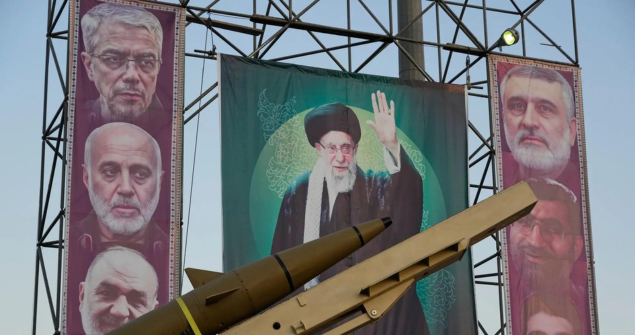
The current military cycle in the Middle East confirms a historical axiom: tactical brilliance cannot compensate for a lack of grand strategy. The synchronized "attack blitz" by US and Israeli forces against high-value Iranian leadership targets functions as a masterclass in intelligence-driven kinetic operations, yet it simultaneously risks accelerating a shift toward decentralized, uncontainable regional instability. To evaluate the efficacy of these strikes, one must move beyond the headlines of "wipeouts" and instead quantify the impact through the lens of organizational theory, replacement latency, and the shifting threshold of deterrence.
The Triad of Decapitation Efficacy
The success of a targeted killing is not measured by the rank of the deceased, but by the systemic disruption it causes within the adversary's command-and-control (C2) architecture. When US and Israeli assets neutralize key Iranian commanders, they are attempting to manipulate three specific variables:
- Institutional Memory Depletion: High-ranking officials in the Islamic Revolutionary Guard Corps (IRGC) often hold decades of informal networks. Removing them creates an information vacuum that formal bureaucratic structures cannot immediately fill.
- Operational Friction: The sudden loss of a central node forces the organization to divert resources toward internal security audits and successor vetting, slowing the tempo of external operations.
- Psychological Paralysis: Constant surveillance and the demonstrated ability to strike anywhere create a "hunker down" mentality among surviving leadership, stifling proactive planning.
While these strikes achieve immediate kinetic goals, they operate on a diminishing return curve. The IRGC has transitioned from a charismatic leadership model to a resilient, decentralized cellular structure. When a "node" is removed, the network often routes around the damage.
Quantifying the Replacement Latency
A critical failure in standard analysis is the assumption that a leader’s death equals a permanent loss of capability. In reality, every military organization has a "Replacement Latency"—the time required for a successor to achieve the same level of operational competence and network trust as their predecessor.
In the case of the Quds Force and its proxies, this latency is narrowing. The "Second Generation" of Iranian commanders grew up in an era of constant asymmetric warfare. They are digital natives who prioritize redundant communication channels over the centralized, personality-driven command styles of the previous era. Therefore, the window of "tactical advantage" gained from a strike is shorter today than it was a decade ago.
The mechanism of this failure is rooted in the Hydra Effect:
- Fragmentation: One cohesive strategy is replaced by three or four independent, less predictable sub-strategies.
- Radicalization: Successors often feel the need to prove their "revolutionary credentials" through more aggressive, less calculated actions to secure their position.
- Hardening: Surviving leaders adopt more rigorous operational security (OPSEC) measures, making future intelligence gathering exponentially more difficult.
The Deterrence Paradox
The primary strategic justification for these attacks is the restoration of deterrence. The logic suggests that by raising the cost of Iranian regional interference, the US and Israel will force Tehran to retreat. However, this ignores the Cost-Benefit Inversion inherent in asymmetric conflict.
For Iran, the cost of losing a commander—while high in human and political capital—is relatively low in economic terms compared to the cost incurred by the US and Israel to execute the strike. A single Reaper drone mission or a multi-agency intelligence operation costs millions of dollars and utilizes finite geopolitical capital. Iran, conversely, maintains a high supply of ideological recruits ready to fill the vacuum.
When the "tactical blitz" fails to change the underlying political will of the adversary, it ceases to be a deterrent and becomes a catalyst for escalation. Deterrence only works when the adversary believes they have something left to lose. By systematically "wiping out" the leadership tier that understands the "rules" of the shadow war, the US and Israel may be inadvertently removing the very actors capable of negotiating a de-escalation.
Technical Execution vs. Strategic Intent
Modern precision-guided munitions (PGMs) and signals intelligence (SIGINT) have reached a point of near-perfection. The ability to track a specific cell phone or vehicle across borders and deliver a kinetic payload with sub-meter accuracy is a technological feat. Yet, this precision creates a "Tactical Trap."
Policymakers often mistake the ability to hit a target for the existence of a plan. The "Attack Blitz" methodology relies on High-Frequency/Low-Impact events. Each strike is a data point showing dominance, but the aggregate does not necessarily trend toward a stable conclusion.
The reliance on technology over human-centric diplomacy creates a feedback loop where the only response to an Iranian provocation is another strike. This reduces foreign policy to a series of reactive, kinetic moves rather than a proactive shaping of the regional order.
The Decentralization of the Proxy Network
One of the most significant "blind spots" in the competitor's narrative is the assumption that the IRGC is a top-down monolith. In truth, the "Axis of Resistance" has moved toward a Franchise Model.
- Hezbollah: Operates with significant autonomy in Lebanon.
- The Houthis: Maintain their own internal political goals in Yemen, often independent of Tehran's immediate tactical needs.
- Iraqi Militias: Frequently compete for local influence, using Iranian support as a tool rather than acting as mere puppets.
By killing the Iranian "connectors" between these groups, the US and Israel may be cutting the leashes. Without centralized Iranian oversight, these proxy groups are more likely to engage in "wildcat" operations—uncoordinated attacks that risk triggering a regional war that neither Washington nor Tehran actually desires.
The risk of a Tactical Blunder lies in this loss of control. If the "adults in the room" (the senior commanders who have managed these proxies for decades) are removed, the regional theater is left to younger, more impulsive field commanders who may miscalculate the threshold for a full-scale Israeli or American response.
Mapping the Escalation Ladder
To understand the current trajectory, we must apply the Escalation Ladder framework. Currently, both sides are stuck on the middle rungs:
- Sub-threshold Conflict: Cyberattacks and maritime harassment.
- Kinetic Signaling: Targeted killings and limited missile strikes.
- Limited Theater War: Sustained aerial campaigns and proxy surges.
- Total Regional War: Direct state-on-state conventional conflict.
The "blitz" moves the conflict firmly into Rung 3. The danger is that the US and Israel are climbing this ladder with the assumption that Iran will eventually jump off. History suggests that revolutionary regimes, when backed into a corner, are more likely to climb higher.
The strategic play is no longer about the quantity of leaders eliminated, but the reconfiguration of the regional security architecture. The current reliance on decapitation strikes has reached a point of diminishing marginal utility. To move from tactical dominance to strategic stability, the focus must shift toward Incentive Decoupling—creating conditions where Iranian proxies find more value in local political integration than in kinetic regional disruption.
Until the underlying drivers of the conflict—such as the vacuum of power in failed states and the lack of a credible regional security pact—are addressed, "wiping out" leaders remains a temporary fix for a permanent problem. The next operational phase must prioritize the disruption of the supply chains of influence rather than just the personnel of influence. This requires a transition from purely kinetic operations to a "Gray Zone" strategy that utilizes economic isolation, cyber-dominance of local narratives, and the strengthening of sovereign institutions in proxy-heavy nations. Success is not a body count; it is a neutralized network.