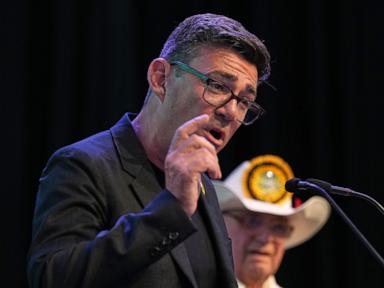
Andy Burnham is back in Westminster, but the glossy narrative of an irresistible march to 10 Downing Street ignores the fragile reality of his regional record. By winning the Makerfield by-election, the former Greater Manchester mayor has successfully removed the technical barrier preventing him from launching a direct leadership challenge against a vulnerable Keir Starmer. Yet the media obsession with his open-necked shirts, DJ battles, and "King of the North" moniker obscures a more critical investigation. The national elevation of his signature "Manchesterism" policy model faces severe structural hurdles, unexamined financial deficits, and a deep skepticism from the very southern and rural electorates he must win over to command a true national majority.
Devolution in the United Kingdom has long operated as a convenient shock absorber for central government, allowing Westminster to delegate local crises without relinquishing core financial controls. Burnham navigated this tension with undeniable media skill, transforming the Manchester mayoralty into a powerful soapbox. His political identity changed from a stiff, New Labour cabinet insider into a flat-cap-adjacent regional populist. His defining victory—the creation of the integrated bus, tram, and train network known as the Bee Network—is frequently cited by his allies as the ultimate proof of executive competence.
The structural truth under the yellow paint of those buses is far more complicated. Bringing a fragmented, privatized transit network back under public regulation required exhausting, multi-year legal battles against private operators who fought to maintain their monopoly over profitable routes. While capped two-pound fares won immense local popularity, the underlying funding model relies heavily on temporary central government grants and a highly controversial ten-pound annual charge levied on local pensioners for travel passes. The financial sustainability of the network remains unproven. If scaled to a national level, a universal rollout of this regulated model would require immediate capital injections that the current British Treasury simply cannot afford without significant tax increases or deep cuts to other public infrastructure projects.
The financial vagueness of Manchesterism deepens when looking at local tax reform. During his campaign, Burnham floated radical adjustments to the local government funding system, including a land value capture mechanism designed to extract revenue from property developers and a shifting of business rates away from high-street shops toward large logistics warehouses. While these proposals sound appealing to an exhausted post-industrial electorate, they run directly into a mathematical wall. Regional local government finances across Britain are in a state of near-total collapse, driven by skyrocketing social care costs and inflationary pressures. Shifting the tax burden onto warehouses in the North West does nothing to fix the systemic funding deficit of rural councils in the South West or suburban authorities in the Midlands.
There is also a profound geographical disconnect in Burnham's populist appeal. To successfully challenge Starmer and eventually face a general election, a candidate cannot merely be a king of one region; they must build a national coalition. The adversarial style that served Burnham well when fighting Boris Johnson over pandemic lockdowns does not translate cleanly to voters in non-urban England. Suburban areas in the South and rural shires view the expansion of mayoral combined authorities not as liberation, but as an aggressive, city-centric consolidation that swallows up small towns and diminishes localized representation. A political brand built entirely on grievances against a "London-centric" establishment faces an immediate paradox when that brand tries to take over the very capital it spent a decade demonizing.
Consider a hypothetical example where an administration attempts to implement the Greater Manchester "Live Well" service model nationwide. This model integrates health, housing, and debt advice at a neighborhood level through voluntary organizations. In a dense, culturally connected urban center like Manchester, the infrastructure and local charity networks already exist to make this integration functional. In a dispersed, rural constituency spanning hundreds of square miles with minimal public transport, the exact same integrated model completely disintegrates because the physical points of contact are inaccessible to the population. Burnham’s administrative victories are deeply specific to the unique, compact geography of the post-industrial North West.
The ideological divisions within the Labour Party present an equally treacherous obstacle. Burnham positions himself to the left of the current leadership, appealing to a membership that remains deeply disillusioned by Starmer's cautious, fiscal-conservative orthodoxy. However, parliamentary rebellions are rarely driven by pure ideology; they are driven by cold electoral survival. While Labour members might applaud a rhetorical assault on trickle-down economics, centrist members of Parliament representing fragile, southern swing seats are terrified of any platform that could be painted by opponents as a return to tax-and-spend socialism. Burnham's path to power depends on convincing these cautious backbenchers that his brand of pragmatic populism can protect their majorities. It is an incredibly difficult sell.
The victory in Makerfield proved that Burnham can successfully squeeze the air out of right-wing insurgencies like Reform UK in traditional working-class heartlands. His local credibility and tireless door-knocking operation neutralized an opponent that had made massive gains in recent local elections. But holding a seat where your family roots run deep is a world away from managing the complex, contradictory demands of a highly polarized nation of seventy million people.
The coming weeks will reveal whether the parliamentary Labour Party has the appetite for a brutal internal civil war during an ongoing economic crisis. Starmer has already signaled that he will fight any leadership challenge with everything at his disposal, meaning Burnham cannot rely on a bloodless coronation. If he does choose to strike, he will have to move past the comfortable rhetoric of regional defiance and offer a precise, fully costed blueprint for the entire United Kingdom. The King of the North has finally made it back across the palace gates of Westminster, but he will soon discover that the terrain of a national campaign is far steeper, colder, and more unforgiving than the streets of Manchester.


