The intersection of genealogical data and geopolitical optics creates a unique form of "soft power" validation that frequently surfaces during high-level state interactions. When reports surfaced identifying Donald Trump and King Charles III as nineteenth cousins, the value of the information lay not in its biological significance—which is statistically negligible—but in its ability to provide a historical veneer to modern bilateral relations. In a strictly mathematical sense, most individuals of Western European descent share common ancestors within the last millennium. However, the strategic deployment of these links functions as a diplomatic lubricant, shifting the narrative from transactional politics to a framework of shared heritage.
The Mathematical Dilution of Distant Lineage
To analyze the claim of nineteenth cousinship, one must first quantify the biological reality of the connection. Genetic inheritance operates on a principle of rapid dilution. Each generation back doubles the number of ancestors while halving the genetic contribution of any single progenitor.
- Ancestor Expansion: At nineteen generations back, an individual has $2^{19}$ or 524,288 potential ancestor slots.
- Genetic Recombination: Because of the way DNA is shuffled through recombination, it is statistically probable that two nineteenth cousins share zero segments of DNA.
- The Common Ancestor Paradox: Given the population sizes of the 15th century, the "pedigree collapse" phenomenon dictates that many of these slots are filled by the same individuals.
The common ancestor in this specific claim—reputedly King Edward III—lived in the 14th century. By the 21st century, the biological link is functionally non-existent. The relationship is a social construct based on records, not a biological reality that influences behavior or traits. This distinction is vital for separating "pop-genealogy" from scientific genetics.
Structural Components of Genealogical Diplomacy
The utility of a royal connection for a US President serves three distinct strategic functions within the realm of public perception and international protocol.
1. Legitimacy Scaling
For a political leader, especially one from a non-dynastic background, a link to a reigning monarch provides an "ancestry-based" legitimacy that bypasses the volatility of election cycles. It anchors the leader’s identity in a historical continuum. This creates a psychological bridge between the "New World" democratic office and the "Old World" institutional stability of the British Crown.
2. Narrative Alignment
The "Special Relationship" between the United States and the United Kingdom often requires emotional anchors to sustain public support. Framing the heads of state as "family" simplifies complex geopolitical alliances into a relatable human story. This reduces the friction of diplomatic friction by characterizing disagreements as "familial disputes" rather than systemic conflicts.
3. Media Cycle Dominance
Genealogical revelations are optimized for high-velocity media consumption. They are non-partisan, intriguing, and easily digestible. By engaging with these reports—as seen in the President’s positive acknowledgment—a leader can pivot the media focus away from high-stakes policy debates toward a more humanized, lighthearted narrative. This is an exercise in brand management rather than policy.
The Mechanism of Royal Ancestry Claims
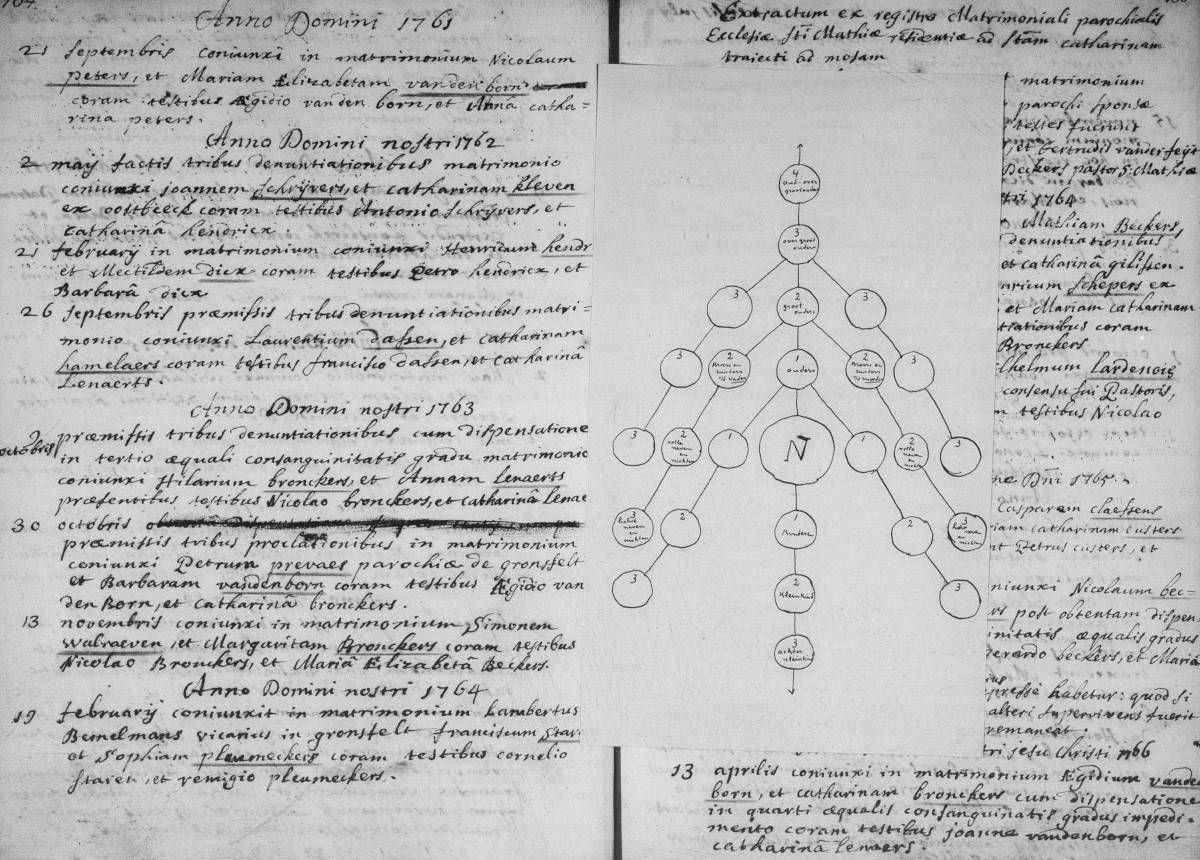
Genealogical researchers typically utilize "descendancy research" to link modern figures to historical royalty. The process relies on identifying a "gateway ancestor"—a person who immigrated to the Americas in the 17th or 18th century and was a documented descendant of a noble house.
The validity of these claims hinges on the integrity of the paper trail. Historical records face several points of failure:
- Non-Paternity Events (NPEs): Undocumented biological breaks in the lineage where the legal father is not the biological father.
- Record Loss: Fires, wars, and decay have obliterated significant portions of parish registers.
- Status Inflation: Historical genealogists often fabricated links to royalty to increase the social standing of a family.
In the case of the Trump-Charles connection, the lineage is traced through the President's mother’s Scottish roots. The MacLeod lineage provides the geographical and historical context for such a connection. Because the Scottish clan system often intersected with the peerage, these links are common among those with Highland ancestry.
Tactical Responses to Genealogical Reports
When such data is presented to a head of state, the response is rarely accidental. It follows a calculated logic designed to maximize rapport.
The President’s reaction—acknowledgment and appreciation—functions as a social signal. Refuting the claim would be seen as pedantic or hostile, while over-emphasizing it would appear desperate. The optimal strategy is a "warm acceptance" that acknowledges the historical prestige of the Crown without ceding the democratic authority of the Presidency.
This creates a "Kinship Buffer." During state visits, these shared links can be used in toasts and informal remarks to soften the atmosphere before moving into harder discussions regarding trade or defense. It is a tactical use of "found history" to facilitate modern objectives.
Limitations of the Shared Heritage Model
While useful for optics, genealogical diplomacy has clear limitations. Historical ties do not override national interests. The "cousin" narrative is a superficial layer that exists only as long as it serves the interests of both parties.
The primary risks include:
- Elitism Charges: In a populist political environment, highlighting royal connections can be counter-productive if perceived as a rejection of commoner roots.
- Historical Baggage: Linking a modern leader to a medieval monarch like Edward III also links them to the controversies, wars, and tyranny of that era.
- Verification Volatility: If subsequent research debunks the link, the narrative collapses, leading to minor reputational embarrassment.
Strategic advisors must treat these claims as "low-stakes high-reward" assets. They should be used to flavor a state visit but never used as the foundation for substantive policy shifts.
The Forecast for Ancestral Brand Building
The trend of using DNA and genealogy to define identity is accelerating. As databases grow and the "Global Family Tree" becomes more interconnected, these types of reports will become more frequent. We are moving toward a period where almost every US President will be found to have a link to the British Royal Family, given the deep colonial roots of the American political class.
The novelty will eventually diminish. To maintain the strategic advantage, future leaders will need to find more specific or unique ancestral narratives—such as connections to significant revolutionary figures or non-European lineages—to differentiate their "historical brand."
For now, the Trump-Charles link serves as a masterclass in how a simple genealogical report can be transformed into a diplomatic asset. It bridges the gap between the individual and the institution, using the ancient language of bloodlines to speak to the modern requirements of the 24-hour news cycle. Leaders should continue to monitor their genealogical profiles, ensuring they have a prepared narrative for when these "ancestral bridges" are inevitably discovered.