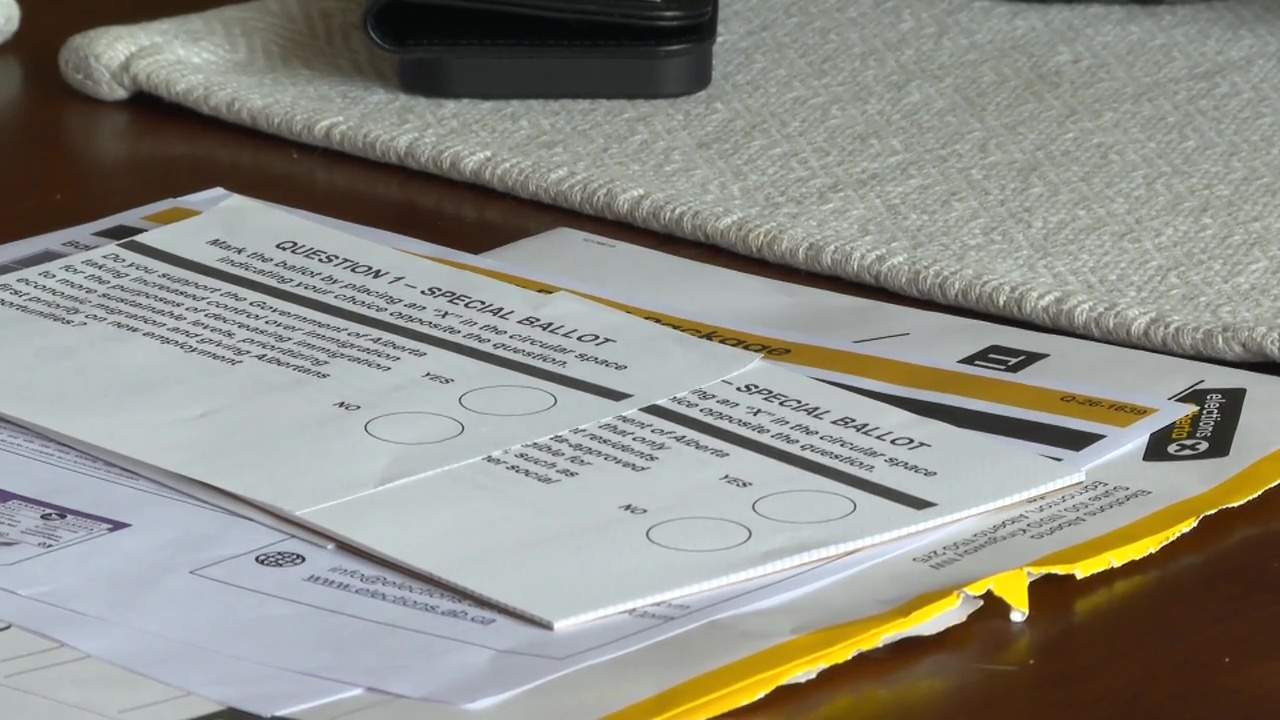
The envelope arrives unceremoniously, sliding through the slot in the front door with a dry, papery whisper. It lands on the linoleum floor, catching the edge of a stray mitten. For most of us, mail is a mundane parade of bills, flyers for local lawn care, and circulars we toss directly into the blue bin without a second glance. But this particular envelope carries a different weight. It smells faintly of printer ink and municipal bureaucracy. Inside lies the physical machinery of democracy, compressed into a packet of folded paper, a secrecy sleeve, and a return envelope that requires no stamp.
Right now, across the sprawling expanse of Alberta, those envelopes are arriving at kitchen tables, on coffee tables cluttered with coffee mugs and half-finished crosswords, and on the edge of neatly organized desks in spare bedrooms. And the people holding them are realizing something startling.
The clock is ticking faster than anyone anticipated.
The deadline has moved up. Not by a subtle margin, but by enough to send a quiet shockwave through households from the rolling foothills of the south to the oil-rich expanse of the north. Demand for mail-in ballots has surged. It is a sharp, unexpected spike that caught election officials flat-footed and forced a sudden compression of the calendar. People are not just waiting for election day anymore. They are seizing the ballot box in advance, dragging the act of voting out of the public school gymnasium and into the quiet, domestic sanctuary of their homes.
Why the sudden rush? To understand the surge, you have to look past the dry press releases and examine the psychology of the modern voter. We live in an era of perpetual exhaustion. Schedules are fractured. Shift work eats the weekends. Long commutes devour the hours between dawn and dusk. The traditional ritual of standing in a line on a cold Tuesday in a gymnasium, waiting for an overworked clerk to flip through a massive ledger, feels increasingly obsolete.
Consider a hypothetical voter named Sarah. Sarah works forty-five hours a week at a regional hospital in Edmonton, balancing night shifts with the quiet, relentless demands of raising two children. For Sarah, the idea of carving out two hours on a designated election day is a logistical puzzle with no clean solution. If she votes in person, she sacrifices precious sleep or misses a bedtime story. But a mail-in ballot? That changes the arithmetic entirely. It bends to her life, rather than demanding her life bend to it. She can sit at her kitchen table at eleven o'clock at night, the house finally silent, read through the referendum question with a cup of chamomile tea in her hand, and make her choice in peace.
Multiply Sarah by several hundred thousand, and you begin to see the invisible pressure building within the postal system.
When election administrators first drafted the timeline for this referendum, they modeled their projections on historical averages. They looked at past turnouts, factored in a modest bump for postal voting, and drew a neat, orderly line on a calendar. They assumed a gentle slope. Instead, they hit a sheer cliff face. Requests for mail-in voting packages came flooding in like a sudden thaw after a brutal winter. The volume overwhelmed standard projections.
Panic did not ensue, but urgency certainly did.
Officials were forced to pull the emergency levers of administration. Deadlines were dragged forward. The window for requesting, completing, and mailing back the ballots was tightened to ensure every single voice could be tallied before the statutory cutoff. This administrative pivot is where the friction lies. When a system designed for a slow, predictable trickle is suddenly forced to swallow a raging river, things get tense. Printers run overtime. Sorting facilities prioritize white government envelopes over everyday mail. Couriers feel the squeeze.
And the voters feel it, too. A moved-up deadline transforms a leisurely democratic duty into a race against the calendar. That ballot sitting on the kitchen table can no longer be shoved to the bottom of a stack of mail to be dealt with next week. Next week might be too late.
There is something deeply revealing about this shift. It tells us that people care fiercely about the outcome of this specific referendum, yet they distrust the traditional friction of public participation. They want their say, but they want it on their own terms. The referendum touches on questions of autonomy, economic identity, and the fundamental relationship between the citizen and the state. These are not abstract policy debates happening in a distant legislature. They are kitchen table arguments. They are whispered conversations over breakfast toast. They are the kinds of questions that make neighbors debate across chain-link fences.
When the stakes feel intensely personal, people do not want to delegate their participation to a crowded room where they might have to wait behind someone arguing with an election worker. They want control. They want to hold the pen themselves, seal the envelope with their own hands, and drop it into a neighborhood mailbox with a quiet sense of finality.
Yet, this convenience comes with a hidden tax: the demand for punctuality.
Postal voting strips away the safety net of the in-person voting station. If you forget to sign the declaration envelope, your vote is voided. If you misplace the secrecy sleeve, the ballot is disqualified. If you miss the newly accelerated deadline by even a single day because the snowstorm delayed your local mail carrier, your voice is effectively erased from the ledger. There is a stark vulnerability in trusting a piece of paper to the winds of logistics.
Yet the demand continues to climb. Every news report about the surging numbers seems to have the paradoxical effect of accelerating the trend rather than slowing it down. People see that their neighbors are participating early, and it triggers a powerful behavioral pattern: the fear of being left out, combined with the quiet pride of civic duty executed on one's own terms.
We are watching a quiet evolution in how democracy is practiced in the West. We are moving away from the communal cathedral of the polling station and toward the decentralized, atomized space of the living room. Whether this makes our civic fabric stronger or more fragile is a question historians will spend decades debating.
For now, the reality is much simpler, much more immediate, and much more human.
Somewhere in Calgary, a tired father is signing his name on a declaration line while his toddler sleeps upstairs. Somewhere in Lethbridge, an elderly retiree with failing knees is walking out to the end of her driveway, relief washing over her as she drops her completed envelope into the red box before the winter wind bites too hard. And across the province, the clock keeps ticking down toward a deadline that moved a little too fast, pushed along by a populace that refused to stay silent.