Two words.
That is all it took to strip away decades of diplomatic varnish, exposing the raw, unvarnished nerve endings of a world teetering on the edge of a generational abyss. Meanwhile, you can read other events here: What Most People Missed About the 27-Year Sentence in the Iran-Backed Plot to Kill Trump.
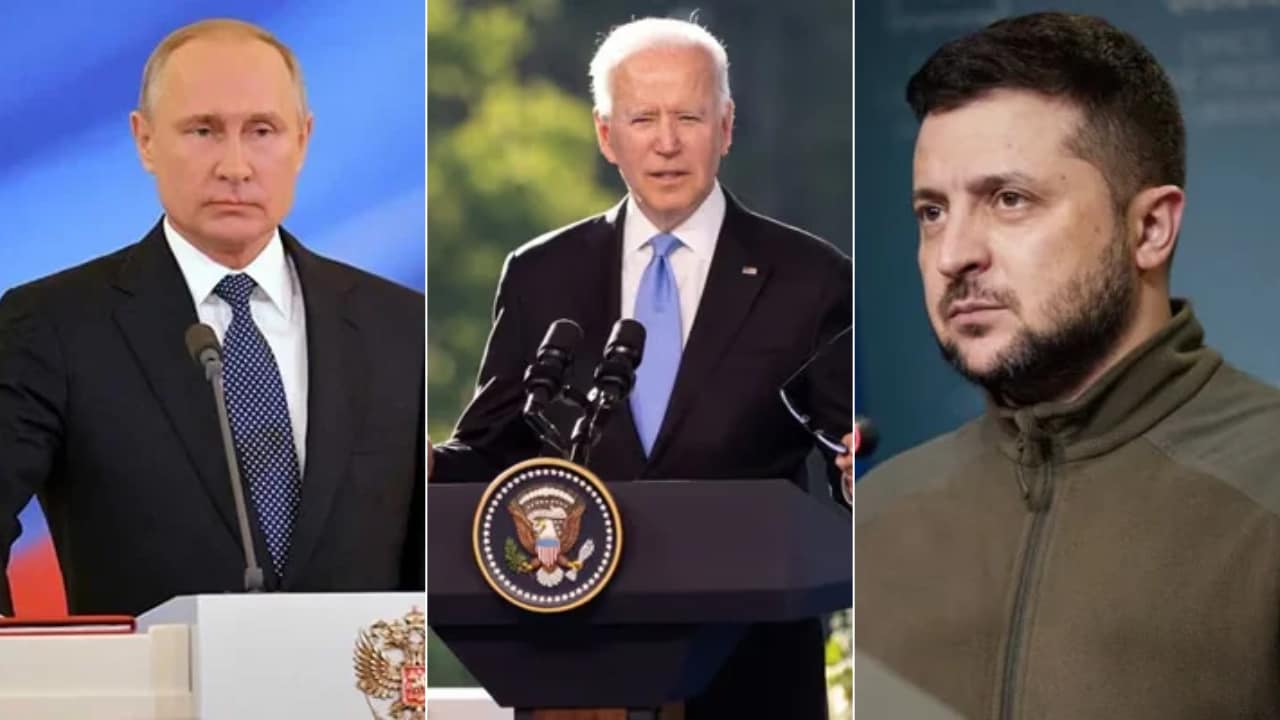
When the excerpts from former President Joe Biden’s memoir first hit the news wires, the headlines flattened the story into a cheap tabloid squabble. According to reporting on the book, Biden characterized Russian President Vladimir Putin as acting like an aggrieved "teenager" and described Ukrainian President Volodymyr Zelensky as "moody" and "stubborn" during the grueling, sleepless months of the Russia-Ukraine war.
Easy. Clickable. Disposable. To see the bigger picture, we recommend the detailed article by NPR.
If you only read the surface chatter, you might dismiss these descriptions as the cranky recollections of an aging statesman settling scores from the comfort of retirement. You might chuckle at the schoolyard imagery and scroll on to the next distraction.
That would be a mistake.
Because behind those blunt, almost domestic adjectives lies the terrifying truth of how modern history is actually made. We like to imagine that global crises are managed by grand strategists moving chess pieces across polished mahogany tables with cold, mathematical precision. We want to believe that the fate of millions rests on sober calculations of deterrence, supply chains, and international law.
The reality is far more fragile, and infinitely more human. When the secure lines connect at three in the morning, there are no chess masters on the call. There are only exhausted, cornered, prideful human beings, carrying the weight of their own histories, insecurities, and nightmares into rooms where a single misread tone can trigger a catastrophe.
The Architecture of a Three-Way Collision
To understand why Biden reached for words usually reserved for family dinner arguments, you have to step inside the claustrophobic geometry of the crisis. Imagine, for a moment, a hypothetical mediation session—not in the gilded halls of Geneva or the Situation Room in Washington, but around a scarred oak kitchen table in a quiet house during a winter blackout.
Call it a metaphor for the invisible room these three men occupied between 2022 and 2024.
At the head of the table sits the eldest figure, a man who has spent half a century believing that patience, institutional guardrails, and incremental pressure can contain any fire. He has seen the Cold War freeze and thaw; he remembers the Cuban Missile Crisis not as a textbook chapter, but as a lived memory of checking the sky for contrails. His overriding terror is simple: one wrong spark, and the whole house burns down.
Across from him sits a younger man in a wrinkled olive-drab sweatshirt, dark circles carved beneath his eyes like bruises. He has not slept through the night in months. Outside the window, his neighbors' homes are turning to ash, and every hour he spends arguing over rules of engagement is another hour measured in fresh graves. To the old man, his refusal to compromise looks like stubbornness. To the man in the sweatshirt, compromise is just a polite word for surrender.
And pacing the perimeter of the room, kicking at the floorboards, nursing an ancient, festering grievance over lost status and imagined slights, is a third figure who seems determined to prove that if he cannot own the house, nobody else gets to live in it safely.
This is not an exercise in reducing geopolitics to pop psychology. According to historians of international relations, personal temperament has always been the hidden variable in statecraft—the friction that causes carefully engineered alliances to grind and spark. When Biden used those specific labels in his memoir, he was inadvertently pulling back the curtain on the exact psychological friction that defined the deadliest European conflict since 1945.
Why "Teenager" Is the Most Terrifying Word in Diplomacy
Let us look closely at the first label. Calling an autocrat with a nuclear arsenal a "teenager" sounds, at first glance, like dismissive bravado. In diplomatic circles, adversaries are usually described as "calculating," "revisionist," or "strategic actors." Those words carry a strange comfort; they imply that if you offer the right incentive or apply the right pressure, the adversary will respond logically.
A teenager does not respond to logic when pride is on the line.
Think about the emotional mechanics of adolescence. It is defined by an acute sensitivity to humiliation, a desperate need to command respect from peers, and a willingness to burn down bridges simply to prove you cannot be pushed around. According to numerous intelligence assessments and scholarly analyses of the Kremlin's decision-making leading up to the February 2022 invasion, Putin’s worldview became increasingly untethered from traditional cost-benefit analysis. Economic sanctions—the primary weapon of Western statecraft—relied on the assumption that Moscow would prioritize long-term prosperity and global integration over territorial dominance.
Instead, the reaction resembled wounded pride hardening into spite.
I remember sitting in a cramped newsroom in late February 2022, watching the live feeds from Kyiv as the first cruise missiles struck. The air smelled of burnt coffee and static electricity, and the overwhelming sensation among seasoned foreign correspondents was not triumphalism, nor even pure shock—it was a cold, creeping dread. We were watching a leader torch decades of Russia's economic integration with Europe, isolate his nation on the world stage, and send tens of thousands of young men into a meat grinder, all to vindicate a historical narrative that existed largely inside his own head.
When Biden describes that mindset as teenage petulance, he is articulating a profound strategic dilemma. How do you deter someone who treats every rational off-ramp as an intolerable insult? If you back an adult into a corner, they negotiate. If you back an angry adolescent into a corner, they reach for the nearest heavy object just to see the look on your face when it breaks.
For the White House, this meant every weapons shipment—from Javelin anti-tank missiles in the early weeks to HIMARS rocket systems, Abrams tanks, and eventually F-16 fighter jets—was calibrated against an invisible psychological tripwire. Move too slowly, and Ukraine bleeds out. Move too fast, and the wounded ego in Moscow decides that escalation is the only way to save face.
The Burden of Being "Moody and Stubborn"
Now shift your gaze to the other side of the ledger, where the friction was supposed to be between allies.
Describing Volodymyr Zelensky as "moody" and "stubborn" strikes a very different chord, one that reveals the agonizing asymmetry of wartime alliances. From Washington’s perspective, the United States was orchestrating the largest military and financial support coalition in modern memory, risking direct confrontation with a nuclear power while navigating fierce domestic opposition in Congress. Gratitude, patience, and adherence to agreed-upon red lines seemed like the bare minimum a partner could offer.
Yet anyone who has ever stood beside a person fighting for their literal survival knows that survival makes a mockery of polite etiquette.
Consider what Zelensky’s daily reality actually looked like while Washington debated escalation matrices. In the opening days of the invasion, when Western intelligence agencies quietly offered to evacuate him from Kyiv, he famously replied that he needed ammunition, not a ride. That defiance rallied a nation and shamed hesitant Western capitals into action. It was pure, unadulterated stubbornness—the exact quality required to keep a fractured, outgunned country from collapsing within seventy-two hours.
You cannot ask a man to summon superhuman obstinacy to stop an invasion on Tuesday, and then expect him to transform into a compliant, deferential bureaucrat on Wednesday when he is told he cannot strike the airfields launching bombs at his children's hospitals.
Accounts from inside the administration during those years—corroborated by multiple journalistic reconstructions of the Biden-Zelensky relationship—paint a picture of recurring, high-voltage clashes. In June 2022, during a tense phone call while Biden was listing billions in newly approved aid, Zelensky immediately began reciting a list of everything Ukraine still lacked. Biden reportedly lost his temper, insisting that the American people were being generous and that a little more gratitude would be appropriate.
Was Zelensky being moody? Or was he carrying the unbearable guilt of knowing that every polite "thank you" wasted thirty seconds that could be spent begging for one more air-defense battery?
History offers a sobering parallel. During World War II, Winston Churchill drove Franklin D. Roosevelt and his generals to distraction with relentless demands, theatrical gloom, and midnight cables insisting that Britain was on the brink of ruin unless American supplies arrived immediately. Roosevelt frequently complained privately about Churchill’s exhausting temperament. Yet Roosevelt understood a fundamental truth: a leader fighting an existential war cannot afford the luxury of pleasantries. Their job is to be an open wound until the bleeding stops.
The Invisible Costs of Calibration
What makes Biden’s memoir reflections so compelling is not the gossip, nor the validation they offer to critics on either side of the political aisle. Rather, it is how starkly they illuminate the gap between human endurance and geopolitical pacing.
In Washington, policy is measured in fiscal quarters, legislative cycles, and careful risk assessments. Officials talk about "boiling the frog"—gradually increasing pressure on Moscow so that each new capability delivered to Kyiv feels like an incremental step rather than a sudden shock. On paper, it looks prudent. In practice, it creates an agonizing purgatory for the people living under the artillery shells.
Picture a Ukrainian artillery commander outside Bakhmut or Avdiivka in the winter of 2023—a hypothetical composite drawn from countless frontline dispatches. He has twelve shells left for the day. His scouts spot an enemy column massing two miles away, well within range of long-range precision munitions that are sitting in warehouses thousands of miles away, held up by debates over whether providing them might provoke an unpredictable reaction in the Kremlin.
To the strategist in Washington, holding back those munitions is responsible statecraft—managing a volatile adversary who behaves like an unpredictable teenager.
To the commander in the mud, it feels like abandonment dressed up in diplomatic jargon. And when that commander’s president gets on a secure video call with Washington that evening, his frustration isn't an abstract policy disagreement. It is the distilled rage of men freezing in trenches while their allies debate the emotional stability of their killer.
Conversely, look at the burden sitting on the shoulders of the American president. Every intelligence briefing on his desk carries casualty projections not just for Eastern Europe, but for scenarios in which miscalculation spirals into a direct clash between NATO and Russia. When you are the person whose signature authorizes the deployment of troops or the crossing of a nuclear threshold, caution isn't cowardice—it is the only wall standing between civilization and unthinkable ruin.
Both men were trapped inside entirely rational, utterly incompatible moral universes. One was trying to save his country today; the other was trying to prevent the end of the world tomorrow. When those two imperatives collide on a telephone line, sparks are inevitable.
Why We Sanitize the Human Element
There is a reason political memoirs rarely survive their first news cycle intact. We treat them like courtroom exhibits, combing through the pages to find quotes that prove our pre-existing opinions right. Critics of Biden’s foreign policy point to the "teenager" remark as evidence that the administration was chronically intimidated by Russian nuclear bluster, self-deterring at critical moments when decisive aid could have broken the stalemate. Meanwhile, skeptics of American aid seize on the "moody and stubborn" characterization as proof that Kyiv was an ungrateful, reckless partner dragging Washington deeper into an endless quagmire.
Both readings miss the forest for the trees.
Strip away the partisan point-scoring, and what remains is an unusually candid confession about the limits of power. Even at the pinnacle of global authority, with the world’s largest military and intelligence apparatus at his disposal, an American president cannot force another human being to want what is good for them, nor can he soothe the anguish of an ally watching their cities turn to rubble.
We sanitize history in textbooks because the truth is too unsettling. We prefer grand theories—realism, liberal institutionalism, balance-of-power dynamics—because theories make the world feel predictable. They suggest that if we just find the right formula, the machine will run smoothly.
The raw honesty of Biden’s descriptions shatters that illusion. It reminds us that beneath the treaties, the summits, and the carefully scripted communiqués, international relations is still governed by the oldest, messiest forces on earth: pride, fear, exhaustion, and grief.
The Echo Beyond the Page
Years from now, long after the immediate political skirmishes surrounding this memoir have faded into footnotes, historians will return to these passages—not for the sensationalism of the adjectives, but for what they reveal about the psychological toll of prolonged conflict.
War does not merely destroy buildings and redraw borders; it erodes the human capacity for patience on every side of the table. It turns leaders into caricatures of their sharpest traits, magnifying caution into hesitation, resilience into obstinacy, and grievance into madness.
At three in the morning, when the red light blinks on the secure console and the translator clears their throat before delivering another impossible demand or another veiled threat, there is no textbook to consult. There is only the voice on the other end of the line, breathing heavily in the dark, waiting to see who will blink first.