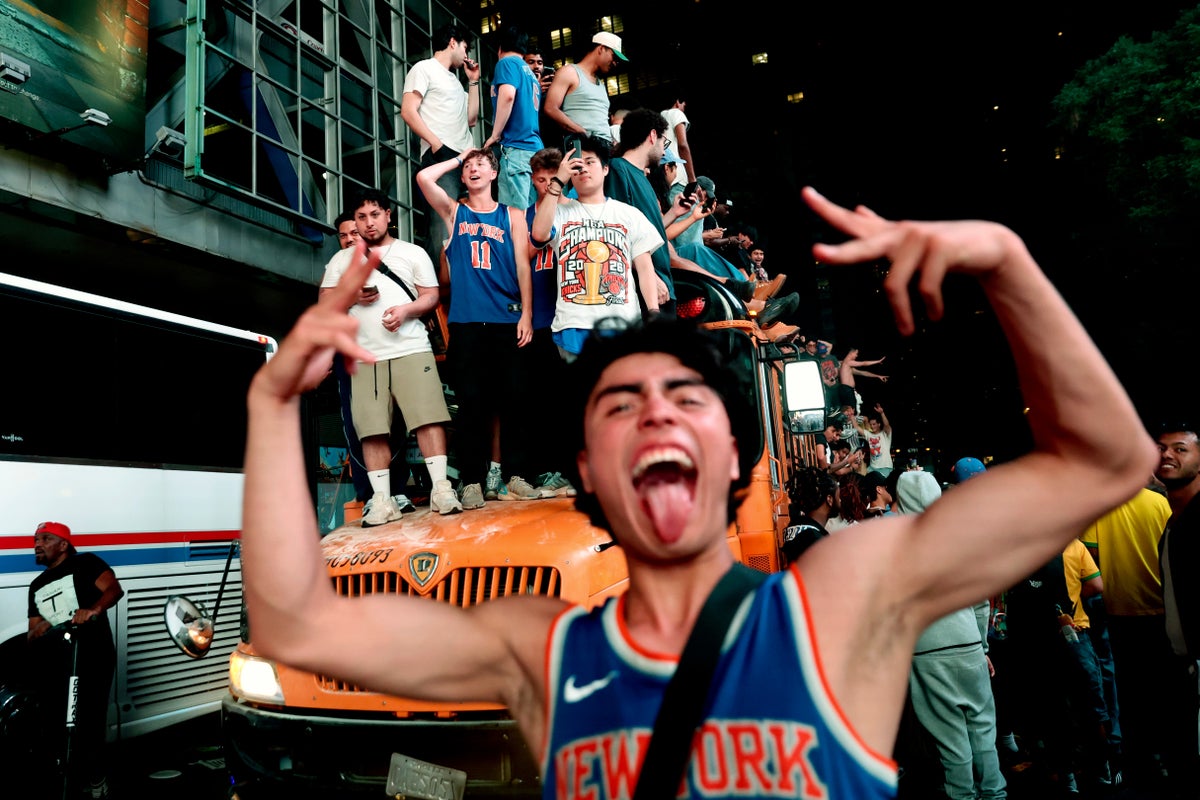
The national media spent the morning after the Knicks' historic championship victory weeping over shattered store windows on Eighth Avenue. They called it "mayhem." They used words like "marred" and "tragedy" to describe a fan base exhaling 53 years of institutionalized frustration. They want you to believe that New York City collapsed into tribal anarchy because a basketball went through a hoop in June.
It is a lazy, predictable script. It is also entirely wrong.
What the pearl-clutchers call a riot was actually something far more dangerous to the modern sports industrial complex: the sudden, violent return of authentic fan culture to an arena that has spent three decades trying to price it out of existence.
The corporate suits who run professional sports do not fear property damage. They insure against that. What they actually fear is a fan base that refuses to behave like passive consumers in a sterilized, Disneyfied entertainment ecosystem.
The Economics of the Controlled Fan Experience
For thirty years, leagues have operated under a comfortable thesis: the ideal fan is a quiet corporate VP who buys a $400 lower-bowl ticket, sips a $19 craft beer, and applauds politely when the jumbotron instructs them to "Make Some Noise."
I have spent two decades sitting in luxury suites and press boxes across league venues. I have watched sports executives actively engineer the soul out of stadiums. They want controlled emotion. They want predictable spend.
A Knicks championship shatters that model.
When MSG explodes, it is not the hedge fund managers in row AAA driving the energy. It is the upper deck. It is the people who scraped together rent money to sit in Section 414. The post-game chaos outside the Garden was not a breakdown of civil order; it was a reclamation of public space by a subculture that has been systematically marginalized by soaring ticket prices and gentrified arena policies.
Leagues love to market "passion," but only when it can be packaged into an official t-shirt or a sponsored digital collectible. The moment that passion spills onto the asphalt and refuses to be monetized, the media labels it a crisis.
Why the Chaos Narrative is Domestically Manufactured
Let us look at the data the mainstream analysis conveniently ignores. European football clubs win domestic titles annually. When Real Madrid or Celtic secures a trophy, hundreds of thousands of people occupy the city centers. Flares are lit. Streets are blocked. The police do not treat it as an apocalyptic event; they treat it as Tuesday. It is factored into the civic infrastructure.
In America, we have conditioned ourselves to view any spontaneous public gathering with absolute terror.
Typical Championship Fan Profile: Corporate vs. Authentic
+------------------------+-------------------------+-------------------------+
| Metric                 | The Corporate Ideal     | The Authentic Diehard   |
+------------------------+-------------------------+-------------------------+
| Ticket Spend           | High (Expense Account)  | Low-to-Mid (Disposable) |
| In-Game Engagement     | Passive / Networking    | High / Vocal            |
| Post-Game Behavior     | Early Exit to Avoid     | Street Celebration      |
|                        | Traffic                 |                         |
| Brand Loyalty          | Transactional           | Intergenerational       |
+------------------------+-------------------------+-------------------------+
The media's obsession with a few overturned trash cans outside a Midtown deli completely misses the structural reality. The real story isn't that the streets were chaotic. The real story is that the city’s sports culture survived thirty years of losing and corporate sanitization without losing its edge.
Dismantling the Myth of the Well-Behaved Fan Base
Is public celebration inherently a sign of civic decline?
No. The premise itself is flawed. The media conflates property disruption with social decay because it serves a specific narrative of urban instability. When a college town burns couches after a football game, it is framed as "youthful exuberance." When New York celebrates a basketball championship, it is framed as a security failure.
Why do cities fail to manage championship crowds?
Because city governments and team ownership groups view fans as liabilities rather than stakeholders. Instead of creating designated civic spaces for a population that has waited half a century to celebrate, the city deploys riot gear and barricades. They attempt to compress an explosive amount of human energy into narrow sidewalks, then act shocked when the pressure creates a flashpoint.
The Dark Side of Winning in a Hyper-Capitalist Market
There is a genuine downside to this championship, but it has nothing to do with broken glass.
The real casualty of the Knicks winning a title is the immediate, permanent exclusion of the working-class fan from Madison Square Garden.
Now that the narrative of the "lovable loser" or the "tortured fan" is dead, the ticket market will adjust brutally. The prices will climb to an astronomical baseline that permanently bars the very people who created the atmosphere the team uses in its marketing materials.
"The ultimate irony of modern sports capitalism: the more a fan base invests its soul into a team's journey, the more expensive it becomes for that fan base to witness the destination."
Ownership groups use championships to justify luxury conversions. They replace real fans with corporate clients who treat the game as a backdrop for a business dinner. The rowdy, beautiful, slightly terrifying energy that flooded Seventh Avenue after the final buzzer is exactly what ownership will spend the next five years trying to eradicate from the building itself.
Stop Demanding Polite Euphoria
The expectation that a population should celebrate a generational sports milestone by quietly walking to the subway and filing home is a corporate delusion. It asks people to turn off the emotional investment the moment the broadcast rights holder stops rolling commercials.
You cannot demand that fans care enough to spend thousands of dollars on merchandise, watch hundreds of hours of television, and pass down their loyalty through generations, and then demand they express that care like Presbyterian monks.
The post-game scene in New York was loud, dirty, and chaotic. It was exactly what real sports culture looks like when it escapes the boardroom. If you prefer a sanitized, quiet, predictable celebration, go watch tennis.