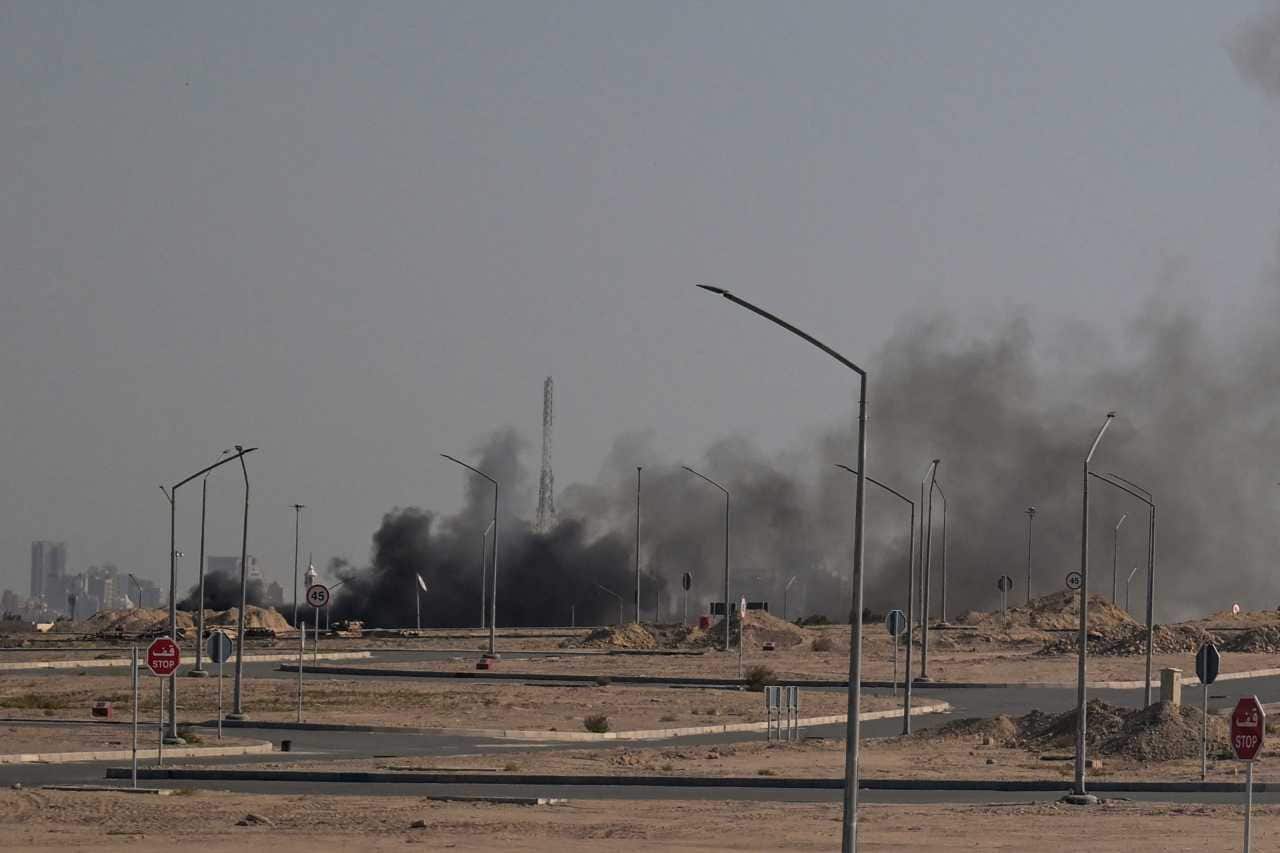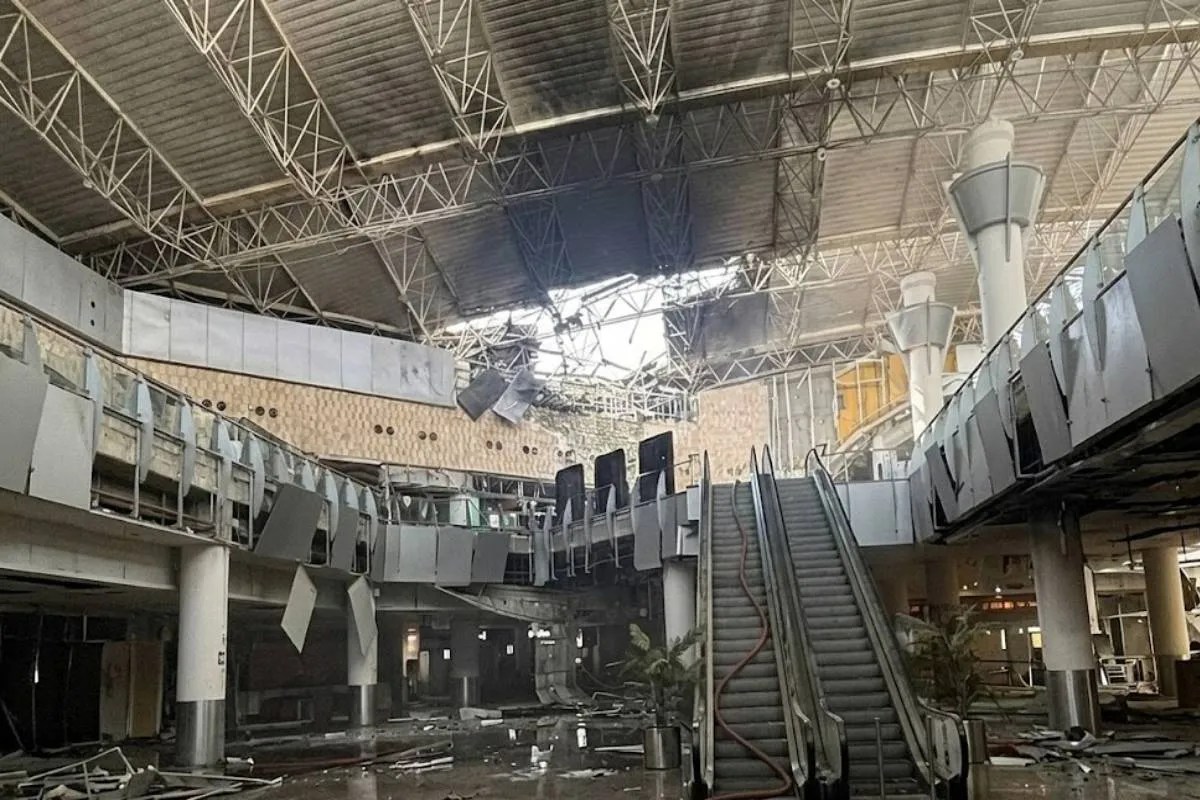
Mainstream news outlets love a predictable script. A tragic incident occurs at a major transit hub like Kuwait International Airport, casual linkages are drawn to retaliatory US airstrikes in Iran, and embassies issue boilerplate alerts telling expatriates to "exercise caution." It is a formula designed to generate panic, reassure the public that "something is being done," and move on to the next cycle.
This reaction misses the entire point.
The lazy consensus dominating international reporting assumes that localized security breaches are direct, linear reflections of macro-level state warfare. It posits that increasing embassy surveillance and issuing travel warnings can mitigate the risks faced by transnational workforces. Having analyzed regional security logistics and supply chain vulnerabilities across the Middle East for over fifteen years, I can tell you that this perspective is dangerously naive.
Global transit security is not a chess game between superpowers; it is a fragmented, asymmetrical ecosystem where the weakest link is almost always hyper-local, contractual, and completely detached from high-level statecraft.
The Flawed Linear Narrative of Retaliation
When a headline links an attack in the Gulf directly to US-Iran military friction, it satisfies a hunger for narrative symmetry. Big nations fight, bystanders suffer. But geopolitics rarely operates in a straight line.
To understand why this framework fails, we must look at the structural mechanics of modern airport security and regional proxies. Major aviation hubs in the Gulf do not operate as unified military fortresses. They are massive, multi-tiered commercial operations heavily reliant on third-party contractors, sub-contractors, and outsourced labor pools.
When an incident occurs on the perimeter or within a terminal, mainstream analysts immediately look to Tehran or Washington. They should be looking at the procurement protocols of airport ground handling services.
- Asymmetric Exploitation: Hostile actors rarely launch complex operations based purely on ideological timing. They exploit pre-existing operational blind spots.
- The Procurement Trap: Heavy reliance on lowest-bidder security contracts creates systemic vulnerabilities that no amount of embassy "high alerts" can fix.
- Decoupled Triggers: Localized actions are frequently executed by autonomous cells operating on their own timelines, merely using broader regional chaos as a smoke screen to maximize media impact.
By focusing exclusively on the macro-political theater—the airstrikes and the diplomatic posturing—analysts ignore the immediate, ground-level failures that actually cost lives.
The Mirage of Embassy Protection
Let us dismantle the premise that diplomatic missions can protect citizens in the wake of sudden kinetic events. The standard institutional response to a crisis is the issuance of a security advisory. These documents are exercises in bureaucratic liability management, not actionable security intelligence.
Tell an expatriate worker to "remain vigilant" is the operational equivalent of telling a drowning person to swim harder. It shifts the burden of security from institutions to individuals who possess neither the tactical training nor the intelligence access to act on it.
During my time coordinating risk assessments for logistics firms in high-risk zones, I watched corporate boards waste millions of dollars rewriting travel policies based entirely on embassy press releases. It is theatre. If an airfield perimeter is breached, a PDF bulletin from a consulate three miles away provides zero tactical utility.
The harsh reality that nobody wants to admit is that embassies are designed for diplomacy, not tactical crisis management. When regional tensions spike, their primary objective is protecting their own sovereign territory and communication lines, not policing the infrastructure of the host nation.
Structural Vulnerabilities in Global Labor Corridors
The tragic loss of foreign nationals, such as Indian workers in the Gulf, highlights a brutal economic reality that standard news reporting completely sanitizes. The blue-collar migrant workforce forms the literal spine of Gulf infrastructure, yet they are systematically excluded from the security architecture designed to protect high-value assets.
Consider the layout of any major international transit point. Security spending is heavily front-loaded toward protecting the assets that generate revenue: first-class lounges, duty-free zones, and aircraft hulls. The secondary zones—cargo bays, maintenance hangars, and remote parking lots where the majority of the working-class force operates—are treated as logistical afterthoughts.
This creates a stark, class-based security disparity.
+------------------------------------------------------------+
|                THE TRANSIT SECURITY PYRAMID                |
+------------------------------------------------------------+
| [HIGH]   Zone 1: Premium Terminals & Aircraft              |
|          (Max Capital Investment, Federal Oversight)       |
+------------------------------------------------------------+
| [MEDIUM] Zone 2: Public Check-In & Screening               |
|          (High Visibility, Reactive Patrols)               |
+------------------------------------------------------------+
| [LOW]    Zone 3: Logistics, Cargo & Perimeters             |
|          (Outsourced Labor, Fragmented Monitoring)         |
+------------------------------------------------------------+
When an attack penetrates the outer layers of an aviation complex, it is the personnel in Zone 3 who bear the brunt of the impact. Yet, standard industry analysis continues to treat "airport security" as a monolithic concept, ignoring the reality that different zones operate under entirely different risk profiles.
Redefining the Security Equation
If the current model of relying on state-level retaliation theories and embassy warnings is broken, how do we actually fix it? The answer requires a uncomfortable shift from macroeconomic analysis to micro-level operational auditing.
We must stop asking who ordered an attack and start asking how the material components bypassed the immediate perimeter. This means holding private logistics corporations and state aviation authorities accountable for the fragmentation of their security chains.
Imagine a scenario where aviation hubs were legally penalized not for the political motivations of attackers, but for the specific failure of their access-control systems. If financial liability shifted from insurers to the executives signing off on sub-contracted perimeter security, the vulnerability landscape would change overnight.
The downside to this contrarian approach is obvious: it drives up the cost of doing business. It demands rigorous vetting, higher wages for ground-level security personnel, and a dismantling of the lucrative sub-contracting loops that define modern airport management. But the alternative is continuing to accept a system where human lives are traded for lower operating costs, papered over by empty bureaucratic statements.
Stop looking at the maps of the Middle East to understand transit vulnerabilities. Start looking at the contract ledgers of the terminals. The threat isn't just the missile flying across the border; it is the unvetted delivery truck wave-checked through a side gate because the guard was underpaid and overworked.