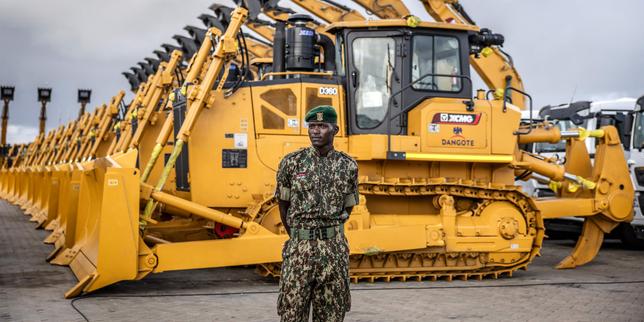
The lazy consensus of global journalism operates on a predictable script. Take an ancient East African archipelago, drop a massive industrial project into its perimeter, and wait for the ink to dry on the tragedy. Conservationists weep for the mangroves. Travel magazines publish elegiac photo essays about the death of dhow sailing boats. Everyone nods along, feeling collectively virtuous about a coastline they will never visit.
It is a comfortable narrative. It is also entirely bankrupt. Recently making headlines recently: The Corporate Capture of Electoral Space Structural Decay and Organized Crime in Regional Peru.
When the Lamu Port-South Sudan-Ethiopia Transport corridor project began carving up northern Kenya, the professional mourners of the heritage circuit lost their minds. They framed the arrival of heavy infrastructure as a zero-sum war between pristine Swahili antiquity and brute corporate extraction.
They missed the fundamental structural reality of the region. Poverty is not a museum exhibit. It is a slow-motion catastrophe. Additional insights into this topic are covered by NBC News.
I have watched well-meaning Western NGOs spend decades protecting idyllic poverty as if it were a protected UNESCO asset class. They romanticize thatched roofs and kerosene lamps while sitting on air-conditioned flights back to London or Zurich. When locals trade subsistence fishing for predictable wage labor or logistics training, the metropolitan commentariat treats it as a cultural betrayal.
Let us dismantle the core falsehoods driving the panic over Lamu’s industrial awakening.
The Myth of Static Paradise
The dominant argument against heavy development in Lamu rests on a historical fabrication. The popular imagination paints the island as an untouched medieval time capsule that existed in amber until bulldozers arrived.
History tells a different story. Lamu was never a wildlife sanctuary. It was a brutal, hyper-connected commercial node. For centuries, dhow captains traded ivory, cloves, and human lives across the Indian Ocean basin, linking Arabia, India, and the Swahili coast in a ruthless mercantile web. It survived because it adapted to economic gravity, not because it preserved a static aesthetic for romantic tourists.
When critics lament that a megarefinery or port infrastructure disrupts the traditional rhythm of the coast, they are mourning a fantasy that never benefited the people living through water scarcity, youth unemployment, and zero formal economic mobility.
Heritage without capital is just an open-air prison.
The Energy Poverty Hypocrisy
Let us talk about carbon imperialism. The loudest voices condemning industrial investments in East Africa usually write from capitals powered by a century of unbridled fossil fuel combustion. They demand that nations like Kenya leapfrog industrialization entirely, skipping straight to expensive, intermittent green tech while their own populations sit in the dark.
Energy density drives economic liberation. You cannot run a modern healthcare system, a regional supply chain, or a digital economy on artisanal solar panels and good intentions.
The Lamu corridor project is not merely about oil or logistics; it is about rewriting the terms of trade for a landlocked interior that has been economically landlocked for generations. South Sudan and Ethiopia need outlets to the global market. Kenya needs fiscal depth beyond tourism and rain-fed agriculture.
To pretend that a coastal community should remain an economic backwater so that European backpackers can enjoy an authentic sunset is a grotesque inversion of ethics.
What the Environmental Critique Gets Right (And Wrong)
I will grant the critics this: heavy infrastructure projects in fragile coastal ecosystems carry catastrophic risks if managed with typical bureaucratic incompetence. Mangroves matter. Coral reefs matter. Artisanal fisheries feed thousands of families who do not have stock portfolios to cushion a bad quarter.
Where the opposition collapses is in assuming that opposition equals management. Shouting slogans at a refinery does not stop pollution; building institutional capacity, enforcing rigorous environmental impact bonds, and demanding local equity stakes does.
The real scandal in Lamu is not that heavy industry is arriving. It is the historic failure of local populations to secure generational wealth from state-megaprojects. Too many infrastructure deals negotiated in Nairobi or Beijing treat coastal communities as speed bumps rather than shareholders.
If you want to protect Lamu, stop trying to freeze it in 1850. Start fighting for local ownership models, sovereign wealth dividends, and strict legal accountability for corporate polluters.
The Uncomfortable Future
The port is built. The roads are cutting through the bush. The demographic pressure of a young, urbanizing East Africa will not pause because a travel blogger finds diesel fumes offensive.
The romantic era of paternalistic conservation is over. The choice for Lamu is not between paradise and ruin. It is between planned, aggressive economic integration that benefits locals, or chaotic, extractive exploitation that leaves them behind while outsiders extract the rents.
Stop crying over the dhows. Start teaching the kids how to run the cranes.