High-profile murder prosecutions rarely collapse because of a lack of evidence. They collapse when investigators decide which evidence is worth testing long before a jury ever sits down.
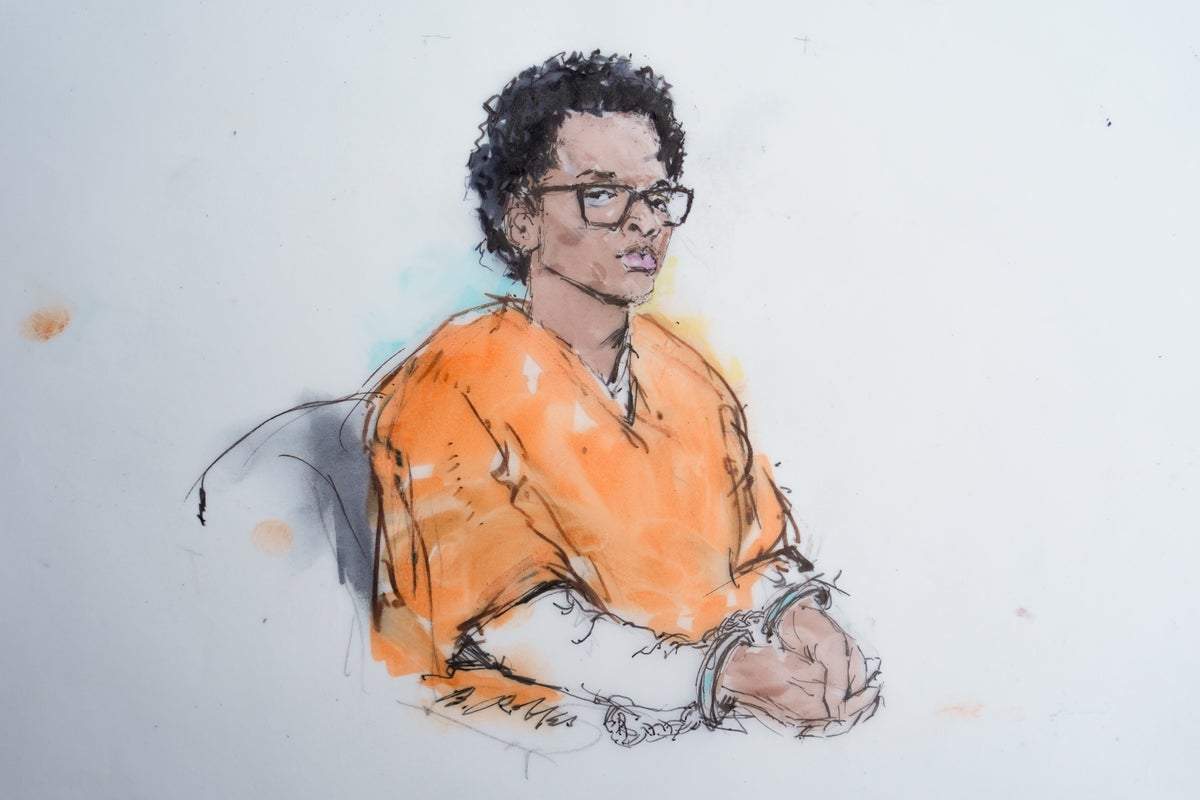
During the preliminary hearing for David Anthony Burke, the 21-year-old indie-pop artist known professionally as D4vd, defense attorney Blair Berk exposed a glaring vulnerability in the Los Angeles Police Department’s forensic investigation. Burke faces charges of first-degree murder, child sexual abuse, and body mutilation following the discovery of 14-year-old Celeste Rivas Hernandez’s dismembered remains inside the front trunk of his Tesla. While prosecutors presented high-probability match statistics tying the victim’s DNA to garage stains, the defense hammered away at what forensic technicians intentionally left untouched: touch DNA on alleged murder tools, unswabbed vehicle exteriors, and untested household items. In similar developments, we also covered: Stop Believing Modern Diplomacy Can End War.
The defense strategy isn't just standard legal posturing. It highlights a systemic issue in modern criminal investigations where forensic teams prioritize confirming a pre-existing prosecution narrative over conducting an exhaustive, objective analysis of a crime scene.
The Flaw in Confirmation Forensic Science
When LAPD criminalist Lauren Wallace testified regarding two small chain saws recovered from Burke’s Hollywood Hills home, she admitted that investigators ran basic chemical screenings for blood on the blades. When those tests returned negative, technicians made a deliberate choice: they chose not to swab the handles for skin cells or touch DNA. USA Today has also covered this fascinating subject in extensive detail.
That single decision created an immediate entry point for the defense.
Berk seized on the omission during cross-examination, forcing the criminalist to acknowledge that an item carrying someone else’s skin cells would yield no visual cues to the naked eye. In a home where multiple people resided and frequented, failing to sample the grips of tools allegedly used in a gruesome dismemberment leaves an unanswered question that could spark reasonable doubt in a trial.
Police analysts defended the decision by arguing that testing for contact DNA inside a suspect's primary residence is redundant because the suspect's genetic material is already expected to cover every surface. That logic completely ignores the primary goal of defense investigation: identifying secondary suspects or third-party presence.
+-----------------------------------------------------------------------------------+
| FORENSIC TESTING GAP ANALYSIS                                                     |
+------------------------------------+----------------------------------------------+
| Evidence Item                      | LAPD Action vs Defense Vulnerability         |
+------------------------------------+----------------------------------------------+
| Small Chainsaw Handles             | Tested blades for blood (negative).          |
|                                    | Refused touch DNA swabbing on grips.         |
|                                    | Leaves third-party handler theories open.    |
+------------------------------------+----------------------------------------------+
| Tesla Exterior & Door Handles      | No swabbing performed.                       |
|                                    | LAPD deemed it "unnecessary."                |
|                                    | Fails to eliminate external handlers.        |
+------------------------------------+----------------------------------------------+
| Garage Floor & Rubber Mats         | Chemically illuminated via Luminol/Bluestar. |
|                                    | DNA matched victim, but state admitted       |
|                                    | inability to prove origin was blood vs touch.|
+------------------------------------+----------------------------------------------+
When a forensic team skips testing because they assume they already know who used an item, they stop gathering physical facts and start collecting confirmation.
Probability Numbers versus Biological Context
Prosecution testimony hit heavy headline numbers when LAPD criminalist Samantha Tosch took the stand. She testified that DNA profiles recovered from a rubber mat, a rowing machine, and a Tesla charger inside Burke’s garage matched Rivas Hernandez with an astronomical probability metric.
The statistics sound absolute to a lay audience. Yet under rigorous cross-examination, the scientific certainty began to fracture along the edges of context.
Berk forced the state’s expert to concede three critical facts:
- The laboratory cannot confirm whether the matched DNA originated from blood, saliva, cellular sweat, or skin transfer.
- The laboratory cannot determine the mechanism of transfer, leaving open the possibility of secondary or tertiary contact.
- The laboratory has no scientific method to establish how long the biological material had been present on those surfaces.
This distinction is crucial. A blue-glowing chemical illumination across a garage floor looks damning in courtroom photos. But if the underlying substance cannot be definitively identified as blood, and if fake blood containers—which defense counsel linked to Burke’s music video sets—were also recovered on site, the prosecution’s physical narrative becomes subject to heavy cross-examination.
                +---------------------------------+
                |   EVIDENTIARY AMBIGUITY GAP     |
                +---------------------------------+
                                 |
        +------------------------+------------------------+
        |                                                 |
        v                                                 v
+-------------------------------+ +-------------------------------+
|     Prosecution Narrative     | |        Defense Counter        |
+-------------------------------+ +-------------------------------+
| High statistical DNA match    | | No confirmation of body fluid |
| Stains glow blue in garage    | | Fake blood props on property  |
| Digital location tracking     | | Multiple household occupants|
+-------------------------------+ +-------------------------------+
The High Risk of Unswabbed Vehicles
The oversight extended past the residential garage into the physical vehicle where Rivas Hernandez’s body was uncovered months after her disappearance. Criminalist Chelsea Murillo acknowledged under oath that LAPD technicians did not attempt to extract touch DNA from the exterior of the Tesla or its outer door handles.
Her reasoning was straightforward: it didn't seem necessary.
In homicide investigations involving concealed bodies and long transport timelines, the exterior of a vehicle is a primary zone for physical evidence. Leaving the exterior unexamined gives defense attorneys a concrete argument during trial. They do not need to prove who else touched the vehicle; they only need to show that law enforcement failed to check.
In high-stakes criminal trials, an unasked question from a detective is often far more valuable to a defense team than a negative lab result.
Digital Footprints versus Biological Gaps
To offset the physical testing gaps exposed during cross-examination, prosecutors are leaning on digital tracking. Detectives testified to cell tower location data and embedded Tesla telemetry placing Burke at his Hollywood residence during the window of the alleged murder, as well as tracking multiple trips to a remote region in Santa Barbara County where the victim's passport was later recovered.
Digital location data establishes physical presence. It proves a phone or a vehicle moved along a specific trajectory at a specific time. What digital data cannot prove, however, is human agency at the scene of a crime. It cannot verify who was holding the phone, who was driving the vehicle, or who took specific actions once the vehicle arrived at its destination.
By relying heavily on location pings while skipping physical touch swabs on physical evidence, the state has built a case that is mathematically strong on location but structurally fragile on physical handling.
When a preliminary hearing finishes, the judge decides only if sufficient cause exists to move the case forward to trial. But the transcript of this hearing reveals the blueprint for the coming trial battle. Prosecutors will stand on statistical probabilities and digital tracking maps. Defense attorneys will stand inside the forensic gaps, reminding jurors that police officers decided not to test the very handles of the tools they claim committed the crime.


