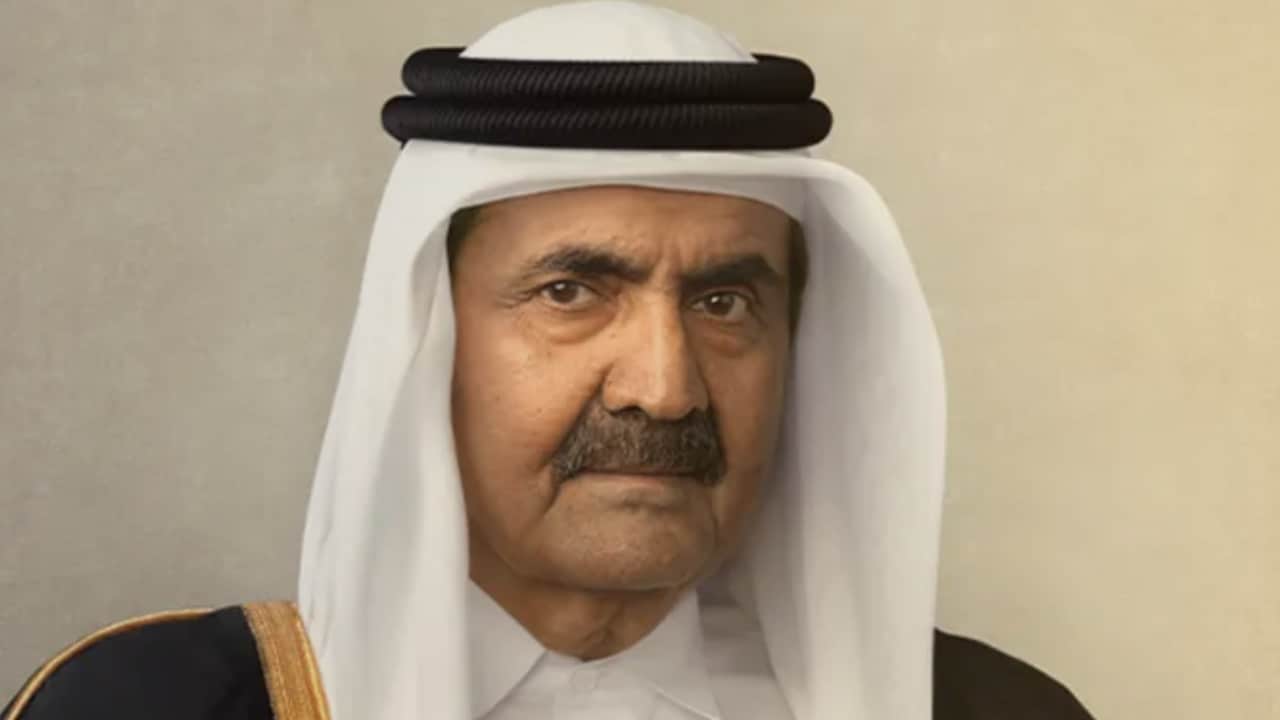
Qatar used to be a quiet corner of the Persian Gulf. It relied on a fading pearl industry and sat firmly under the shadow of its larger neighbors. Then came 1995. Sheikh Hamad bin Khalifa Al Thani took the reins of power and changed the trajectory of his country forever. Understanding the modern global footprint of Qatar requires a close look at the specific choices made by the man often called the Father Emir.
He didn't just run a country. He completely re-engineered it. From launching global media networks to betting everything on liquid natural gas, his decisions still ripple through international politics and global energy markets today.
The Coup That Changed the Gulf
In the summer of 1995, the political order of the Gulf experienced a sudden shakeup. While his father, Sheikh Khalifa bin Hamad Al Thani, was staying at a luxury hotel in Switzerland, the young Crown Prince Hamad executed a swift, bloodless coup. It wasn't a sudden whim. Tension had been building for years over how the country managed its vast, untapped wealth.
The older generation favored a slow, conservative approach to development. Sheikh Hamad wanted speed. He saw a rapidly changing world and knew his country was falling behind. Backed by key members of the ruling family and the military, he took control before breakfast was served in Geneva.
His father called it the behavior of an ignorant man. The international community, however, saw it differently. Washington and London recognized the new ruler almost immediately. They saw a modernizer. They were right. Sheikh Hamad knew that to survive as a tiny nation surrounded by giants like Saudi Arabia and Iran, Qatar needed to become indispensable to the rest of the world.
The Trillion Dollar Natural Gas Bet
When Sheikh Hamad took over, Qatar was deeply in debt. It sounds impossible now, but the state finances were a mess. The country had plenty of oil, but not enough to compete with Saudi Arabia. What it did have was the North Field, a massive underwater reservoir of natural gas shared with Iran.
At the time, natural gas was an afterthought. It was difficult to move, expensive to process, and lacked a global market. Skeptics thought building the infrastructure to liquefy and ship this gas was economic madness. Sheikh Hamad ignored the doubters. He invited foreign energy giants like ExxonMobil and Total to invest billions in specialized facilities.
It was a staggering gamble. If global energy prices dropped, the country would face bankruptcy. Instead, the bet paid off spectacularly.
By the mid-2000s, Qatar became the world leader in Liquefied Natural Gas exports. The wealth flowed in faster than anyone anticipated. The state transformed this sudden rush of money into a sovereign wealth fund, the Qatar Investment Authority. Suddenly, a small peninsula owned chunks of London real estate, stakes in major European automakers, and massive shares in global banks.
Soft Power and the Birth of Al Jazeera
Wealth alone doesn't buy security. Sheikh Hamad understood that a rich but silent country remains vulnerable to regional bullies. He needed a voice that could reach across borders and influence public opinion.
In 1996, he provided a 150 million dollar grant to launch a new satellite news channel. They called it Al Jazeera.
Before this launch, Arab media consisted mostly of dry, state-controlled broadcasts praising local dictators. Al Jazeera did something radical for the region. It broadcast live debates, questioned government officials, and covered controversial topics that were previously taboo. It gave a platform to political dissidents across the Middle East.
The channel infuriated neighboring regimes. Saudi Arabia, Egypt, and Syria routinely complained to Doha, demanding that the network be shut down. Sheikh Hamad refused to budge. He used the network as a diplomatic shield. It made Qatar a central player in regional politics, giving the tiny nation a geopolitical weight that far exceeded its physical size.
A Foreign Policy of Contradictions
Under Sheikh Hamad, Qatar developed a foreign policy that confused outsiders but served a clear purpose. He didn't pick a side. He talked to everyone.
He allowed the United States military to build Al Udeid Air Base, which became the largest American military installation in the Middle East. At the exact same time, he maintained working diplomatic relations with Iran to ensure the smooth operation of their shared gas field. He hosted offices for the Taliban and Hamas, while simultaneously maintaining low-level trade ties with Israel.
To Western observers, it looked like double-dealing. To Sheikh Hamad, it was practical survival. By positioning Qatar as the ultimate neutral ground, he made sure that every global superpower and regional actor needed Doha to pass messages or negotiate peace deals. You couldn't ignore Qatar because Qatar was talking to the people you couldn't talk to yourself.
Setting the Stage for the World Cup
The global sports strategy that culminated in the 2022 FIFA World Cup didn't start overnight. It was a long-term plan initiated during Sheikh Hamad's reign. He recognized early on that sports offered a direct line to global prestige and cultural relevance.
The country began hosting major tennis tournaments, athletics championships, and Asian Games. They bought prestigious football clubs like Paris Saint-Germain. When Qatar won the bid to host the World Cup in 2010, it shocked the international sports establishment. It drew intense scrutiny, allegations of corruption, and fierce criticism over labor rights.
The Western press lambasted the decision. Yet, from the perspective of the Qatari leadership, the tournament achieved exactly what it was meant to do. It placed Doha permanently on the global map and forced massive infrastructure upgrades, transforming a sleepy city into a glittering metropolis of highways, metros, and architectural marvels.
The Historic Abdication
In June 2013, Sheikh Hamad did something virtually unheard of in the modern history of Arab monarchies. He voluntarily stepped down. He was 61 years old, experiencing health issues, and decided it was time for a transition.
He handed the throne to his fourth son, Sheikh Tamim bin Hamad Al Thani.
Monarchs in the region usually rule until their final breath. Abdications typically happen because of a palace coup or a failing mind. Sheikh Hamad broke the mold by orchestrating a smooth, planned transfer of power to a younger generation. He took the title of Father Emir and stepped into the background, allowing his son to take the spotlight.
The timing was deliberate. The Middle East was still reeling from the chaos of the Arab Spring, a series of uprisings that Qatar had actively supported through its media and wealth. By stepping down, Sheikh Hamad ensured that Qatar remained stable and unified while other regional powers struggled with internal dissent or aging rulers who refused to let go.
Evaluating the Modern Legacy
The choices made during those critical eighteen years of rule continue to define the nation today. The immense wealth generated by the gas boom created one of the highest per-capita incomes on the planet. Citizens received free healthcare, free education, and generous state subsidies.
The strategy came with a steep cost. The rapid development relied heavily on millions of migrant workers who faced difficult, often dangerous conditions under the restrictive kafala sponsorship system. Though recent years brought labor reforms, the legacy of that rapid build-up remains a point of deep international criticism.
Furthermore, the aggressive foreign policy and independent stance eventually triggered a massive backlash. In 2017, Saudi Arabia, the United Arab Emirates, Bahrain, and Egypt launched a bitter diplomatic and economic blockade against Qatar. They demanded the closure of Al Jazeera and a severe scaling back of ties with Iran.
The blockade lasted for nearly four years. It failed to break Doha. Ironically, the economic independence and international alliances that Sheikh Hamad spent decades building allowed the country to weather the storm without collapsing.
Look closely at how Qatar navigates international energy negotiations, mediates high-stakes global conflicts, or commands attention on the world stage. You aren't just looking at the actions of a modern state. You are looking at the execution of a blueprint drawn up by a young prince who decided in 1995 that his country would no longer play a minor role in global history.