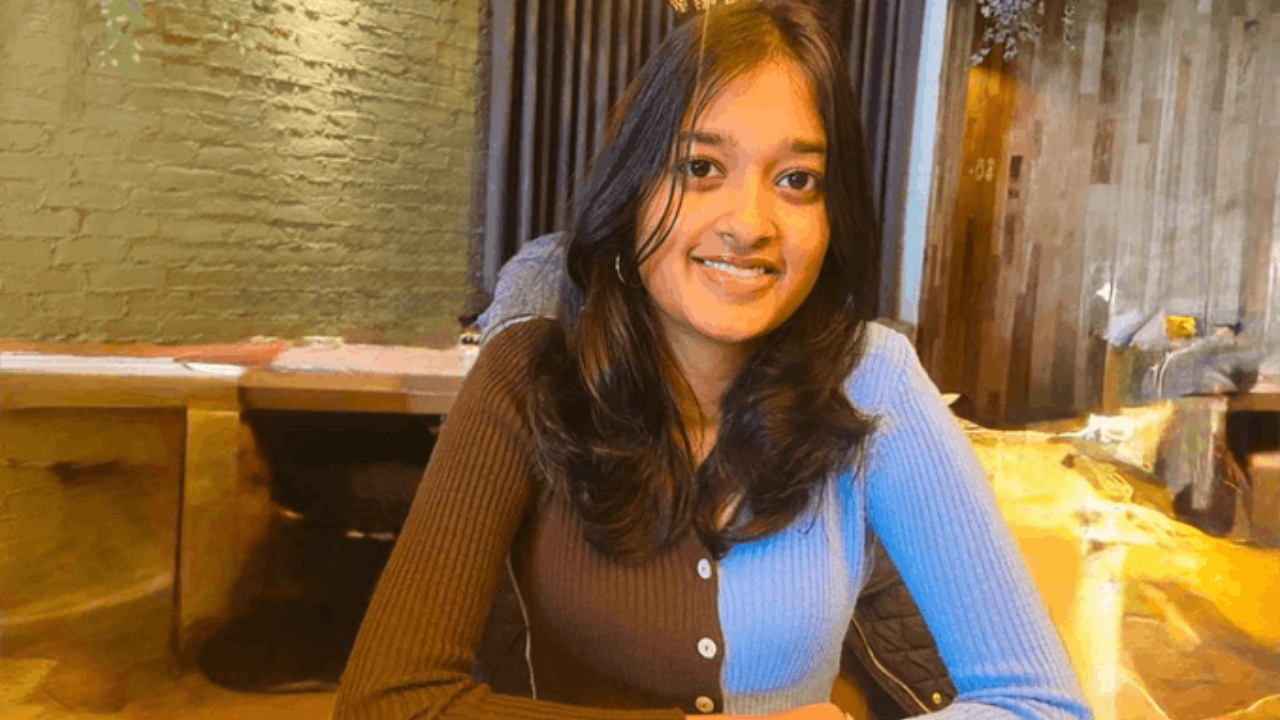
The air in Austin during late spring usually carries the scent of cedar and woodsmoke from a hundred different barbecue pits. It is a city of motion, defined by the frantic, hopeful energy of twenty-somethings dragging backpacks across Guadalupe Street. Savitha Shan was one of those faces in the crowd. She was a student at the University of Texas, a place where the future is supposed to feel like a promise rather than a gamble.
But promises break.
On a night that should have been unremarkable, the trajectory of a young life—one built on late-night study sessions and the specific, vibrant dreams of the Indian-American diaspora—was severed by the crack of gunfire. Savitha was killed in a shooting that defied logic, the kind of random violence that leaves a permanent, jagged hole in the fabric of a community. When the sirens faded and the news cycle began its inevitable pivot to the next tragedy, a family was left standing in the silence of an empty bedroom.
They had two choices. They could let the darkness of that night define Savitha’s story, or they could find a way to make her light permanent.
The Weight of an Empty Chair
Grief is a heavy, physical thing. It sits in the chest and makes the simple act of breathing feel like a chore. For the Shan family, the loss of Savitha wasn't just a statistic or a headline in a local paper. It was the absence of a voice at the dinner table. It was the sudden, agonizing stillness of a phone that no longer buzzed with texts about exams or weekend plans.
In the wake of such a loss, there is a desperate urge to do something, anything, to push back against the unfairness of it all. Most people send flowers. Some write letters. The Shan family decided to build a bridge. They established the Savitha Shan Memorial Scholarship, an initiative designed to support students who share Savitha’s drive and her heritage.
This wasn't just about money. It was about ensuring that another student, perhaps one who looks like Savitha and dreams like her, wouldn't have their journey cut short by a lack of resources. It was a way of saying that while one life was taken, the values that life represented—education, ambition, and community—would be defended at all costs.
Turning Mourning Into Momentum
Consider the mechanics of a scholarship. On paper, it is a financial transaction. A sum of money is moved from an endowment to a tuition bill. But that is a cold way to look at a lifeline.
Imagine a student sitting in a dormitory, the same kind of room Savitha might have occupied. This student is brilliant, but they are tired. They are working two jobs to stay in school. They are wondering if the dream of a degree is worth the crushing weight of the debt they are accumulating. Then, they receive a notification. They’ve been awarded the Savitha Shan Memorial Scholarship.
Suddenly, the pressure eases. The room feels a little brighter. That student isn't just receiving a check; they are receiving the belief of a family they have never met. They are being told that Savitha’s name still carries weight, and that her legacy is now intertwined with their own success. This is how a tragedy is transformed into a legacy. It is a slow, deliberate process of turning pain into a platform for others.
The University of Texas at Austin is a massive institution, a sea of over 50,000 students. It is easy to feel invisible there. By creating this scholarship, the Shan family ensured that Savitha would never be invisible. Every year, a new name will be linked to hers. Every year, a new person will learn about the girl who loved her campus and her culture, and who was taken far too soon.
The Invisible Stakes of a Legacy
We often talk about "giving back" as if it is an optional hobby for the wealthy. But for families like the Shans, it is a form of survival. It is an act of defiance against the randomness of violence. When a life is stolen, the world loses all the potential that person carried. The breakthrough they might have made in a lab, the children they might have raised, the kindness they would have shown to a stranger—all of it vanishes.
Establishing a memorial fund is an attempt to reclaim some of that lost potential.
If Savitha cannot be the one to change the world, her scholarship will find someone who can. It creates a ripple effect. One student graduates because of this funding. They go on to become a doctor, a lawyer, or a teacher. They, in turn, help hundreds of others. The initial act of the Shan family, born out of the deepest possible sorrow, becomes a force of nature that expands far beyond the borders of Texas.
The Indian-origin community in the United States often finds itself at a unique crossroads. There is a deep-seated respect for the "American Dream"—the idea that hard work and education are the keys to a better life. When that dream is shattered by something as senseless as a shooting, it shakes the foundation of that belief. The scholarship acts as a repair kit for that broken faith. It reaffirms that the community will take care of its own, and that the pursuit of knowledge is still the most powerful response to ignorance and hate.
A Quiet Revolution in the Face of Loss
There is no closure in a tragedy like this. The word "closure" is a myth we tell ourselves to make the unbearable seem manageable. There is only the long, slow walk toward a new normal.
The Shan family is walking that path now. They are doing it with a grace that is difficult to fathom. By channeling their energy into the University of Texas, they are staying connected to the place Savitha loved. They are choosing to remember the girl who walked the "Drag," who cheered for the Longhorns, and who had the world at her feet.
The scholarship is a living monument. Unlike a statue, which is static and cold, a scholarship grows. It evolves. It learns. It graduates.
The next time you walk through a college campus, look at the faces of the students rushing to class. Each one is a world of possibilities. Each one is a story in progress. Behind some of those faces is a story of struggle, and behind others is a story of support they didn't see coming. Somewhere in that crowd, there is a student whose future was made possible because a family in Texas decided that a bullet wouldn't be the final word in their daughter’s life.
Savitha Shan is gone, but the doors she is opening for others are swinging wide, caught in a breeze that smells of cedar and hope.