The financial press is currently salivating over the Lime IPO filing like a pack of wolves chasing a meat wagon. They see "Uber-backed," "electric," and "carbon-neutral" and immediately hit the buy button. They are buying a fairytale.
The standard narrative is simple: Lime solved the "last mile" problem, the unit economics finally work, and they are the green savior of the modern city. This is nonsense. Lime hasn't built a sustainable business; they’ve built a highly efficient way to subsidize municipal transportation budgets with venture capital and retail investor equity.
If you think Lime is a tech company, you’ve already lost. Lime is a heavy-machinery logistics firm masquerading as a software play. Every dollar of revenue is fought for in the mud, literally.
The Unit Economics Delusion
The bull case for Lime relies on a metric called "contribution margin." They’ll tell you that once you pay for the scooter and the electricity, the rest is profit.
They are lying by omission.
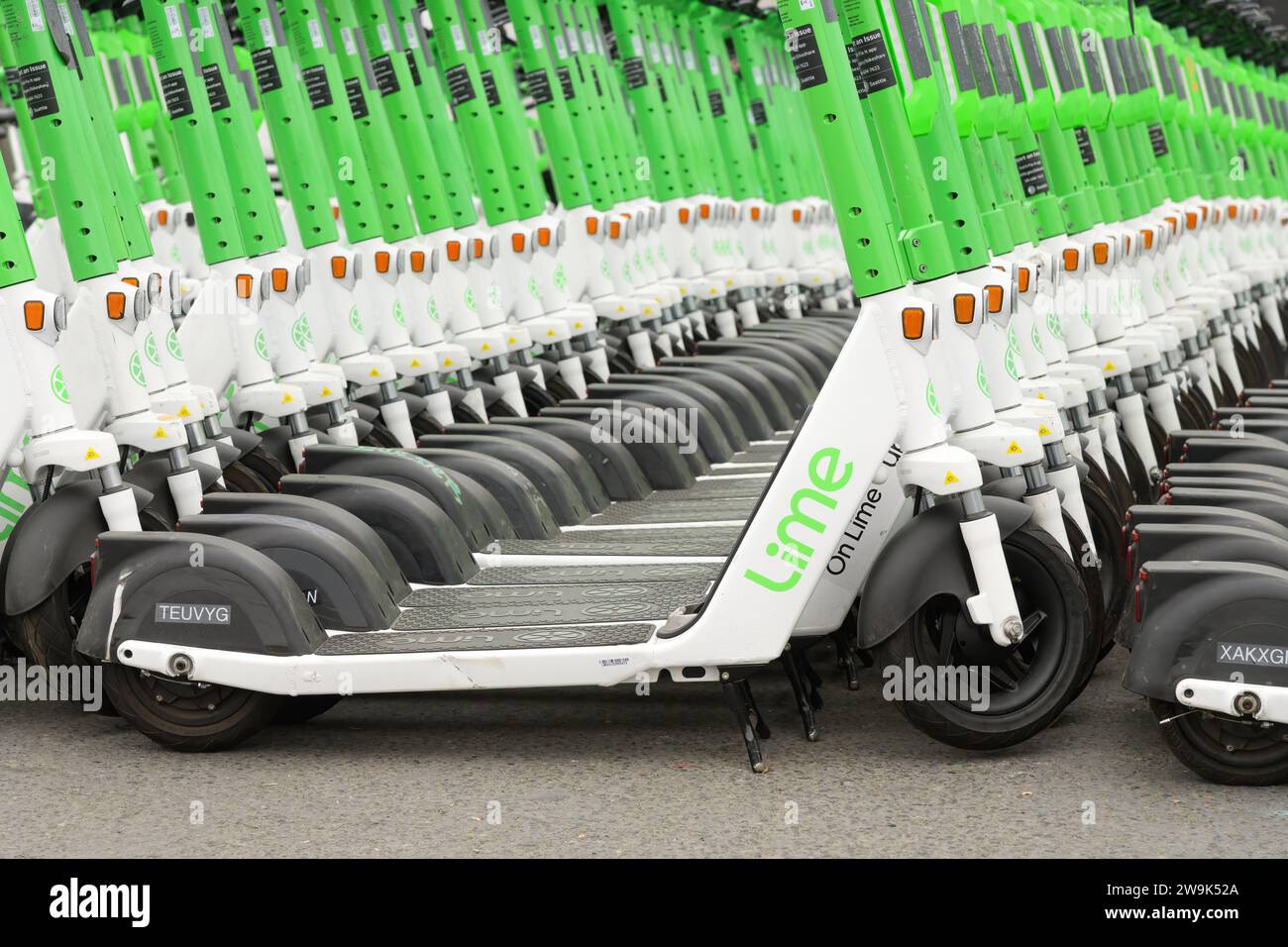
They ignore the brutal reality of hardware depreciation in a hostile environment. A Lime scooter isn't a server sitting in a climate-controlled data center. It is a piece of aluminum and lithium being dropped off curbs, thrown into rivers, and scorched by the sun. In the early days, the average lifespan of a bird or lime scooter was measured in weeks, not years. While hardware has improved, the physics of urban decay haven't changed.
To make an IPO work, Lime needs to convince you that their $v=d/t$ velocity of cash flow exceeds the $r$ rate of physical destruction. It doesn't.
Let's look at the real costs:
- Vandalism and Theft: This isn't a rounding error. It's a fundamental cost of doing business in a public square.
- Regulatory Rent-Seeking: Cities don't see Lime as a partner. They see a piggy bank. Between per-trip fees, permit costs, and "equity zone" requirements that force scooters into low-demand areas, the city takes its cut before Lime sees a dime of profit.
- The Rebalancing Nightmare: Scooters don't magically move back to the top of the hill. The labor costs of "juicers" or specialized crews to move these heavy blocks of metal across gridlocked cities eat the margin alive.
The Myth of the Last Mile
We’ve been told the "last mile" is a gold mine. It's actually a graveyard.
The last mile is the most expensive segment of any journey. In logistics, companies like FedEx and UPS spend billions trying to optimize it, and they have the benefit of charging high premiums for physical goods. Lime is trying to do it for the price of a cup of coffee.
People use Lime when the weather is perfect, the distance is too long to walk but too short for an Uber, and they aren't carrying groceries. That is a niche market, not a global transportation revolution. When it rains, Lime’s revenue doesn't just dip—it vanishes. When it snows, their assets become liabilities that need to be collected and stored at a massive expense.
Lime is essentially a fair-weather utility. No utility in history has ever commanded a "tech" valuation while being at the mercy of a rain cloud.
Uber is Not Your Friend
The "Uber-backed" headline is meant to instill confidence. It should do the opposite.
Uber didn't invest in Lime because they thought it was a standalone winner. They invested because they needed a hedge. Uber wants to own the "transportation layer" of your phone. If you open the Uber app and see a Lime scooter, Uber wins because you stayed in their ecosystem.
But Uber’s interests are not aligned with Lime’s shareholders. Uber would happily see Lime operate at a loss forever if it meant users didn't migrate to a different multi-modal app. In the world of venture-backed transportation, Lime is a feature, not a product.
The "Green" Lie
We need to talk about the environmental impact, because it’s the primary marketing shield Lime uses to deflect criticism of their business model.
If a scooter replaces a car trip, it’s a win. But data suggests that’s rarely what happens. Most scooter trips replace walking, cycling, or public transit. When you factor in the carbon footprint of the "collection vans"—usually diesel-chugging trucks that drive around all night picking up dead scooters—the "green" argument collapses.
$CO_{2e} = (Manufacturing + Charging + Collection) / Total Miles$
When the denominator (Total Miles) is suppressed by high turnover and theft, the carbon intensity per mile often rivals a fuel-efficient sedan. Lime isn't saving the planet; they are rearranging the deck chairs on the Titanic and charging you $1.00 to start the clock.
The Regulatory Trap
Imagine a business where your primary landlord (the city) can change the rules, cap your inventory, and kick you out of the building with 24 hours' notice. That is the micro-mobility sector.
Cities like Paris have already banned rental scooters entirely. Why? Because the "negative externalities"—cluttered sidewalks and annoyed voters—outweigh the tax revenue. Every major city on Lime's map is a potential "zero revenue" event waiting to happen.
Investors are being asked to buy into a company that doesn't own its "storefronts" (the sidewalks) and has no legal right to exist if a city council gets grumpy. That isn't a business; it's a temporary permit.
The Hardware Arms Race
Lime will argue that their custom-designed Gen-4 or Gen-5 scooters are the secret sauce. They aren't.
Hardware is a commodity. Anything Lime builds, Ninebot or Segway can replicate and sell to a dozen smaller competitors for half the price. There is no "moat" here. There is no proprietary algorithm that makes a Lime scooter go faster or stay charged longer than a competitor's.
The only moat Lime has is its balance sheet. They are trying to out-spend the competition until they are the last one standing. But in a high-interest-rate environment, the "burn to win" strategy is a suicide mission.
The Wrong Questions
People ask: "How many rides did they do last quarter?"
The real question: "How much did each of those rides actually cost after accounting for the replacement of the scooter?"
People ask: "What is their market share in London?"
The real question: "How much is the London permit fee going to increase next year to cover the city's budget deficit?"
People ask: "Will people keep using scooters?"
The real question: "Will people keep using Lime when the VC subsidies run out and a ride costs $15 instead of $5?"
Stop Buying the "Platform" Hype
Lime is a bike rental shop with an app.
If you went to a beach town and saw a guy renting out bicycles, you wouldn't value his shop at $5 billion. You’d look at his inventory, his maintenance costs, and his foot traffic. Adding GPS and an iPhone interface doesn't change the underlying physics of the business.
The IPO is the "exit" for the early backers who realized that the "last mile" is a slog, not a sprint. They want to hand the keys to the retail market before the cities realize they can just run these programs themselves as part of the public transit system.
If you want to invest in the future of cities, buy companies that own the land or the power grid. Don't buy the company that relies on the mercy of a sidewalk and the lifespan of a cheap battery.
The "micro-mobility revolution" is just a very expensive way to find out that walking is free and cars are hard to beat.
Don't be the liquidity for someone else's mistake.