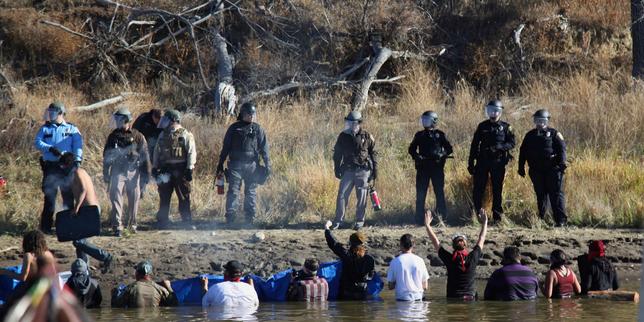
The $345 million defamation judgment against Greenpeace USA represents a fundamental shift in the risk profile of non-profit entities. It is no longer an issue of reputational damage or regulatory friction; it is a terminal liquidity event. This judgment creates a precedent where the specific tactics of environmental advocacy—namely, the targeting of supply chains and corporate financing—are being reclassified by the judiciary as actionable torts rather than protected speech. The survival of the organization now hinges on its ability to navigate a forced restructuring while shielding its global affiliates from financial contagion.
The Mechanics of the $345 Million Liability
The judgment is not a random figure. It is a calculation of specific economic losses claimed by Energy Transfer, the operator of the Dakota Access Pipeline. To understand how a non-profit can be held liable for such a sum, one must examine the three distinct categories of damages typically applied in high-stakes defamation and RICO (Racketeer Influenced and Corrupt Organizations Act) litigation:
- Actual Damages: These represent the quantified costs of project delays, increased security requirements, and the direct expense of repairing physical infrastructure. In the Dakota Access Pipeline context, these costs were compounded by the scale of the multi-state project.
- Statutory Trebling: Under RICO statutes, if a pattern of "racketeering" is established—which the plaintiffs argued included coordinated misinformation campaigns to disrupt commerce—the court can triple the actual damages. This turns a manageable $115 million liability into a terminal $345 million obligation.
- Punitive Assessments: These are designed to deter future behavior. When an organization’s primary operational model is identified as the source of the harm, punitive damages are scaled to be "painful" relative to the entity's net assets.
For Greenpeace USA, which operates on annual revenues significantly lower than the total judgment, this creates a Negative Equity Spiral. When liabilities exceed assets to this degree, the organization loses the ability to secure lines of credit, insure its operations, or maintain the "going concern" status required by auditors.
The Corporate Veil and Cross-Border Contagion
A critical structural question is whether the $345 million liability can migrate from Greenpeace USA to Greenpeace International (Stichting Greenpeace Council) based in the Netherlands. The legal strategy used by the plaintiffs aims to "pierce the corporate veil" by arguing that the various national entities are not independent actors but are directed by a central command.
The risk of contagion is governed by three variables:
- Operational Integration: If the plaintiffs prove that Greenpeace International provided the specific strategy, funding, or personnel for the anti-pipeline campaign, the Dutch entity becomes a co-defendant.
- Asset Commingling: Any evidence that funds flow fluidly between national offices without strict fee-for-service contracts or arm's-length agreements increases the likelihood that a US court will view the entire global network as a single enterprise.
- The "Agency" Theory: If Greenpeace USA is deemed a mere agent of the international body, the liability follows the principal.
If the "veil" is breached, the financial shock could freeze the accounts of Greenpeace affiliates worldwide. Donors in Germany or the UK may find their contributions seized by US marshals to satisfy a judgment rendered in a Texas or North Dakota court. This creates a massive donor flight risk, as contributors are generally unwilling to fund the legal liabilities of past campaigns rather than active environmental protection.
Strategic Vulnerability: The Shift from Protest to "Tortious Interference"
The Greenpeace verdict signals a refinement in corporate legal defense. Historically, companies sued for "libel" or "slander," which carry high burdens of proof regarding "actual malice." The new strategy focuses on Tortious Interference with Business Relations.
The logic follows a specific sequence:
- The Communication: The activist group contacts a bank or a construction partner.
- The Pressure: The group threatens a boycott or reputational campaign unless the partner severs ties with the target company.
- The Breach: The partner, fearing a PR crisis, terminates the contract.
- The Damage: The target company suffers a quantifiable loss of capital or project momentum.
By framing activism as an intentional interference with a contract, corporations can bypass many First Amendment protections. The court’s confirmation of the $345 million judgment suggests that "organizing a boycott" is no longer a safe harbor if it involves the dissemination of information a jury later deems "knowingly false."
The Cost of Truth-Testing in Advocacy
The core of the Greenpeace defense failed because they could not satisfy the Veracity Constraint. In high-stakes litigation, the "opinion" defense—the idea that an activist's claims are merely hyperbolic political speech—is shrinking.
When an organization makes a specific claim—e.g., "This pipeline will inevitably leak into the primary aquifer of the Standing Rock Sioux"—they are making a predictive factual statement. If the plaintiff can prove the organization had access to engineering reports suggesting the opposite, the "Actual Malice" standard is met. This forces a radical change in the Activist Cost Function.
- Pre-Verdict: The cost of a campaign was merely the cost of staff, travel, and materials.
- Post-Verdict: The cost must include a "Litigation Premium." Every infographic and press release must now undergo the same level of legal scrutiny as a corporate SEC filing.
This overhead creates a bottleneck for mid-sized environmental groups. Only the largest, most legally insulated organizations can afford the "Fact-Checking Infrastructure" required to survive the discovery phase of a lawsuit.
The Bankruptcy Paradox
Greenpeace USA faces a binary choice: pay the judgment (which it cannot) or file for Chapter 11 protection.
A bankruptcy filing would allow the organization to halt collection efforts while it attempts to reorganize. However, bankruptcy for a non-profit is a brand-ending event. It requires the full disclosure of all donor lists, internal communications, and strategic plans to a court-appointed trustee and the very creditors (Energy Transfer) seeking to dismantle them.
Furthermore, the "Goodwill Asset" of an NGO is its most valuable property. Unlike a manufacturing firm that can continue to produce widgets while in Chapter 11, an NGO sells trust. Once the organization is under the control of a bankruptcy court, its independence—and thus its value to donors—evaporates.
The Systematic De-risking of Global Advocacy
To survive this environment, international NGOs must adopt a Decoupled Architecture. This involves:
- Hyper-Localization of Liability: Ensuring that national offices have zero shared assets, zero shared directors, and zero integrated financial systems with other branches.
- The "Intelligence Agency" Model of Information: Moving away from centralized "campaign toolkits" to independent, locally-generated content that cannot be traced back to a global "RICO enterprise."
- Insurance as a Defensive Moat: Securing specialized "Professional Liability" or "Advocacy Insurance," though the premiums for such coverage are likely to skyrocket or become unavailable following a $345 million confirmation.
The Greenpeace case is a stress test for the entire sector. If the judgment stands and the organization dissolves, it marks the end of the "Global Brand" model of activism and the beginning of a fragmented, clandestine, and perhaps more radicalized approach to environmental pressure.
The immediate strategic priority for any organization mirroring Greenpeace's tactics is an Internal Audit of Predictive Claims. Every statement made in the last five years regarding corporate projects must be mapped against available data at the time of publication. Any gap between the rhetoric used and the evidence held constitutes a potential $300 million-plus liability. The era of "activism by hyperbole" has reached its financial limit; the era of "activism by forensic evidence" is the only path forward for institutional survival. Organizations that fail to make this transition will find themselves liquidated by the very systems they intended to disrupt.