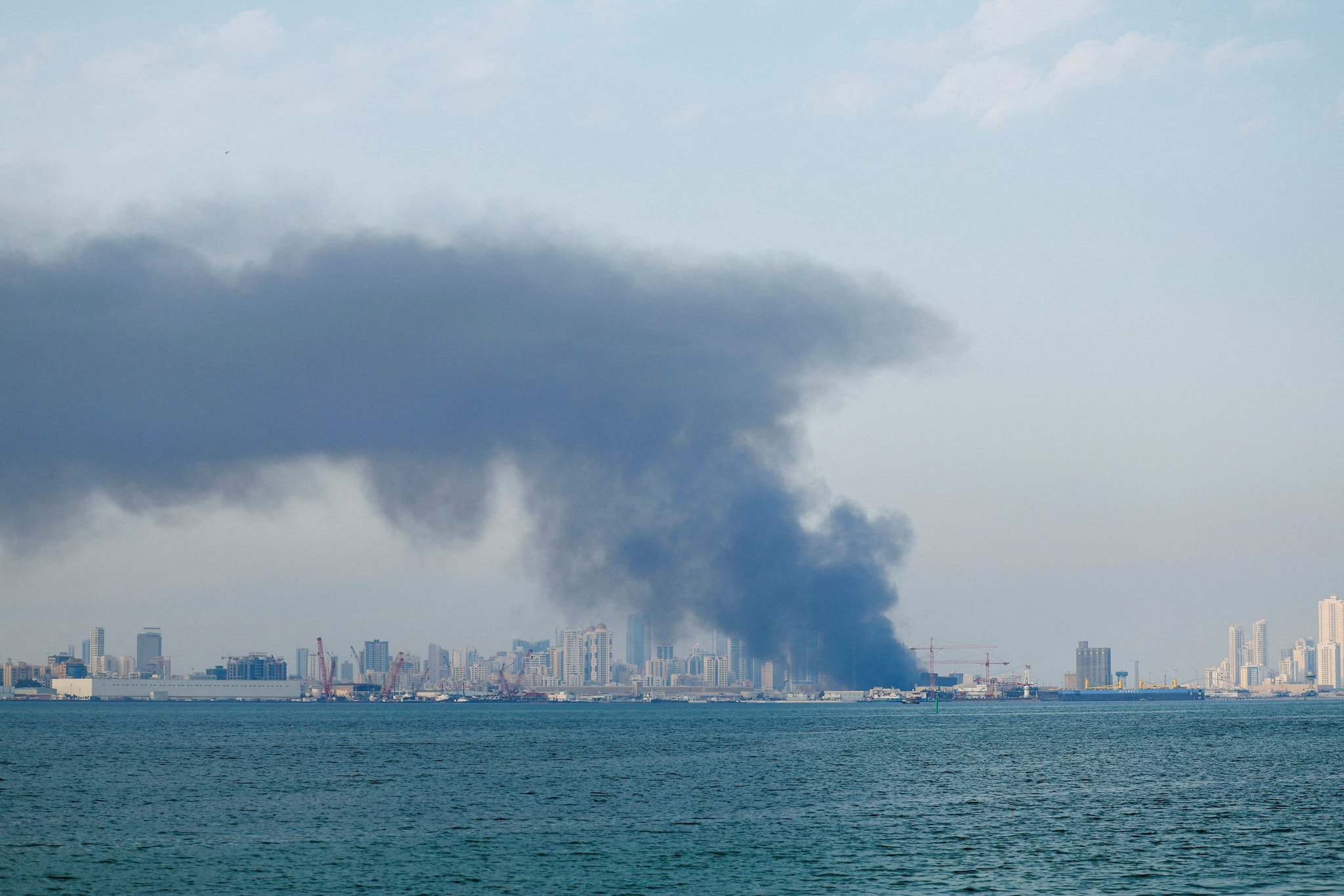
The sky over Dubai isn't supposed to burn. For decades, this city built its entire brand on being the "safe haven"—the glittering, air-conditioned exception to a volatile Middle East. But on February 28, 2026, the illusion of distance vanished. As Iranian missiles streaked toward the UAE in a massive retaliatory strike following US-Israeli actions, the "Dubai bubble" didn't just leak; it popped.
You’ve seen the videos of the Burj Khalifa standing tall while interceptors lit up the clouds behind it. It’s a jarring sight. For the millions of expats who call this place home, the reality of living on the frontline of a regional war has replaced the comfort of a luxury vacation. Also making news recently: Finland Is Not Keeping Calm And The West Is Misreading The Silence.
The Saturday That Changed Everything
Dubai life is usually measured in brunch bookings and beach days. That changed on a Saturday afternoon when the first loud blasts shook the glass towers of Dubai Marina. It wasn't thunder. It was the sound of air defenses engaging Iranian projectiles.
Panic hit the streets quickly. In a city where most residents aren't from here, "what do we do?" became the only question. The Dubai Metro, usually a model of efficiency, became a sea of anxious faces. Roads between Dubai and Abu Dhabi choked with traffic as families tried to get home. Malls that usually bustle with weekend shoppers saw an eerie, sudden quiet. Further details regarding the matter are explored by The New York Times.
The UAE's National Emergency Crisis and Disaster Management Authority (NCEMA) didn't mince words. Stay indoors. Keep away from windows. Don't touch debris. It’s a message residents here haven't had to hear in decades.
The Economic Heartbeat Skips a Beat
Dubai International Airport (DXB) is the busiest international hub on the planet. It’s the city's lungs. When the UAE announced a "temporary and partial closure" of its airspace, those lungs stopped breathing. More than 1,800 flights were canceled or diverted across the region. Imagine 260,000 travelers a day with nowhere to go.
If you were stuck at DXB, you weren't just delayed; you were caught in a global logistics nightmare. Emirates and flydubai had to ground their fleets. This isn't just about missing a vacation. It's about billions in lost trade and airport revenue.
What This Means for Your Money
- Tourism and Travel: The sector is bracing for a hit. For the first time, some governments have raised travel warnings for the UAE to "do not travel."
- Real Estate: Investors are watching closely. The "safe haven" tag is what drives the property market here. If that’s compromised, the sky-high prices might actually see a ceiling.
- Logistics: Jebel Ali Port, which handles nearly 15.5 million TEUs of cargo annually, is a primary target due to its strategic importance and US Navy presence. Delays here mean empty supermarket shelves in weeks, not months.
When the "Safe Haven" Tag Fails
Honestly, the shock wasn't just about the missiles. It was about the realization that the UAE is no longer untouchable. For years, the country’s leadership steered clear of direct conflicts. But as things escalated between the US, Israel, and Iran, the UAE found itself closer to the line than it ever wanted to be.
The strike on a high-end hotel on Palm Jumeirah was a wake-up call. Whether it was a direct hit or falling debris, the result was the same: four people injured and a fire that could be seen for miles. This wasn't a military base in the desert; it was the heart of the world’s most famous artificial island.
Practical Steps to Navigate the Uncertainty
If you’re living in Dubai or planning a trip, don't just hope for the best. You need a plan.
- Stock Up Locally: Major retailers like Lulu Group have already increased their stock of essentials from three months to six. Do the same at home. Water, non-perishable food, and basic medical supplies are non-negotiable.
- Monitor Official Channels: Ignore the WhatsApp forwards. Stick to NCEMA, the Dubai Police app, and the UAE Government’s official social media.
- Check Your Travel Insurance: Most standard policies have a "war and terrorism" exclusion. If you’re booking a flight, check if your provider offers specific "cancel for any reason" coverage or if the airline is offering free rebooking.
- Get Your Documents in Order: Keep digital and physical copies of your passport, residency visa, and insurance. If things get worse, you don't want to be hunting for paperwork.
The reality is that Dubai’s resilience is its greatest strength. The government has already shown it can handle massive crises—think back to how they managed the COVID-19 outbreak. But this is a different beast entirely. It’s kinetic, it’s loud, and it’s right outside your window.
The "City of Gold" is still standing, but the shine is definitely a bit scuffed. Whether this is a one-time rattle or the start of a long-term shift in the region's stability is anyone's guess. For now, daily life in Dubai isn't about the next brunch; it's about watching the sky.
Start by auditing your household emergency kit today and downloading the official Dubai Police and NCEMA apps for real-time alerts.