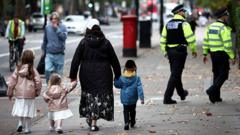
Fear shouldn't be the tax you pay for living in a global city. But for many Jewish Londoners, that's exactly what the bill looks like lately. After a string of high-profile incidents and a sharp rise in reported hate crimes, the Metropolitan Police Service has finally shifted gears. They've launched a dedicated team specifically tasked with protecting the Jewish community. It’s a move that feels both necessary and, quite frankly, overdue.
You've probably seen the headlines. There’s been a palpable shift in the atmosphere on London’s streets. We aren't just talking about online trolling or mean-spirited comments. We’re talking about physical confrontations, verbal abuse in broad daylight, and a general sense that the social contract is fraying at the edges. When people start thinking twice about wearing a kippah or a Star of David in public, something has gone wrong.
Why the Met is pivotting toward specialist protection
The Met’s decision to create this unit isn't just about PR. It's a logistical response to a data-driven nightmare. Recent figures show that antisemitic incidents haven't just ticked up—they’ve surged. Usually, the police try to manage hate crime through general neighborhood teams. That hasn't worked here. The nuances of these specific attacks require people who actually understand the community they're guarding.
This new team isn't just a handful of officers with a new badge. They’re being embedded in areas with high Jewish populations, like Barnet, Hackney, and Haringey. The goal is simple. They want to be visible. They want to be fast. Most importantly, they want to build trust that has, let’s be honest, been a bit shaky lately.
Community leaders have been calling for this for months. Organizations like the Community Security Trust (CST) do incredible work, but they aren't the police. They don't have the power of arrest. By bridging the gap between volunteer-led security and state-funded policing, the Met is trying to create a net that actually catches people before things escalate.
The reality of street level antisemitism in London
If you walk through Golders Green or Stamford Hill, you’ll see the tension. It’s in the way people look over their shoulders. I’ve spoken with residents who say their kids are scared to take the bus. That's not the London anyone wants. The attacks we’ve seen range from "drive-by" shouting matches to genuine physical violence.
The Met's new unit focuses on a few key areas:
First, they're increasing patrols around schools and synagogues. These are the obvious targets. But they’re also focusing on "intel-led" policing. This means monitoring social media and local chatter to spot trouble before it arrives at a storefront.
Second, there’s a heavy emphasis on the "feeling" of safety. It sounds fluffy, but it’s vital. If you see a police car, you feel better. If a potential attacker sees a police car, they think twice. It’s basic psychology. The Met is finally leaning into the idea that presence is a form of prevention.
Breaking down the communication barrier
One of the biggest hurdles in policing hate crime is underreporting. People often don't bother calling 101 because they don't think anything will happen. Or worse, they don't think the officer on the other end will "get it." This new team is meant to change that dynamic.
By having officers who are specifically trained in the nuances of antisemitism, the Met hopes to make the reporting process less exhausting for victims. You shouldn't have to explain why a specific slur or gesture is a threat. The person taking the report should already know. That specialized knowledge is what makes a "team" different from a general patrol.
It also means better evidence gathering. If you understand the patterns of these attacks, you know what to look for on CCTV. You know which witnesses to talk to. You know how to build a case that actually sticks in court.
The role of the Community Security Trust
It’s impossible to talk about this without mentioning the CST. They’ve been the backbone of Jewish safety in the UK for decades. While the Met’s new team is a massive win, it’s going to rely heavily on the data and "boots on the ground" insights that the CST provides. This partnership is the only way the plan succeeds.
The CST records thousands of incidents that never even make it to a police desk. By syncing up with this new Met unit, the police get a much clearer picture of the "low-level" harassment that often leads to bigger crimes. It’s about connecting the dots.
What this means for the rest of London
Some people might ask why one community gets a special team. It's a fair question, but it misses the point. When hate crime spikes against any specific group, it’s a failure of public order for everyone. If the police can’t protect a Jewish family in North London, what makes you think they can protect anyone else?
Policing is always about resources. Right now, the fire is burning in this specific corner of the city. The Met is just doing what any good fire department does—aiming the hose where the flames are highest. It sets a precedent for how the city handles surges in targeted hate. If we see a similar spike in Islamophobia or any other form of targeted bigotry, the blueprint for a rapid-response specialist team is now there.
Dealing with the root of the problem
Let’s not kid ourselves. A police team is a band-aid. A very necessary, high-quality, much-needed band-aid, but a band-aid nonetheless. It doesn't fix the underlying radicalization or the social media algorithms that feed people a steady diet of hate.
However, we can’t wait for a "holistic" societal shift while people are being harassed on their way to work. We need enforcement now. The Met's move signals that the "wait and see" approach is over. They’re acknowledging that the Jewish community is under a unique kind of pressure right now and that the standard policing model wasn't cutting it.
Your next steps if you're affected
If you’re living in London and feel targeted, don't just sit on it. The effectiveness of this new Met team depends entirely on the information they receive.
- Report every incident, no matter how small. If someone shouts a slur from a car, get the plate and report it. It builds the "heat map" the police use to allocate these new officers.
- Use the CST resources. They have a direct line to the police and can often help you navigate the reporting process if you’re feeling overwhelmed.
- Stay aware of your surroundings, but don't let fear dictate your life. The whole point of this new police presence is to give that freedom back to you.
The Met is finally stepping up. Now, we have to see if the presence of these officers on the street translates into actual arrests and a cooling of the temperature. London is at its best when everyone feels they belong. This new team is a step toward making that a reality again. Keep your eyes open, stay informed, and use the tools that are now being put in place.