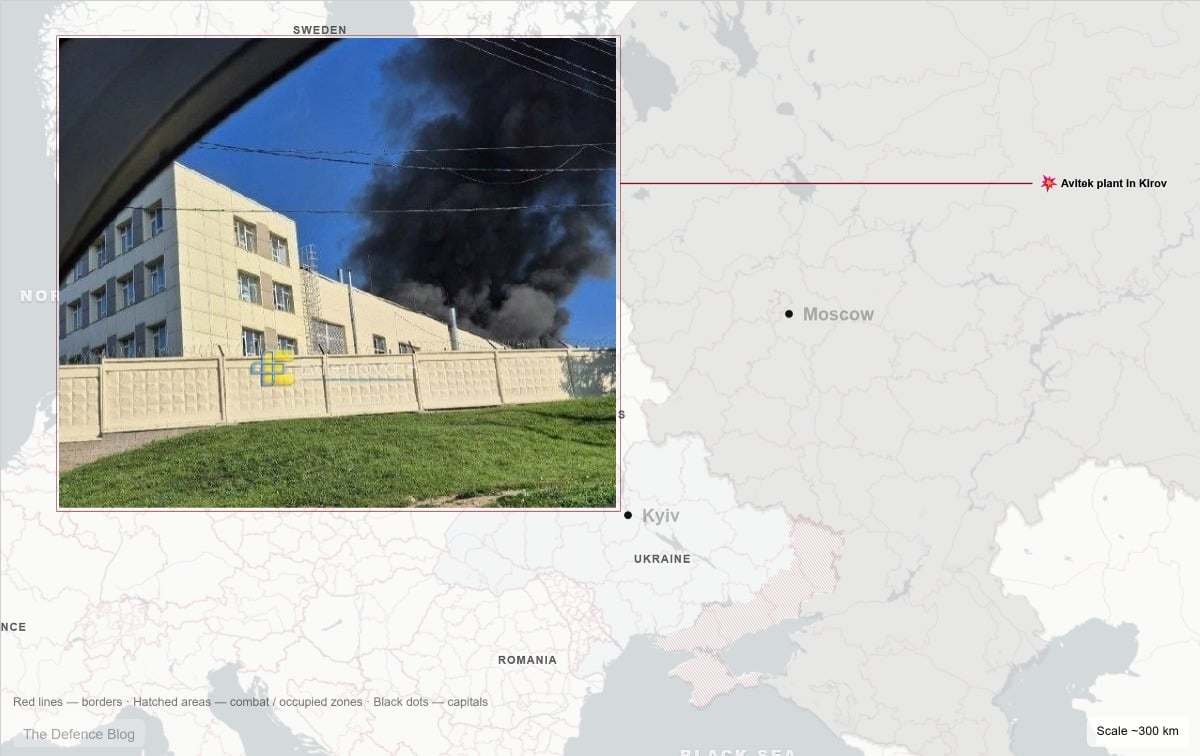
The Strategic Illusion of Long-Range Strikes
Western media loves a dramatic explosion. When a Ukrainian drone or cruise missile travels 800 miles deep into Russian territory and blows up a gunpowder plant in Kirov, the headlines write themselves. Pundits line up to declare a turning point. Social media feeds flood with high-definition video of smoke plumes, accompanied by grand claims that Moscow’s war machine is finally crumbling from within.
It is a comforting narrative. It is also a complete tactical misdirection.
Celebrating deep-strike successes feels good because it offers a clean, technological solution to a dirty, brutal war of attrition. But hitting a factory in Kirov—or Vyatskiye Polyany, or any other distant industrial hub—is a PR victory masquerading as a military breakthrough.
The defense analysis industry has allowed splashy footage to replace sober assessment. If you want to understand where this conflict is actually being decided, you have to look past the fireballs in the Russian rear and look at the brutal, unglamorous mechanics of the frontline.
Why Destroying a Single Plant Changes Nothing
Let us break down the logistics that commentators routinely ignore.
When a missile hits a military facility hundreds of miles behind the frontlines, three things immediately happen:
- The facility suffers structural damage.
- Production pauses temporarily while fires are extinguished and damage is assessed.
- The media declares the facility "destroyed."
Here is what actually happens next: production adapts.
Modern military-industrial networks are not fragile, single-point-of-failure systems. Russia did not spend the last three years idling; it converted its economy into a decentralized, hardened wartime apparatus. A strike on a plant in Kirov halts a specific output node, but it does not erase the stockpile already in transit, nor does it destroy the dozens of auxiliary sub-assembly facilities scattered across eleven time zones.
[ Strike Occurs ] ➔ [ Local Production Halt ] ➔ [ Inventory Buffer Absorbs Shock ]
                                                        │
[ Frontline Unaffected ] ◄── [ Rerouted Logistics ] ◄───┘
I have spent decades watching military command structures respond to infrastructure degradation. Organizations built on Soviet-style redundancy do not collapse because a building burns down. They re-route. They absorb the blow. They shift production mandates to secondary facilities in the Urals or disperse machinery into smaller, unmapped workshops.
The assumption that taking out a single chemical or machinery plant severely disrupts frontline artillery supplies within weeks is simply scientifically and logistically false. War reserves exist precisely to cushion these shocks. By the time a factory strike actually impacts the shell density on the Pokrovsk or Chasiv Yar fronts, months have passed—giving the adversary ample time to compensate through imports or supply-chain workarounds.
The Real Cost: Distraction from the Attrition Battle
Every long-range cruise missile or high-end strike drone deployed against a deep-rear target represents a massive investment of technical capital, intelligence assets, and planning bandwidth.
When those resources are channeled toward symbolic targets, they are not being used where they are needed most: stopping tactical breakthroughs on the ground.
The Math of Deep Strikes vs. Tactical Interdiction
Consider the operational trade-offs required to execute a deep strike:
- Intelligence Allocation: Satellite imagery, electronic signals intelligence, and agent networks are focused on stationary, strategic targets hundreds of miles away rather than shifting tactical artillery positions.
- Asset Consumption: High-grade guidance systems and long-range airframes are expended on targets with zero immediate influence on the active line of control.
- Air Defense Suppression: Complex flight paths must be mapped to bypass defensive bubbles, consuming valuable electronic warfare tools.
Meanwhile, on the actual line of contact, ground forces face overwhelming glide-bomb raids, dense artillery barrages, and incremental land loss. Deep strikes do not stop glide-bomb launches. They do not kill enemy infantry creeping into trenches. They do not destroy the short-range drone networks dominating the tactical kill zone.
The fundamental flaw in modern Western defense commentary is the obsession with strategic interdiction over tactical survival. A nation can win twenty long-range headlines a month and still lose five square kilometers of defensive ground a day.
Dismantling the Popular Myths
To understand why deep strikes are overhyped, we have to dismantle the flaws in the common questions circulating online.
"Doesn't this force Russia to redeploy air defense systems away from the front?"
This is the most common defense of deep-strike strategy, and it sounds logical on paper. In practice, it fails basic threat matrix analysis.
Frontline air defenses are short- and medium-range tactical systems (like Tor and Pantsir variants) designed to counter low-flying drones, close-air support, and rockets. Deep-rear strategic facilities are protected by static, long-range networks (like S-300 and S-400 systems). Russia does not pull tactical air defense units off the active battle line to guard a factory in Kirov. They utilize static regional reserves and territorial defense assets. The frontline threat level for Ukrainian pilots and drone operators remains entirely unchanged.
"Won't destroying production facilities drain the Russian economy?"
No. Industrial damage during an active war does not trigger economic collapse; it triggers increased state spending. Rebuilding a damaged facility injects state funds directly back into domestic defense contractors. Unless you can strike every critical link in a supply chain simultaneously—a feat requiring thousands of heavy cruise missiles, not dozens—you are merely creating an expensive game of industrial whack-a-mole.
What Actually Moves the Needle
If long-range strategic strikes are primarily theater, what actually shifts the balance in a war of this scale?
It comes down to three unglamorous, high-volume priorities:
- Counter-Battery Dominance at Scale: Systematically locating and destroying active enemy artillery systems within 40 kilometers of the front lines.
- Integrated Air Defense at the Edge: Denying the airspace over the frontline to stop the delivery of heavy aerial munitions before they launch.
- Fortification Engineering: Constructing deep, layered, concrete-reinforced defensive lines that make tactical advances mathematically impossible for infantry pushes.
None of these three priorities make for viral video content. They do not generate dramatic, high-contrast night-vision footage of distant explosions. But they are the cold, mechanical reality of how grinding wars are stabilized and won.
Focusing on Kirov is easy. It allows observers to believe that technology can bypass the brutal realities of attrition. It creates the illusion of momentum while the fundamental dynamics on the ground remain stubbornly, dangerously unchanged.
Stop counting the miles a missile flies. Start counting the frontline artillery systems destroyed today. That is the only metric that has ever mattered.


