The tea goes cold in the glass while the radio mutters in Bengali. Across the room, a grandfather stares out the window at a street in New Delhi that feels simultaneously too loud and terribly hollow. He is safe here. His grandchildren speak fluent Hindi with local accents, their schoolbags heavy with the promise of a stable tomorrow. Yet, the old man’s mind remains tethered to a delta thousands of miles away, a place of rivers, paddy fields, and a sudden, violent rewriting of history.
Exile has a distinct taste. It tastes of dust and borrowed time.
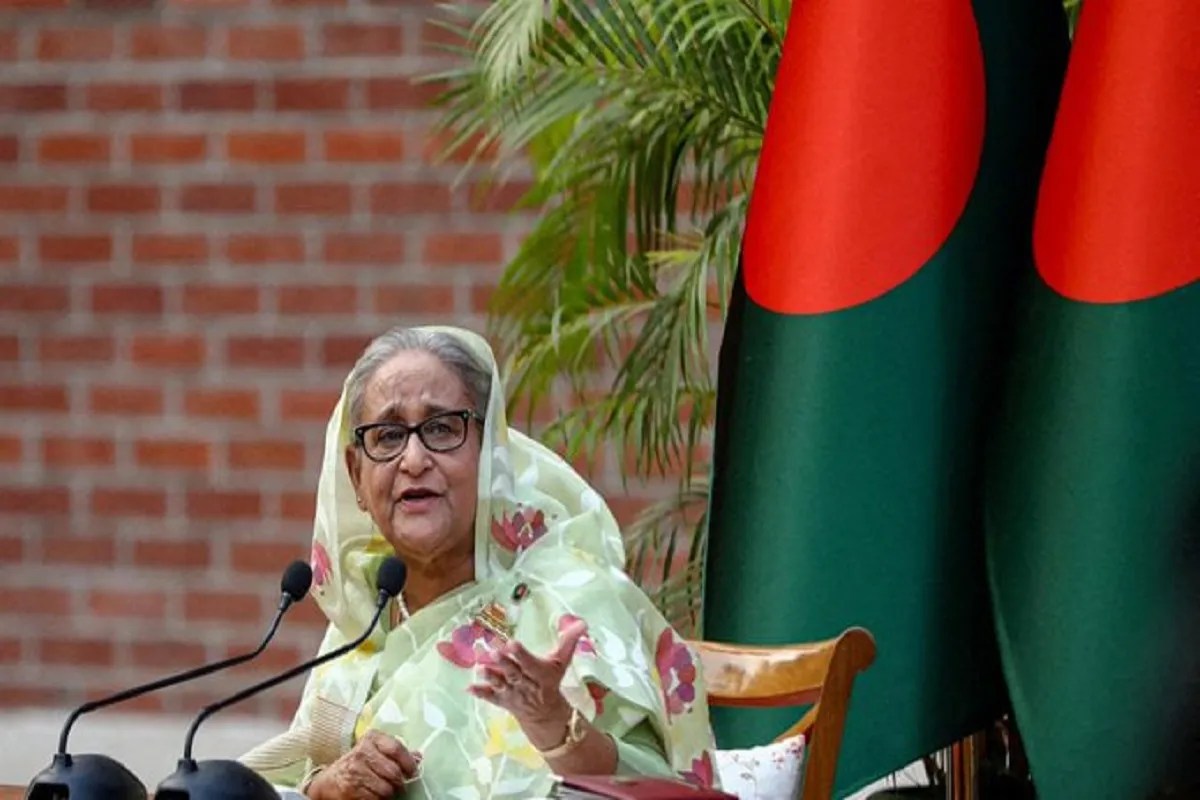
When Sheikh Hasina stepped onto foreign soil after the dramatic collapse of her government, she did not just leave behind a presidential residence; she left behind an entire political ecosystem now gasping for air. From the relative safety of her temporary refuge in India, her voice recently pierced the heavy silence of diplomacy. Her words were not diplomatic niceties. They were a raw, unfiltered alarm. Every night, they are killing our people.
To understand the weight of that statement, you have to look beyond the dry columns of geopolitical analysis. You have to look at the streets of Dhaka, Rajshahi, and Chittagong, where the social fabric has frayed past the point of casual repair.
History rarely turns on a dime; it pivots on a knife-edge. For decades, Bangladesh existed as a delicate geopolitical balancing act—a secular democracy born from a brutal war of independence against a military regime, carving out its identity through textile mills, microcredit, and a fierce cultural pride in language and poetry. But nations are fragile things. They are built on shared myths and institutional guardrails. Remove the guardrails, and the abyss stares back.
Hasina’s warning that Bangladesh risks becoming "a second Pakistan" is not merely partisan rhetoric. It is a terrifying historical echo. It evokes the ghosts of 1971, the specter of military dominance, sectarian fractures, and the systematic silencing of pluralism. When minority communities—Hindus, Buddhists, secular intellectuals—look over their shoulders in the dark, they are not imagining things. Temples vandalized, businesses looted, and homes marked: these are the classic, sickening symptoms of a society losing its institutional soul to mob rule and extremist opportunism.
Consider the perspective of a hypothetical young student in Dhaka named Tanvir. Six months ago, Tanvir was on the streets, cheering for change, believing that the ouster of an entrenched administration would instantly usher in a golden age of freedom and economic prosperity. He wanted jobs. He wanted a voice. But revolutions are hungry beasts that often devour their own children. Today, Tanvir walks home quickly after dusk. The police boxes are empty or burnt. The men patrolling the intersections are not wearing uniforms of the state; they carry the unblinking, unpredictable authority of street corners and ideological fervor. The euphoria of the uprising has curdled into anxiety.
This is the invisible stake of the current crisis. When law enforcement dissolves, the vacuum is never filled by angels. It is filled by the most ruthless elements available.
India watches this transformation with a profound, quiet dread. New Delhi does not need an unstable, radicalized neighbor sharing thousands of kilometers of porous border. Security analysts speak in cold terms of border management, refugee influxes, and strategic depth. But on the ground in West Bengal, Tripura, and Assam, the anxiety is deeply personal. Families are split across the international boundary. A cousin here, an aunt there. When fires burn in Dhaka, the smoke drifts across the consciousness of millions in India who still consider those ancestral villages home.
Hasina’s decision to speak out from her sanctuary is a gamble. To her critics, she is a deposed leader desperately trying to claw back relevance, refusing to accept that her long tenure ended in a fiery public reckoning. They point to the authoritarian excesses of her later years, the heavy-handed crackdowns, the shrinking political space that ironically birthed the very rage that consumed her regime. There is truth in that critique. Power corrupts, and absolute power blinds.
Yet, two things can be true at the same time. A leader can make catastrophic miscalculations that lead to her downfall, and still be entirely correct about the dark forces waiting in the wings to inherit the ruins.
The tragedy of South Asian politics is the cyclical nature of its vengeance. One regime falls, weeping families demand justice, and the incoming victors immediately pick up the very same truncheons dropped by their predecessors, just wearing different colored scarves. Meanwhile, the ordinary citizen—the rickshaw puller, the schoolteacher, the small-shop owner—pays the toll in blood and broken glass.
When a nation slides into sectarian chaos, the descent is deceptively slow at first, then violently fast. It starts with an offensive social media post. Then a targeted boycott. Then a shattered storefront. Before long, neighbors who shared Eid delicacies and Durga Puja sweets are eyeing each other through narrowed eyelids, wondering who will strike first.
This is the nightmare Hasina is trying to telegraph to the world. She knows the machinery of the state intimately. She knows how thin the veneer of civilization is when the ideological hounds are unchained.
Back in New Delhi, the grandfather turns off the radio. The news anchor’s voice fades into static. Outside, the Delhi traffic hums its indifferent song, a reminder of a different country, a different reality. But the silence in the room remains heavy, weighted down by the realization that history is happening across the border, and no amount of distance can entirely shut out the sound of a neighboring house burning down.


