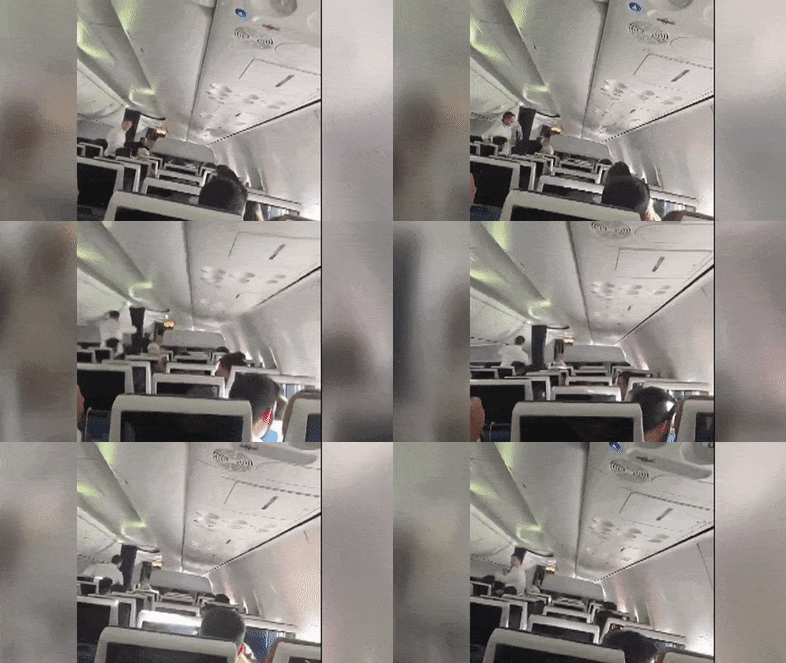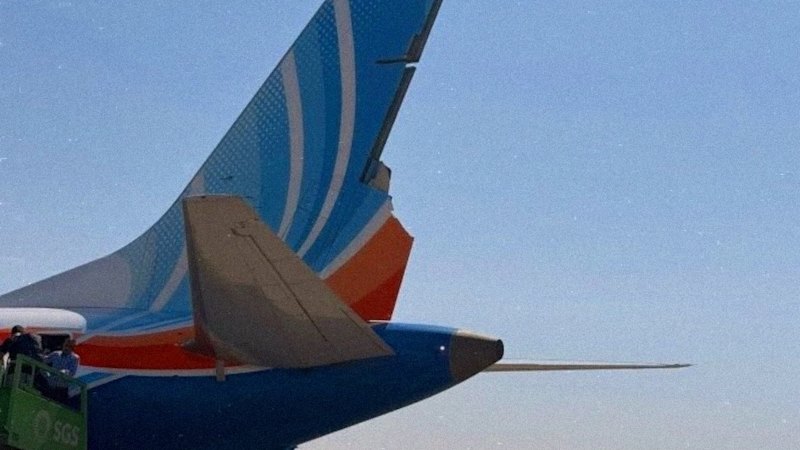
The air inside a modern cockpit at thirty-eight thousand feet is not quiet. It is a dense, layered mechanical breathing—the steady, rhythmic thrum of twin turbofans, the faint, high-frequency hiss of conditioned oxygen, the ghost-like rattle of cabin pressure bulkheads shifting against the thin, freezing vacuum of the stratosphere. But on a Tuesday night over the vast, ink-black expanse of the Empty Quarter in Saudi Arabia, that ambient noise vanished.
Replaced by something far heavier.
Silence. Not the absence of sound, but the presence of dread.
Imagine sitting in that left seat. Outside, there is nothing. No city glow cutting through the curvature of the Earth. No highway ribbons. Just hundreds of thousands of square miles of shifting dunes—the Rub' al Khali—stretching out beneath a moonless vault. When a primary generator drops offline, the massive electronic glass displays flicker, stutter, and go dark. Auxiliary power gasps, kicks in, and then falters. The flight deck transforms from a luminous command center into a dark cave illuminated only by the frantic amber and red staccato of warning lights.
Mayday.
The word feels small against the enormity of the desert below.
This is not a theoretical exercise discussed in a sterile simulator in Frankfurt or Miami. This is the raw edge of aviation, where millions of engineering man-hours, billions of dollars of hull insurance, and hundreds of human lives hang on the split-second decisions of two tired human beings whose coffee went cold three hours ago.
We forget, safely planted in our leather-bound theater seats at thirty thousand feet while scrolling through downloaded movies on our tablets, what is actually holding us up. We treat air travel like an elevator ride. We grumble about the chicken or the cramped legroom. We view the metal tube as a bus with wings. But every long-haul flight across the Arabian Peninsula is a calculated defiance of gravity, physics, and atmospheric hostility.
When a widebody aircraft experiences a critical system degradation over the Saudi desert, the margin for error shrinks to zero. There are no emergency cornfields to put down in. There are no friendly local airfields with precision instrument landing systems every twenty miles. There is sand, salt flats, extreme thermal updrafts, and temperatures that can melt the soles of your shoes before rescue helicopters can calculate your transponder coordinates.
Let us look closely at what actually happens in those agonizing minutes.
First comes the cognitive shock. Training prepares pilots for emergencies, yes. They spend decades in simulators pulling levers, reciting memory items, and arguing with check airmen about hydraulic pressures. Yet, the human nervous system reacts to real terror with a sudden, violent flood of adrenaline. Vision tunnels. Time distorts. Seconds stretch into sluggish hours while events occur at supersonic speed.
The captain’s hands grip the yoke with white-knuckle intensity. The first officer’s eyes dance across the emergency checklist, trying to separate critical actions from cascading secondary alerts. Every warning chime is a hammer blow to concentration.
Terrain. Terrain. Pull up.
Except there is no terrain alert yet—just the vast, silent void. The immediate danger is not hitting a mountain; it is losing the invisible nervous system of the aircraft thousands of miles from the nearest maintenance hangar.
To understand why this matters to anyone outside the aviation industry, we have to look at the geometry of modern global corridors. Saudi airspace is one of the busiest highway systems in the sky. It is the invisible bridge connecting Europe and Africa to the booming markets of India, Southeast Asia, and Australia. Every single day, tens of thousands of passengers sleep peacefully as their metal birds hum across the night sky, trusting an invisible web of air traffic controllers in Riyadh and Jeddah, automated dependent surveillance systems, and the quiet competence of flight crews.
When an emergency punctures that routine, the machinery of modern aviation must pivot instantly.
Air traffic control is not merely a voice on a radio giving polite headings. In a crisis over remote desert terrain, ATC becomes the lifeline. Controllers in Riyadh center faced a sudden, critical divergence from normal flight paths. On their radar scopes, a stable green vector turned into an erratic, descending squiggle.
Communication protocols shifted. The polite, procedural radio chatter evaporated, replaced by sharp, clipped aviation phraseology where every syllable carries the weight of survival.
"Mayday, Mayday, Mayday."
Those three words strip away all bureaucratic pretense. They command the frequency. Every other aircraft within a hundred-mile radius falls silent, their crews listening with a collective, empathetic knot in their stomachs. They know they could be next.
Why do these crises happen in an era of unprecedented technological sophistication? Because complexity is the enemy of reliability. Modern aircraft are masterpieces of integration, but integration means interdependence. When a core electrical bus fails, it doesn't just turn off a lightbulb; it threatens flight control computers, fuel management systems, and navigation databases all at once.
It is here that the human element reasserts its absolute dominance.
Algorithms cannot improvise when the manual has no page for the exact combination of failures flashing across the Electronic Centralized Aircraft Monitor. Algorithms calculate probabilities; humans make choices. The crew had to weigh the risks of continuing toward a major hub with degraded instrumentation against the terrifying prospect of a remote desert descent in pitch darkness.
They chose communication. They chose systematic triage. They shed load—both electrical and mental.
Down on the ground, far below the freezing stratosphere, the response machinery kicked into motion. Saudi aviation authorities, well-drilled in contingency operations across their forbidding interior, coordinated emergency diversion protocols. Emergency services at regional strips were put on high alert. Search and rescue assets—capable of tracking a beacon across undulating dunes where landmarks do not exist—sparmed into readiness.
Consider what it takes to mount a rescue or manage a diversion in the Rub' al Khali. Summer temperatures routinely exceed fifty degrees Celsius. Surface winds can whip fine sand into blinding haboobs that swallow entire horizons. If an aircraft is forced down here, survival is measured in hours, not days. The desert does not forgive mistakes; it preserves them.
Yet, as the minutes bled past, the crisis began to de-escalate through sheer professional competence.
The crew managed to isolate the faulty electrical bus, shedding non-essential avionics while preserving the vital flight instruments needed to keep the wings level. The engines—thankfully untouched by the electrical gremlins—continued their steady, life-sustaining roar. The captain’s voice came over the cabin address system. It was calm. Measured. Deliberately devoid of panic.
Passengers who had woken up to flickering reading lights and a strange, heavy quiet heard the reassurance they desperately needed, even if they could not fully grasp how close they had danced to disaster.
The descent into Riyadh was textbook. Smooth, precise, and profoundly uneventful. When the landing gear thumped down into place and the reverse thrusters roared against the tarmac, the cabin did not erupt into cheers. Most passengers simply exhaled, perhaps checking their phones to see if their connecting flights were still on time, utterly unaware of the abyss they had just skirted.
We step off these aircraft every day into the bright lights of our destinations, grabbing our carry-on bags, rushing to meetings, complaining about taxi queues. We treat safety as a birthright rather than what it actually is: a fragile, hard-won truce negotiated daily against the chaos of the natural world by people whose names we will never know.
That night over the Saudi desert, the machinery failed, but the humans did not.
And as the aircraft taxied to a remote stand, bathed in the harsh white glare of floodlights while maintenance crews swarmed the fuselage with flashlights and diagnostic tools, the desert outside remained as it has for millennia—silent, indifferent, and vast, keeping its own counsel beneath the stars.