The tarmac at Damascus International Airport does not shine like the runway at Orly or Charles de Gaulle. It is scarred. Bleached by a decade of unforgiving sun and pitted by the remnants of a conflict that defined a generation, the concrete feels less like a welcoming mat and more like a fragile bridge between a shattered past and an unwritten future.
When Emmanuel Macron stepped out of the aircraft cabin, the heat hit him first. It was not just the physical warmth of the Syrian air, but the heavy, palpable weight of history shifting in real time. He is the first major Western leader to set foot in this country since the tectonic plates of its political reality broke apart and reformed under entirely new leadership.
For years, Syria was a closed door. A dark room on the global stage. Now, the door has been kicked open, and the world is squinting at what lies inside.
The Street View
Miles away from the diplomatic convoy, in a small bakery tucked into a side street of the old city, a man named Farid wipes flour from his hands onto a faded apron. Farid is a fiction, a composite of the millions of ordinary citizens who have survived the long winter of Syria's discontent, but his reality is entirely accurate. He does not care about the fine print of European foreign policy. He cares about the price of yeast. He cares whether the electricity will stay on long enough to bake his evening bread.
When the news of the French president's arrival flashes across a sputtering television screen in the corner of his shop, Farid stops. He looks at the screen, then out the window at the cobblestones.
For people like Farid, Western leaders have long been distant entities, names spoken on state television or voices delivering empty condemnations from the safety of New York or Geneva. The physical presence of a French president in Damascus is a surreal disruption of the mundane struggle for survival. It represents a crack in the isolation.
The stakes here are invisible but massive. This visit is not just a photo opportunity; it is a high-stakes gamble wrapped in silk diplomacy. By being the first to arrive, France is attempting to draw the new lines of influence in the Middle East. If Macron succeeds in establishing a working relationship with the new administration, he secures a foothold for Western values and economic interests in a region that threatened to spin entirely out of the Euro-American orbit. If he fails, he validates a fragile regime without gaining anything in return, leaving the door wide open for rival global powers to dictate the terms of Syria's reconstruction.
The Ghost in the Diplomatic Room
To understand why this walk down the airplane steps matters, you have to understand the silence that preceded it. For more than a decade, Western policy toward Syria was defined by absence and economic sanctions. The strategy was isolation. The goal was collapse.
But collapse is a messy thing. It does not just affect the people in power; it trickles down to the water pipes, the schools, and the hospital generators. The old leadership held onto the rubble until the sheer weight of history dragged them down. Now, a new coalition sits in the government offices of Damascus. They are untested, ideologically complex, and deeply desperate for international legitimacy.
Macron's arrival is that legitimacy. It is the stamp of recognition.
Consider the calculated risk involved in this move. Inside France, critics are already sharpening their knives. They ask how a Western democracy can shake hands with a government whose hands are still covered in the dust of a fallen state. They worry about the precedent it sets.
But the alternative is arguably more dangerous. Total isolation creates a vacuum. In international politics, vacuums are filled quickly, usually by actors who do not share Western views on human rights or democratic governance. By physically showing up, Macron is asserting that Europe will not be a passive spectator in the rebuilding of its backyard.
The Anatomy of an Encounter
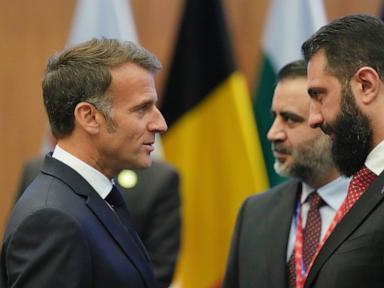
The meetings take place behind heavy wooden doors, far from the gaze of ordinary citizens. The air conditioning hums against the dry heat outside. On one side of the table sit French diplomats, polished and cautious, carrying the weight of a skeptical European Union. On the other side sit the new leaders of Syria, individuals who have spent more time in trenches or covert political networks than in diplomatic salons.
The conversation is a dance on thin ice. Every word is weighed. Every gesture is analyzed.
The French delegation needs guarantees. They want to know that the millions of Syrian refugees scattered across Europe can eventually return to a country that will not imprison them. They want to know that the new government will root out the remaining extremist cells that have long used the chaos of the region to plan attacks on European soil.
The Syrians want something simpler: capital. They need billions of dollars to rebuild roads, to fix power grids, and to restore a broken currency. They know that French recognition is the golden key that unlocks wider European aid and international investment.
It is a transaction masquerading as statecraft.
Beyond the Handshake
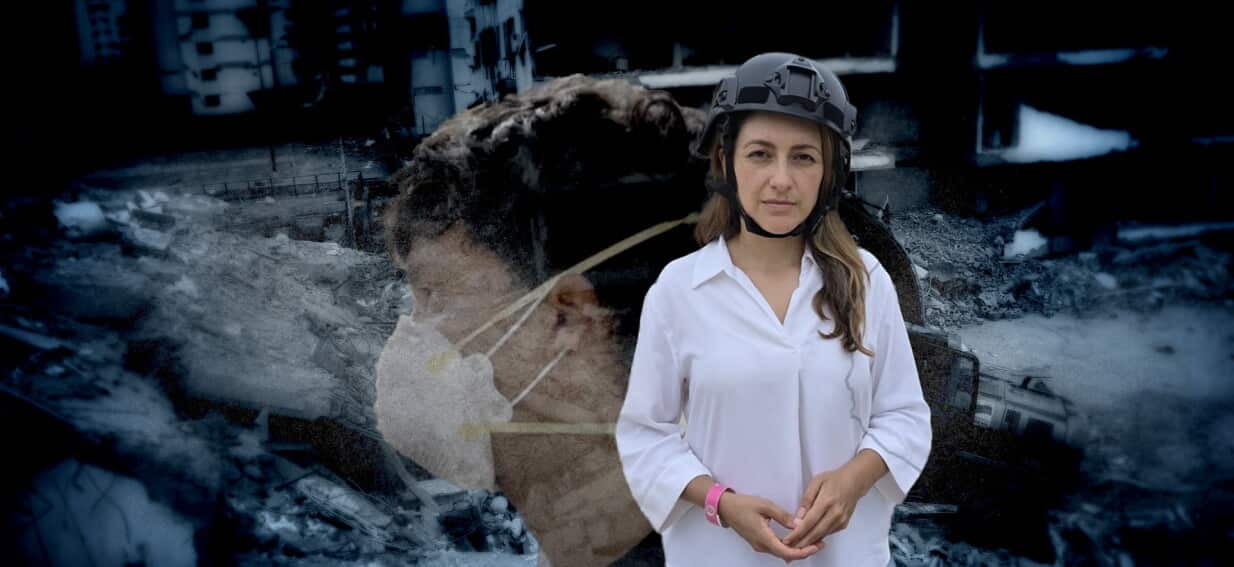
Away from the palace, the reality of the country remains stubborn. The scars of war do not vanish because a foreign dignitary visits. Entire neighborhoods remain heaps of gray concrete and twisted rebar.
Imagine walking through the outskirts of Homs or Aleppo right now. The silence there is loud. It is the silence of missing families, of abandoned shops, of a childhood spent under the shadow of mortar fire. A diplomatic visit cannot instantly put windows back into ruined apartments or erase the trauma of the last fourteen years.
But what it can do is signal a shift in the wind.
For the teenager kicking a deflated football against a pockmarked brick wall in a Damascus suburb, the sudden appearance of foreign flags on state vehicles is a bizarre novelty. It hints at a world that might finally be ready to look at Syria as something other than a tragedy or a threat. It offers a tiny, fragile glimmer of normalization.
The true test of this historic visit will not be found in the joint communiqués issued to the press or the carefully staged photographs of leaders smiling into a sea of camera flashes. The true test will unfold over the next six months in the quiet re-opening of trade routes, the cautious return of aid workers, and the stabilization of daily life for ordinary families.
As the sun begins to set over the Qasioun Mountain, casting long, dramatic shadows across the ancient capital, the French convoy snakes its way back toward the airport. The dust raised by the armored vehicles settles slowly back onto the asphalt.
The Western world has officially broken its silence on Syria. The leader of France came, he saw, and he shook hands with the architects of a new era. The gamble has been made, the chips are on the table, and the people of Damascus are left waiting to see if this new chapter will bring actual bread to their tables, or simply more expensive promises.