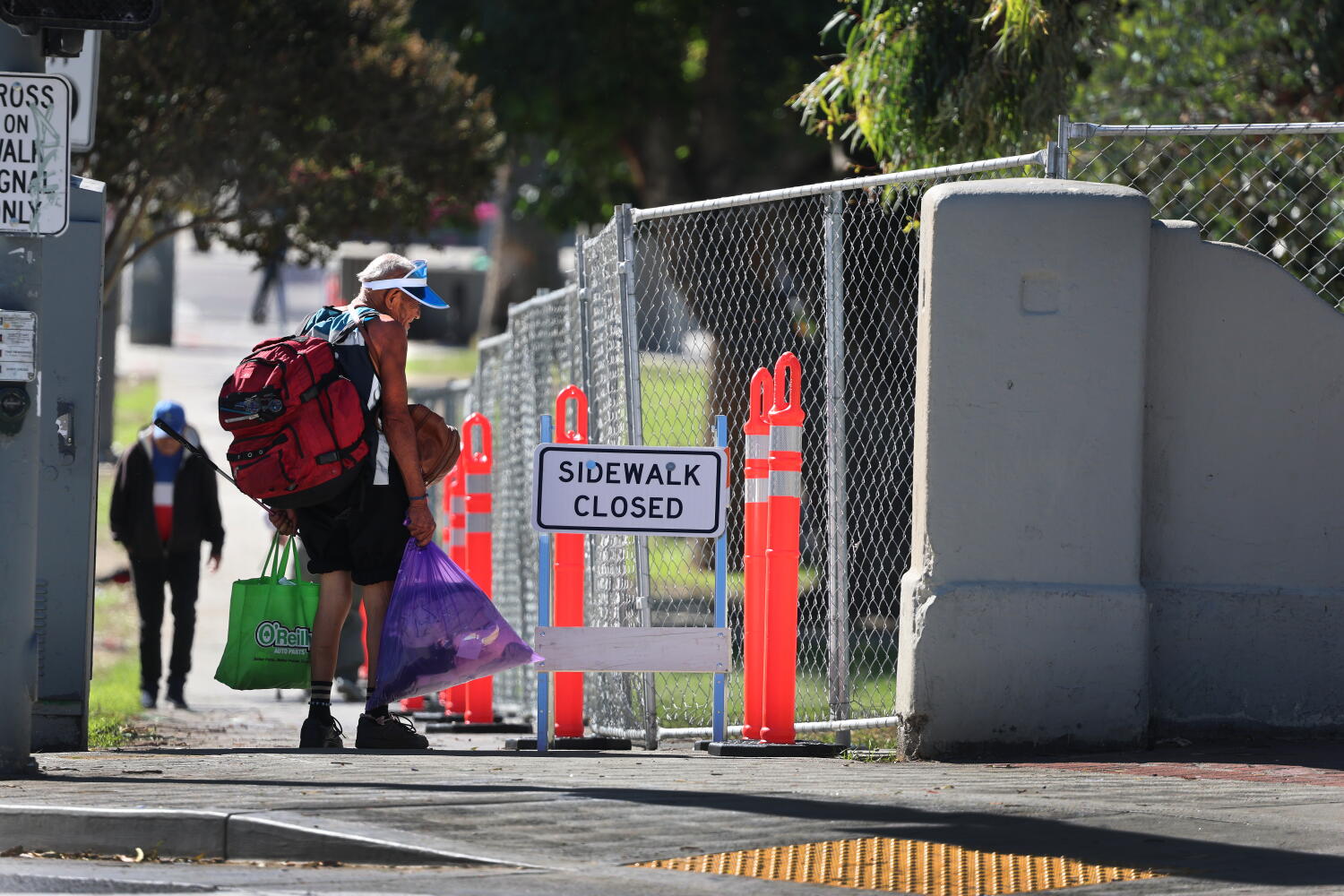
Putting a wrought-iron fence around MacArthur Park will not save Westlake. It will kill it faster.
City Hall wants you to believe that 32 acres of chronic street-level drug markets, overdoses, and violent crime can be solved with steel pickets, padlocks, and nocturnal curfews. Every mainstream headline frames this move as an act of desperation—a reluctant last resort by exhausted officials finally willing to get tough. That framing is lazy, historically illiterate, and dangerously wrong.
Building a perimeter wall around an urban park is not a decisive intervention. It is an admission of civic bankruptcy disguised as urban design.
Having spent years dissecting municipal infrastructure failures and public-space interventions across major North American cities, I have watched the exact same playbook unfold from San Francisco to Philadelphia. Whenever city leadership loses control of a public square, the consultants and councilmembers reach for hostile architecture and perimeter fencing. They spend millions on steel, pat themselves on the back for taking visible action, and then act shocked six months later when the surrounding neighborhood turns into an even worse disaster.
The real story behind the MacArthur Park fence is not about public safety. It is about containment theater, spatial displacement, and how Los Angeles just traded a manageable, centralized problem for an uncontrollable, decentralized crisis.
The Illusion of the Perimeter Fix
To understand why the MacArthur Park fence is doomed, look at the basic physics of urban geography. Crime and addiction do not evaporate when you lock a gate at 10:30 p.m. Human beings do not disappear because a wrought-iron barrier blocks their path to a patch of grass.
When you seal off a 32-acre public space in one of the most densely populated neighborhoods in the western United States, you create immediate hydraulic displacement. Every activity that previously occurred inside the park—open-air fentanyl sales, encampments, late-night gatherings—gets squeezed out onto the narrow sidewalks of Wilshire Boulevard, Alvarado Street, 7th Street, and Park View Street.
Think about what that actually means for the people who live and work in Westlake.
Before the fence, emergency responders, outreach workers, and law enforcement knew exactly where the crisis was concentrated. Inside an open park, sightlines exist. Ambulances can pull up to the perimeter. Street vendors have room to operate without blocking building entrances. Families have alternative pathways.
Once the gates lock, that concentrated population spills directly onto the thresholds of immigrant-owned bodegas, apartment lobbies, elementary school routes, and bus stops. You have not reduced crime by a single percentage point. You have simply relocated it from municipal parkland onto private commercial frontages where business owners have zero security budgets and even less legal recourse.
City officials love fences because fences photograph well for the evening news. A newly installed perimeter looks like order. It projects authority. Meanwhile, two blocks away on 6th Street, foot traffic dies, storefronts shutter, and the exact same illicit economy operates unchecked on residential stoops.
Why Classic CPTED Theory Proves City Hall Wrong
Defenders of the fence inevitably invoke Crime Prevention Through Environmental Design (CPTED), the architectural framework developed by criminologist C. Ray Jeffery and expanded by Oscar Newman in the 1970s. They throw around terms like "access control" and "territorial reinforcement" as if slapping a fence around a historic park represents textbook urban science.
They are quoting half the textbook and burning the rest.
Newman’s core concept of defensible space relies on four pillars: territoriality, natural surveillance, image, and milieu. Access control only works when paired with natural surveillance—what urban theorist Jane Jacobs famously called "eyes on the street."
A high perimeter fence around a massive urban park destroys natural surveillance. Here is why:
- It kills casual foot traffic. Law-abiding commuters, joggers, dog walkers, and parents pushing strollers rely on multiple entry and exit points. When you reduce thirty natural desire lines down to a handful of bottlenecked gates, normal people stop cutting through the park.
- It creates a psychological cage. People avoid entering enclosed spaces where exit routes are restricted. If a mother with two kids sees an erratic individual near one of only four open gates, she turns around and leaves. Within weeks, the only people willing to enter the gated zone are those who have nowhere else to go.
- It traps victims and shields offenders. Once an area inside a fenced park becomes empty of legitimate users, the fence stops keeping bad actors out and starts keeping witnesses away. Iron bars do not stop determined individuals from climbing over or cutting locks; they simply ensure that police cruisers cannot drive onto the turf and passersby cannot easily intervene.
Jane Jacobs warned against this exact mistake in The Death and Life of Great American Cities over sixty years ago. She observed that parks fail not because they are too open, but because they lack diverse, continuous uses around their edges that pull ordinary people into the space from dawn until midnight. Locking the doors turns a neighborhood living room into an abandoned warehouse.
What Everyone Gets Wrong About MacArthur Park’s History
The conventional narrative treats MacArthur Park as a uniquely cursed piece of real estate that finally exhausted the patience of good-hearted politicians. That myth erases thirty years of deliberate policy choices.
MacArthur Park—originally Westlake Park when it opened in the 1880s—was once the crown jewel of Los Angeles. It featured boathouses, Victorian bandstands, botanical gardens, and grand hotels lining its edges. Even through the mid-twentieth century, it functioned as the vibrant civic heart of a dense, working-class community.
The park did not rot by accident. It was systematically severed and neglected:
- The Wilshire Boulevard Bisection: In 1934, the city drove Wilshire Boulevard straight through the middle of the park, cutting a unified green space into two disconnected halves and turning the corridor into a high-speed commuter thoroughfare rather than a neighborhood boulevard.
- The Metro B Line Construction: During the 1990s, the park’s lake was drained for years to build the Westlake/MacArthur Park subway station. That decade-long disruption gutted legitimate park usage, wiped out adjacent small businesses, and created a vacuum that gang networks and drug markets immediately filled.
- The Enforcement Ping-Pong: For the past twenty years, Los Angeles has alternated between aggressive, short-term police sweeps and total hands-off abandonment. Every few years, a new councilmember announces a "revitalization initiative," floods the area with overtime patrols for ninety days, claims victory, and then pulls resources the moment cameras move to another district.
Putting up a fence in 2026 is just the latest chapter in this cycle of cosmetic panic. Instead of fixing the transit hub chokepoints, restoring consistent municipal maintenance, or establishing permanent neighborhood programming, the city spent millions on iron bars to hide its own operational failures.
Answering the Questions Nobody Wants to Ask Honestly
When residents and taxpayers search for answers about the MacArthur Park fence, they usually ask the wrong questions because the media feeds them false binaries. Let us dismantle the most common ones directly.
Does fencing a city park actually reduce violent crime?
No. Decades of urban criminology research—including broken-windows evaluations and displacement studies from institutions like the Urban Institute and RAND Corporation—consistently show that physical barriers without simultaneous programming and steady enforcement merely shift crime geographically. A fence can lower the on-parcel crime statistics reported by the Department of Recreation and Parks, allowing politicians to brag about a drop in "park crime." Meanwhile, LAPD Rampart Division stats for the surrounding 500-yard radius absorb the exact same incidents. It is a statistical shell game.
Isn't a fenced park better than an unusable park?
Only if your goal is to look at green grass from the sidewalk while walking past open-air drug use on the concrete. A park that requires armed guards at bottlenecked gates to stay "clean" is not a functioning public park; it is a manicured terrarium. Taxpayers in Westlake—one of the most park-poor neighborhoods in Los Angeles, with less than 0.6 acres of green space per 1,000 residents—do not need a museum piece they are scared to enter. They need a safe, accessible commons.
What about Bryant Park in New York? Didn't a fence save it?
This is the single most abused comparison in American urban planning. Yes, Bryant Park installed low perimeter fencing and instituted nighttime closures during its famous 1980s–1990s turnaround led by sociologist William H. Whyte and the Bryant Park Restoration Corporation.
Here is what every LA bureaucrat conveniently leaves out:
- The fence was secondary. Bryant Park spent millions widening entrances, removing visual barriers, adding thousands of movable chairs, opening high-end kiosks, and funding a private Business Improvement District (BID) with dedicated sanitation and unarmed hospitality ambassadors on site 18 hours a day.
- Geography and wealth. Bryant Park sits in Midtown Manhattan, surrounded by Fortune 500 headquarters, corporate skyscrapers, and tens of thousands of affluent office workers generating massive commercial tax assessments. Westlake is a low-income immigrant neighborhood where working families live in overcrowded apartments without air conditioning or backyards.
Copying Bryant Park’s iron fence without Bryant Park’s massive daily programming, economic base, and human-scale management is like buying a scalpel and calling yourself a brain surgeon.
The Uncomfortable Truth About Public Order
Before we look at what actually works, we need to be brutally honest about the trade-offs—including the flaws in an open-park approach.
If you leave MacArthur Park completely unfenced without changing anything else, the status quo remains intolerable. Families cannot use the playgrounds. Seniors cannot walk around the lake. Paramedics spend their shifts reversing fentanyl overdoses on the grass while open-air markets operate ten feet away. Doing nothing is indefensible.
The failure is not that Los Angeles decided to intervene. The failure is that Los Angeles chose a passive physical barrier instead of active human presence.
Fences are seductive to bureaucracies because steel is a one-time capital expense. You pay a contractor once, cut a ribbon, and walk away. Staffing a park with recreation leaders, mental health clinicians, sanitation crews, and consistent beat officers requires ongoing operational budgets, inter-agency coordination, and political accountability every single day.
Los Angeles has a chronic allergy to operational execution. So it buys steel instead.
How You Actually Reclaim an Urban Park
If City Hall actually wanted to make MacArthur Park safe, thriving, and hostile to illicit markets without turning Westlake into a penal colony, the blueprint is clear. It requires replacing passive barriers with relentless, structured activation.
1. Flood the Park with Daily, Unavoidable Programming
Illicit drug markets thrive in empty, unprogrammed spaces. They collapse when ordinary people occupy the turf from 6:00 a.m. until 10:00 p.m.
Instead of spending millions on perimeter fencing, redirect those capital funds into seven-day-a-week programming:
- Morning: Organized senior walking clubs, tai chi groups, and open-air coffee kiosks at every corner entrance.
- Afternoon: Youth soccer leagues, tutoring tents, and municipal recreation staff running structured activities on the lawns.
- Evening: Night markets, permitted food vendors, outdoor cinema, and live local music under high-efficiency LED lighting.
You do not push out drug dealers with iron bars. You crowd them out with grandmothers, soccer moms, and taco stands.
2. Legalize and Integrate the Street Economy
Westlake already has one of the most dynamic informal street-vending ecosystems in America. For years, the city treated street vendors as a nuisance to be regulated or swept away, leaving the sidewalks chaotic and disconnected from the park.
Flip that model. Bring permitted food and retail vendors inside the park along the main pathways with dedicated electrical hookups, trash receptacles, and water access. When vendors have a legal, profitable stake inside the park, they become the fiercest guardians of public order. Nobody protects a public square harder than a small business owner whose livelihood depends on families feeling safe enough to buy dinner there.
3. Fix the Metro Station Chokepoint
Anyone who actually walks Westlake knows that the plaza above the Westlake/MacArthur Park Metro station is the primary engine of street disorder. Dark corners, dead-end alcoves, and unmonitored stairwells create a natural staging ground for illicit transactions.
Redesign that plaza immediately. Tear out blind walls, install high-output lighting, put a permanent transit ambassador and crisis-response kiosk directly at the station mouth, and make the transition from subway platform to park pathway completely transparent.
4. Replace Sweeps with Permanent Beat Policing and Crisis Triage
Occasional LAPD task forces accomplish nothing except overtime payouts. Public order requires boring, predictable consistency: dedicated foot and bicycle officers assigned permanently to the park and its four surrounding blocks, paired with non-police outreach teams operating out of a fixed on-site triage center.
When outreach workers have an actual brick-and-mortar hub inside the park—offering immediate detox beds, wound care, and shelter placement—they can intervene before an overdose happens on a park bench. When officers know every resident, vendor, and repeat offender by name, enforcement becomes surgical rather than theatrical.
The Verdict on Steel Bars
Imagine a scenario five years from now. The wrought-iron fence around MacArthur Park is rusted, covered in graffiti, and bent open at three different spots where bolt cutters did their work at 3:00 a.m. The gates are locked every night, turning 32 acres of desperately needed green space into an empty dark zone while the sidewalks of Alvarado and Wilshire remain choked with tents, trash, and open-air drug sales. City Hall will form a new task force, hire a new consultant, and propose spending another ten million dollars on taller spikes and brighter floodlights.
We do not have to imagine it. We have watched American cities run this exact script for forty years.
A city that has to cage its own parks to protect them from its own streets has already surrendered. Take down the plans for the fence, put people back on the grass, and stop pretending that iron bars can do the job of real governance.